Strata gardening Mosman requires far more than basic mowing and blowing. For Sydney strata managers, especially in premium suburbs like Mosman, Vaucluse and Rose Bay, strata garden maintenance is essential for protecting asset value, improving resident satisfaction and maintaining horticultural health across all seasons.
For strata managers and property managers, the garden isn’t just a “nice-to-have” — it’s a critical, living asset.
In premium suburbs like Mosman, Vaucluse, or Rose Bay, a well-maintained garden directly impacts property values, rental yields, and resident satisfaction.
However, Sydney’s unique climate — with its high humidity, coastal salt spray, and periodic drought — presents significant challenges. A simple “mow and blow”
service will quickly see a valuable garden asset decline, leading to expensive remedial work.
This guide outlines a professional, four-pillar maintenance checklist designed for Sydney properties, ensuring your garden is a source of pride, not problems.
Pillar 1: The Horticultural Care & Plant Health Checklist
This is the core of garden management. It involves proactive care that changes with Sydney’s distinct seasons, moving far beyond basic tidying.
Weekly / Fortnightly Tasks (The “Non-Negotiables”)
These are the high-visibility tasks that residents notice first.
- Lawn Care: Professional mowing (cylinder or rotary based on grass type), precise edging of all hard surfaces, paths, and garden beds.
- Site Cleaning: Blowing and clearing all pathways, driveways, and common areas of leaves and debris to prevent slip hazards (WHS).
- Weed Management: Manual removal in beds and spot-spraying on hard surfaces (use eco-friendly herbicides where possible).
- Rubbish Removal: Remove all green waste generated; for strata, check common area bins and remove minor litter.
Monthly Tasks (The “Health Check”)
This is where expertise begins to show, focusing on preventing problems before they start. Strata gardening Mosman requires seasonal strategies, particularly during summer when water stress and humidity are at their peak
- Pest & Disease Scouting:Actively checking for common Sydney pests (NSW DPI plant pest guidelines). Look for Lilly Pilly psyllids, aphids on new growth, scale on Camellias, and fungal issues (e.g. powdery mildew).
- Formative Pruning: Lightly prune shrubs and hedges to maintain shape and promote dense, healthy growth.
- Soil Moisture Check: Manually check levels, especially in known dry spots or beds not covered by irrigation.
- Targeted Fertiliser: Apply specific nutrients to high-demand plants (e.g. seasonal annuals, citrus in courtyards).
Seasonal Tasks (The “Big Jobs”)
Spring (Sep–Nov)
- Major Feed: Slow-release balanced fertiliser (NPK) to all beds and lawns.
- Mulching: Apply 50–75 mm quality mulch (tea tree, pine bark) to suppress weeds, retain moisture, and moderate soil temps.
- Pest Onslaught: Proactive treatment as populations spike.
Summer (Dec–Feb)
- Heat & Water Stress: Adjust schedules; apply soil wetters to hydrophobic soils (e.g. sandy soils in Coogee or Randwick).
- Fire Safety Pruning: Reduce fuel loads in high-risk areas per NSW RFS guidelines.
- Storm Clean-ups: Rapid response for fallen branches and safety risks.
Autumn (Mar–May)
- Prime Planting: Best time to establish new trees, shrubs, and lawns.
- Lawn Renovation: Core, scarify, and over-seed Kikuyu/Buffalo after summer stress.
- Structural Prune: Major annual prune following summer growth.
Winter (Jun–Aug)
- Rose Pruning: Traditional hard prune to set up spring flush.
- Detailed Weeding: Control Oxalis and Winter Grass before seed set.
- Tree & Safety Audits: Assess structure while deciduous trees are bare.
Pillar 2: The Irrigation & Water Management Audit
For any strata property, water is a major, controllable expense. An unmanaged irrigation system is a financial leak. This is a specialist task that a simple gardener cannot perform. Most committees don’t realise how much money a proper strata gardening Mosman plan can save through irrigation audits and proactive horticultural care.
What a Professional Irrigation Audit Includes
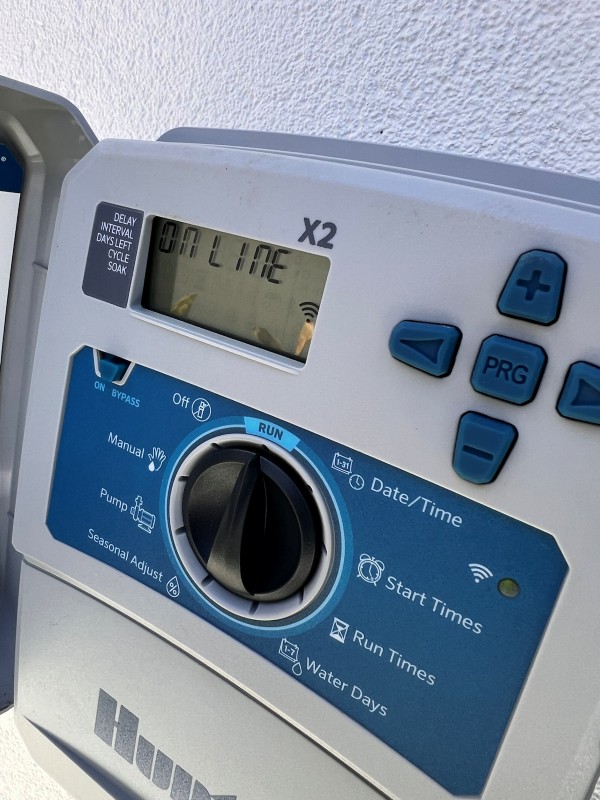
- Controller Check: Verify timer function; confirm a weather-aware “smart” controller; ensure run times match season, soil, and plant type. A “smart” controller can adjusts for weather (as recommended by Sydney Water’s outdoor watering guidelines).
- Valve Box Audit: Locate and test each solenoid. A partially open valve can waste thousands of litres per month.
- Line & Head Inspection (zone-by-zone):
- Broken/missing heads; blocked drip emitters.
- Overspray onto paths/walls (waste + slip hazards).
- Leaking lines (pressure drops, soggy patches).
- Poor coverage (“dry donuts” around heads).
Real-World Scenario: The Randwick Water Bill Mystery
- Experience: Large strata with high water bills but stressed gardens. Manual watering made it worse.
- Audit Found: 15-year-old failing controller; two solenoids stuck partially open; cracked bargain “drip” tubing causing floods and dry spots.
- Solution: Full flush, replace valves, install Wi-Fi smart controller, retrofit pressure-compensating (PC) drip line.
- Result: Water bill dropped by over 40% in the first quarter; plants recovered with root-zone watering.
Irrigation System Comparison: Strata Essentials
| Feature | Sub-Surface Drip Line | Pop-Up Sprays (Gear-Driven) |
|---|---|---|
| Best For | Garden beds, hedges, median strips | Lawns, large open turf areas |
| Water Efficiency | Very High (90–95%) | Moderate (65–80%) |
| Evaporation | Minimal (in-soil) | Higher on hot, windy days |
| Vandalism Risk | Very Low (buried) | Higher (visible heads) |
| Common Issue | Emitter blockage, root intrusion | Broken heads, poor adjustment, “misting” from high pressure |
| Strata Suitability | Excellent: efficient, low-profile, safe | Essential for lawns; requires regular audits |
Pillar 3: Site Safety & Compliance Checklist
For a Property or Strata Manager, this can be more important than aesthetics. Liability is a major concern.
- Clear Pathways: Keep common paths free of debris, encroaching plants, and low branches; prune for safe clearance.
- Trip Hazard Reporting: Proactively identify roots lifting pavers, eroded edges, protruding sprinkler heads, etc.
- Tree Safety: Engage Level 5 Arborists for reports when required (common for large, mature trees in Mosman/Woollahra).
- Chemical Safety: Store and use herbicides/pesticides per NSW regulations; maintain SDS on site.
- Gutter & Drain Pits: Keep ground-level pits and drains clear to prevent flooding during downpours.
Pillar 4: Asset Improvement & Future-Proofing
A great maintenance plan isn’t just about “maintaining” — it’s about improving.
- Proactive Reporting: After each visit, send a simple, photo-based report with: work completed, issues identified, and recommendations for approval.
- Long-Term Planting Plans: Identify failing areas (deep shade, sun-scorched patches) and specify replacements.
- Climate-Appropriate Planting:
- Coastal Exposure (Mosman, Coogee): Prefer hardy, salt-tolerant species such as Westringia fruticosa, Banksia spp., Metrosideros.
- Soils: Eastern Suburbs often sandy/hydrophobic → add organics + wetting agents. North Shore often heavier clays → gypsum and tolerant species.
- Budgeting: Provide a 3–5 year improvement plan (e.g. Year 1: fix irrigation; Year 2: re-plant entry; Year 3: lawn renovation).
People Also Ask (FAQs)
Your Horticultural Asset Partners in Sydney
For Strata Managers, Property Managers, and discerning homeowners, your garden is a significant asset that demands professional management.
It’s not just a cost centre; it’s a key component of your property’s value.
Garden Managers is a team of qualified horticulturists and irrigation technicians. We don’t just “mow and blow” — we manage your garden’s health,
safety, and long-term value. From strata maintenance in Mosman to irrigation audits in Vaucluse or restorations in Coogee, we provide the expertise Sydney properties deserve.
Our other useful guides:
Horticultural Maintenance Sydney: What Tenders Require 2026
Home › Guides › Horticultural Maintenance Tenders Commercial & Facilities What a Horticultural Maintenance Tender Actually Requires — Sydney 2026 Most tender responses fail on the things nobody reads twice: the access window, the schedule of rates, and the documents you didn't have to submit yet. Here's what these contracts actually ask for. Facility managers Strata committees Contractors Updated 27 September 2026 · [...]
Irrigation System Cost Sydney 2026 | Real Installation Prices
Home› Garden Tips & Guides › Irrigation Installation Cost Sydney 💧 Irrigation · Sydney 2026 What Does an Irrigation System Cost in Sydney? Real 2026 Installation Prices Quotes for the same garden can differ by thousands, and it's rarely because one contractor is greedy. It's because they're pricing different systems. Here's what installation actually costs, and exactly what moves the number. ✓ Real [...]
Commercial Grounds Maintenance Cost Estimator
Home› Commercial Gardening Services › Cost Estimator 📊 Commercial Tools · 2026 Commercial Grounds Maintenance Cost Estimator Work out what grounds maintenance should cost for your Sydney site before you go to tender. Pick your site size and visit frequency for an indicative monthly range based on real 2026 Eastern Suburbs pricing. ✓ Real 2026 pricing ✓ No sign-up needed ✓ Monthly + [...]