You know the email. It’s 8:30 PM. A “high-priority” alert from an executive committee member lands in your inbox.
Subject: “THE GARDENS ARE A DISGRACE.”
Attached:
- 10 zoomed-in photos of a single dandelion.
- An overflowing green bin.
- A blurry, Bigfoot-style photo of a “mystery person” (your gardener) temporarily blocking a visitor spot.
Just like that, your “set-and-forget” maintenance contract has become your biggest headache.
The truth is, a cheap gardener isn’t saving your strata plan money—they are a liability. They erode resident satisfaction, blow out budgets with “hidden extras,” and worst of all, they drain your incredibly valuable time.
A-grade strata managers don’t waste time micro-managing their trades. They hire proactive partners who handle the problems before the committee emails start flying.
Here are the 7 red flags that signal your current provider is a liability, and exactly how to fix it. Reclaiming your evenings and keeping the committee happy all comes down to finding a professional strata garden maintenance company.
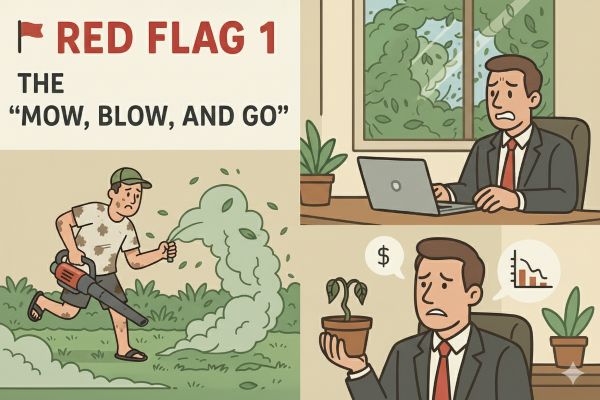
Red Flag 1: The “Mow, Blow, and Go”
This is the most common time-saver for a lazy crew. They show up, mow the lawns as fast as possible (scalping the edges), blast the leaves and clippings into the garden beds (where they smother the plants), and are gone in 45 minutes.
The site technically looks clean… for about 12 hours.
- The Real Cost: This isn’t “maintenance”; it’s a haircut. There’s no weeding, no soil improvement, no pest-spotting, no preventative pruning. Your property’s #1 asset—its curb appeal—is being slowly starved. This “surface-level” service is what leads to massive, costly clean-ups and garden overhauls down the track.
- How to Fix It: Check your contract. A professional agreement doesn’t just say “gardening.” It includes a Horticultural Schedule that specifies when they will fertilise, when they will prune (by plant type), and when they will audit the mulch. If your contract is a one-pager, it’s a red flag.
Red Flag 2: The “Compliance Ghost”
Ask your current gardener for their “Compliance Pack.”
Go on, I’ll wait.
If they can’t immediately send you a single PDF with their $20M Public Liability Insurance, Workers’ Compensation certificate, and WHS/OH&S Safety Plan, you have a massive problem. If they show up in thongs and a singlet, you’re looking at a lawsuit.
- The Real Cost: You’re exposed. If they injure themselves, a resident, or a visitor’s child (e.g., leaving a tool out), the Body Corporate is directly in the legal and financial firing line. This is a multi-million dollar risk just to save a few bucks.
- How to Fix It: This is non-negotiable. Make a “Compliance Pack” a mandatory part of their contract. No pack, no pay, no entry. A professional company will have this ready to go and will display safety signage while on-site.

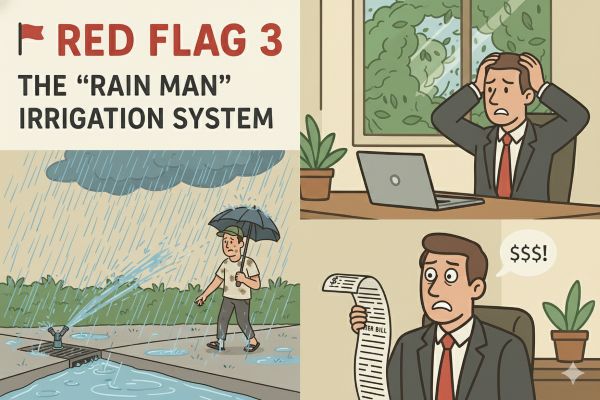
Red Flag 3: The “Rain Man” Irrigation System
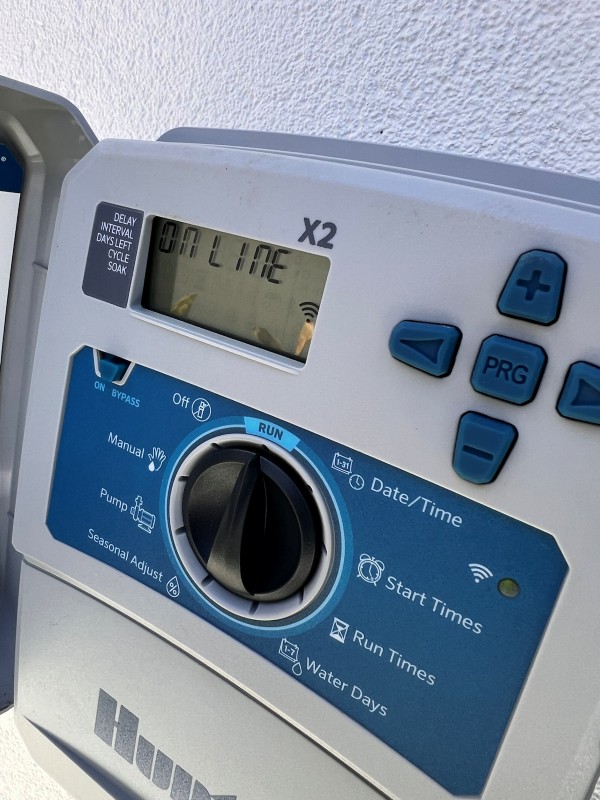
You walk the site, and it’s pouring rain… and the sprinklers are on. Or worse, the sprinklers are on a 7 AM timer, watering the concrete path and the side of the building, while the garden beds 10 feet away are bone dry.
- The Real Cost: This is costing you thousands in wasted water. It’s also killing your plants with root rot and creating dangerously slippery paths. It shows your gardener either doesn’t know, doesn’t look, or doesn’t care.
- How to Fix It: Your garden maintenance partner must be an irrigation expert. Ask them two questions:
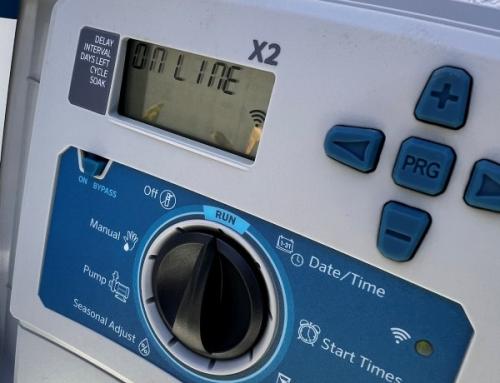
- “How often do you check and adjust the smart controller to match the season?”
- “What’s your process for auditing the system for leaks or broken heads?” If they just stare at you blankly, you have your answer.
Red Flag 4: The “Surprise!” Invoice
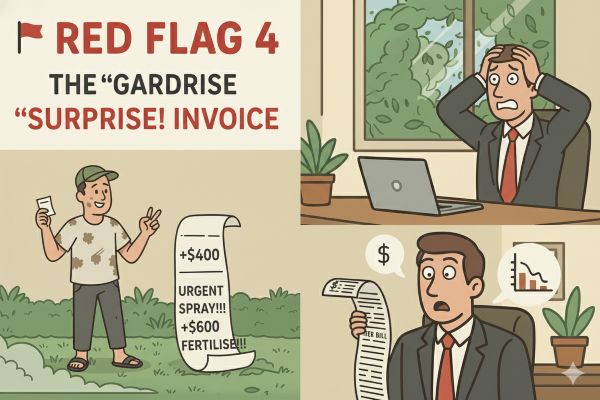
The monthly contract fee is suspiciously low, but every other month you’re hit with “extras.”
- $400 for “urgent pest-spraying”
- $600 for “seasonal fertilising”
- $350 for “weeding” (which you assumed was in the contract)
This isn’t a budget; it’s a guessing game.
- The Real Cost: You can’t forecast your budget, and the committee thinks you can’t control costs. A cheap base rate is the #1 “bait-and-switch” tactic used by low-quality providers.
- How to Fix It: A professional, all-inclusive quote will factor in the correct number of fertiliser applications, pest treatments, and mulching required for the year. It will be a single, predictable number. Real “extras” (like storm damage) should always be “quote and approval” first.
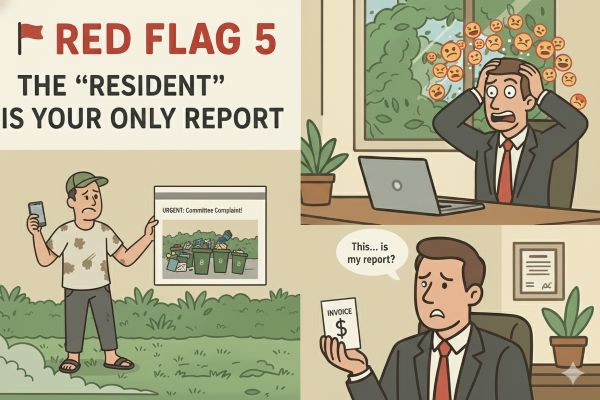
Red Flag 5: The “Resident Complaint” Is Your Only Report
You only hear from your gardener when they send an invoice. The only way you know there’s a problem—a dead tree, a broken fence, a messy BBQ area—is when a furious resident emails you and the entire committee.
You’ve become the customer service rep for a company you’re paying.
- The Real Cost: Your time, your reputation, and your sanity. You’re stuck in “reactive” mode, putting out fires instead of managing the property.
- How to Fix It: A proactive partner is your “eyes and ears.” They should provide a Monthly Service Report after their main visit. It’s simple:
- What we did today (with photos).
- What we’re watching (e.g., “Pest activity on the roses in Block B, treating it now”).
- What you need to know (e.g., “Leaking tap at the pool BBQ, we’ve notified the building manager”). This one document prevents 90% of resident complaints.
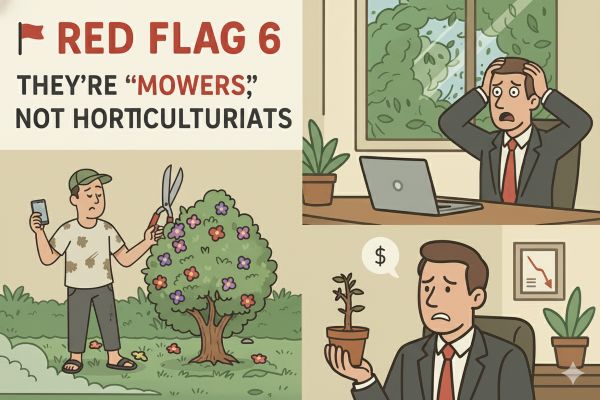
Red Flag 6: They’re “Mowers,” Not Horticulturists
Your gardener “prunes” the beautiful Jasminum polyanthum… in August, chopping off all the buds just before its spectacular spring flower show. They’ve killed a $200 plant because they didn’t know the difference between a weed and a perennial.
- The Real Cost: Plant replacement costs, year after year. The property never looks its best because the plants are stressed, hacked, and flowering at the wrong times (if at all).
- How to Fix It: Ask the company director: “Are the staff on my site qualified horticulturists?” A real maintenance company invests in trained staff who know what a plant is and when to care for it.
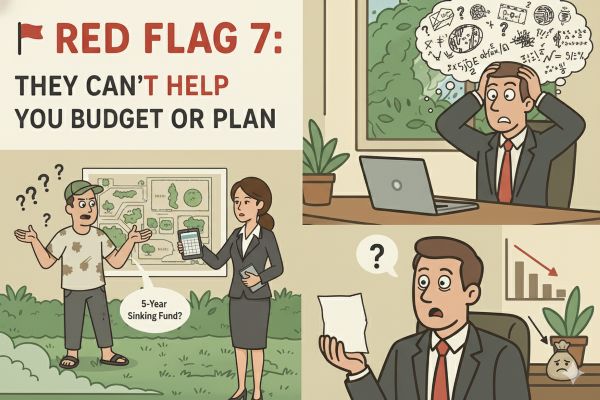
Red Flag 7: They Can’t Help You Budget or Plan
You have your AGM coming up, and the committee asks, “What’s the 5-year plan for the gardens? How much should be in the Sinking Fund (Capital Works Fund) for landscaping?”
You ask your gardener, and they have no idea. They live week-to-week.
- The Real Cost: You have no long-term vision. You can’t provide expert advice to your committee, and the property’s “soft asset” (the garden) is stagnant. You’re missing opportunities to add real value.
- How to Fix It: A true partner can walk the site with you and the committee and say: “These three trees will need to be removed in the next 5 years (approx. $X).” Or, “This high-water-use garden at the entrance is costing you $Y. We can do a one-off project to replace it with a stunning native garden that will save you money and look incredible.”
How to Fix It: From “Expense” to “Asset”
Stop hiring “gardeners.” You need to hire a Proactive Garden Maintenance Partner.
A great partner doesn’t cost you money; they manage your asset. They protect you from liability, forecast your budgets, and (most importantly) give you back your time by stopping resident complaints before they happen.
Your job is hard enough. Don’t let a bad gardener make it harder.
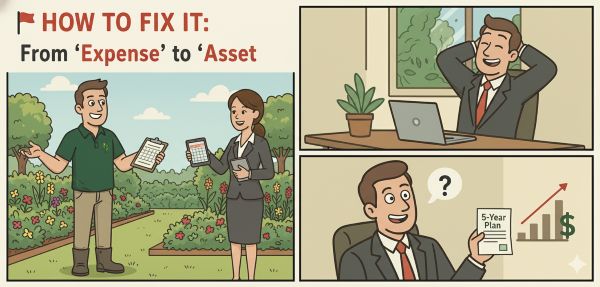
How to Fix It: From “Expense” to “Asset”
Stop hiring “gardeners.” You need to hire a Proactive Maintenance Partner – Expert Strata Gardener.
A great partner doesn’t cost you money; they manage your asset. They protect you from liability, forecast your budgets, and (most importantly) give you back your time by stopping resident complaints before they happen.
Your job is hard enough. Don’t let a bad gardener make it harder.
Is your current provider showing any of these red flags?
Tired of being the complaint manager? We offer a free, no-obligation 15-Minute Strata Site Audit. We’ll walk your property with you and give you a simple, actionable “Priority Report” on the 3 biggest wins you could make—whether you use us or not.
Useful researches:
NSW Government – Strata & Property Services Commissioner
Strata Community Association (SCA) – What is Strata?
Bannermans Lawyers – Work Health and Safety Codes of Practice
FAQ
- What are the biggest red flags of a bad strata gardener?
The main warning signs include surface-level “mow, blow and go” work, poor compliance, irrigation issues, surprise invoices, no reporting, unqualified staff and no long-term planning for the gardens.
2. How does a bad gardener cost a strata plan money?
Cheap operators increase long-term costs through plant damage, wasted water, reactive call-outs, avoidable clean-ups, safety risks and unpredictable invoices. The short-term saving becomes a long-term liability.
3. What should be included in a proper strata garden maintenance contract?
A professional contract includes a horticultural maintenance schedule, fertilising plan, pruning cycles, irrigation inspection program, compliance pack and a monthly service report with photos.
4. Why is irrigation management important for strata?
Incorrect irrigation settings lead to wasted water, higher bills, plant loss and safety hazards. A competent provider audits seasonal settings, checks controllers, inspects spray patterns and repairs leaks.
5. How do proactive gardeners help strata managers?
They reduce complaints, provide detailed reports, forecast budgets, identify risks early, and help plan capital works. They save the strata manager significant time by acting as a maintenance partner, not a contractor.
6. When should a strata plan replace their gardener?
If the provider cannot supply compliance documents, does not report issues, lacks horticultural knowledge, regularly submits “extras”, or creates complaints, it’s time to upgrade to a proactive partner.
7. What is a strata site audit?
A strata site audit is a walkthrough of your property where an expert identifies risks, inefficiencies and improvement opportunities across the gardens and irrigation, then provides a short action-ready priority report.