The 10-Year Capital Works Plan: Landscaping & Irrigation Budget Template for NSW Strata 2026
Landscaping and irrigation infrastructure are among the most consistently underfunded items in NSW strata capital works plans — and from April 2026, the new standard form makes that underfunding visible in a way it wasn’t before. This is the complete template, with real Sydney pricing, covering every garden and irrigation asset your plan should include.
✓ 2026 Sydney Pricing
✓ April 2026 Standard Form
✓ Admin vs Capital Fund Guide
This guide provides practical information about landscaping and irrigation items in NSW strata capital works fund plans. It is not financial or legal advice. For scheme-specific planning, consult a qualified strata manager or quantity surveyor. Pricing figures are indicative for Greater Sydney in 2026 and will vary by property size, access and condition.
Every NSW strata scheme must maintain a 10-year capital works fund plan under Section 80 of the Strata Schemes Management Act 2015. From 1 April 2026, new and reviewed plans must use the NSW Government standard form — tracking costs by specific asset, not broad categories. For landscaping and irrigation, the capital works fund covers: irrigation system replacement (every 15–20 years), major replanting programs, hard landscaping renewal (paths, retaining walls, steps), lawn renovation, and significant tree management. Routine maintenance — regular gardening visits, minor repairs, seasonal adjustments — remains an administrative fund expense. The most common mistake: committees include a single “garden maintenance” line in the admin fund and nothing in the capital works fund. That gap almost always results in an unplanned special levy when the irrigation system fails or a retaining wall needs replacement.
There is a specific moment in many strata AGMs that is entirely predictable and entirely avoidable. A committee presents its 10-year capital works fund plan. The plan has line items for roof replacement, lift servicing, painting and waterproofing. Under “landscaping” there is a single figure — sometimes nothing at all. The plan is adopted, levies are set, and the fund accumulates against the building’s structural and mechanical assets.
Then, seven years in, the irrigation system that has been running since the building was completed in 2008 begins to fail systematically. Controllers, solenoids, pipe runs — all ageing simultaneously. A full replacement quote comes in at $14,000. The capital works fund has $0 allocated for it. A special levy notice goes out.
This situation is common. It happens because landscaping and irrigation are treated as operational costs rather than capital assets — even though the irrigation infrastructure on a medium strata complex represents a genuine capital investment with a defined lifespan that can be estimated, planned for and funded over time.
The April 2026 changes to NSW strata law have made this gap more visible and more consequential. The new standard form requires plans to be prepared by specific asset — a line for “General Maintenance” no longer passes as adequate planning. Every asset that will require major expenditure over the next decade needs to be identified, estimated and included. For many strata committees, completing the new standard form for the first time will reveal that their landscaping and irrigation infrastructure has never been properly planned for.
This guide gives you the complete template.
The April 2026 Standard Form — What Changed and What It Means for Gardens
Under Section 80 of the Strata Schemes Management Act 2015 (NSW), every Owners Corporation must maintain a 10-year capital works fund plan that identifies anticipated major maintenance and replacement costs on common property over the coming decade. The plan must be reviewed at least every five years and approved at an Annual General Meeting.
From 1 April 2026, the Strata Schemes Legislation Amendment Act 2025 (NSW) introduced a mandatory standard form for 10-year capital works fund plans. The key change is how assets must be recorded:
- Before April 2026: Broad categories were acceptable — a single line item called “General Repairs and Maintenance” could cover dozens of different assets across the entire building
- From April 2026: Plans must track costs by specific asset — each piece of infrastructure with a defined lifespan and replacement cost must be listed individually
For landscaping and irrigation, this means a compliant plan can no longer include a single “Garden Maintenance” line. Each major garden asset — irrigation system, retaining walls, paths, significant plantings — needs its own entry with a condition assessment, estimated replacement year and estimated replacement cost.
Under the April 2026 reforms, the standard form applies when your scheme is: (1) preparing a brand new 10-year plan for the first time, or (2) revising or replacing an existing plan. Schemes with a current plan already in place do not need to immediately convert to the standard form — but must use it at the next review. The NSW Strata Hub Capital Works Fund Planner is the government’s free digital tool for preparing compliant plans. A downloadable Word version is also available from the NSW Government website. Given that the extended six-year limitation period for Section 106 maintenance claims now applies, committees that use the new standard form process to identify and fund known landscaping and irrigation deficits are in a materially stronger position than those that don’t.
Admin Fund vs Capital Works Fund — The Critical Distinction for Garden Expenses
Before building the template, the most important conceptual step is understanding which garden expenses belong in which fund. Getting this wrong — putting capital items in the admin fund or treating capital works as operational costs — creates both financial planning problems and governance exposure under the due care and diligence standard now codified in Section 37 of the SSMA.
| Garden Expense | Fund Type | Reasoning |
|---|---|---|
| Regular maintenance visits — mowing, weeding, edging, pruning | Admin Fund | Recurring operational cost, not an asset renewal |
| Minor irrigation repairs — solenoid replacement, head adjustment | Admin Fund | Routine maintenance, not system replacement |
| Annual irrigation service and compliance check | Admin Fund | Recurring operational service |
| Seasonal fertilising, mulching, weed treatment | Admin Fund | Recurring operational cost |
| Minor plant replacements — individual plant failures | Admin Fund | Routine maintenance replacement |
| Full irrigation system replacement | Capital Works Fund | Major asset renewal with 15–20 year lifespan |
| Smart controller upgrade — system-wide | Capital Works Fund | Capital upgrade extending asset lifespan |
| Major replanting program — entire garden beds or zones | Capital Works Fund | Capital renewal, not routine maintenance |
| Retaining wall replacement or major repair | Capital Works Fund | Structural common property, defined lifespan |
| Common area path resurfacing or replacement | Capital Works Fund | Hard landscaping renewal, defined lifespan |
| Garden steps replacement | Capital Works Fund | Structural common property asset |
| Significant tree management — removal, major surgery | Capital Works Fund | Major works, not routine maintenance |
| Lawn renovation — full re-turfing of common areas | Capital Works Fund | Capital renewal every 10–15 years |
| Garden lighting system replacement | Capital Works Fund | Electrical infrastructure with defined lifespan |
| Raised garden bed construction or replacement | Capital Works Fund | Capital structure, not operational maintenance |
“Committees almost universally put ‘garden maintenance’ as a single admin fund line item and leave the capital works fund blank for landscaping. This works fine until something big happens — the irrigation system needs full replacement, the retaining wall fails, the entire pool surrounds need resurfacing. Suddenly there is a $15,000–$30,000 expense with $0 in the capital works fund to cover it. The correct approach is: routine care in the admin fund, infrastructure renewal in the capital works fund. The irrigation system is an asset with a lifespan. A retaining wall is an asset with a lifespan. Both should appear in the capital works plan with a replacement year and a replacement cost.”
The Complete Landscaping & Irrigation Capital Works Template — All Assets
The following template covers every landscaping and irrigation asset that should appear in a NSW strata 10-year capital works fund plan. Use this as the starting point for your scheme’s asset register — adjust the replacement years and costs to reflect your specific property’s condition and age.
Asset 1 — Irrigation System (Full Replacement)
| Detail | Information |
|---|---|
| Asset description | In-ground automatic irrigation system — controller, solenoid valves, pipe network, sprinkler heads and drip emitters serving all common area garden beds and lawns |
| Expected lifespan | 15–20 years (pipes), 10–12 years (valves and controller) |
| Condition assessment required | Annual irrigation audit — zone testing, solenoid check, pipe pressure test, controller review |
| Indicative replacement cost — Small (2–3 zones) | $1,800–$3,500 |
| Indicative replacement cost — Medium (4–6 zones) | $3,500–$8,000 |
| Indicative replacement cost — Large (8+ zones) | $8,000–$20,000+ |
| Note for plan | Controller replacement only (when pipes and valves sound): $420–$1,100. Budget separately for partial replacements in years 10–12 when controller reaches end of life ahead of pipe infrastructure. |
Asset 2 — Irrigation Controller Upgrade (Smart System)
| Detail | Information |
|---|---|
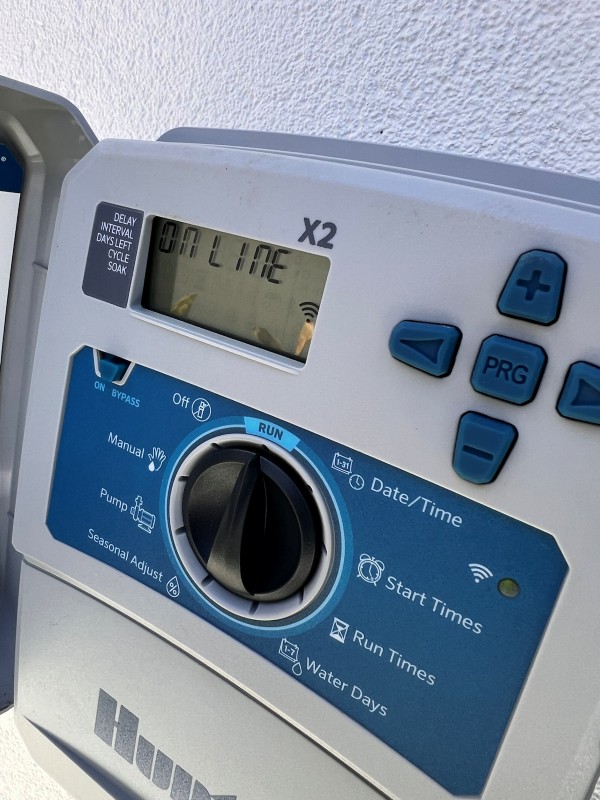
| Asset description | Irrigation controller — upgrade from basic timer to WiFi smart controller (Hunter Hydrawise Pro-HC or equivalent) or Bluetooth controller for underground valve box installations |
| Expected lifespan | 10–15 years for smart controller hardware |
| Indicative cost | $420–$1,100 supply and install |
| Compliance note | Sydney Water requires automated systems to run before 10am or after 4pm year-round. Smart controllers with weather integration reduce non-compliance risk and generate the schedule documentation committees need for Section 37 due diligence records. |
Asset 3 — Common Area Paths and Paving
| Detail | Information |
|---|---|
| Asset description | Garden paths, courtyard paving and pedestrian surfaces within common garden areas — concrete, pavers, sandstone, aggregate or similar |
| Expected lifespan | 20–30 years (concrete), 15–25 years (pavers), 10–20 years (timber deck/hardwood) depending on drainage and root exposure |
| Key failure modes | Tree root heave, subsidence, drainage-related cracking, surface wear in high-traffic areas |
| Indicative replacement cost | $150–$280 per square metre (paving), $200–$380 per square metre (sandstone or premium finish) |
| WHS note | Under Section 106 SSMA 2015, the OC has a strict duty to maintain common pathways in safe condition. Trip hazards from path deterioration are the most common source of garden-related strata liability claims. Include path condition in annual maintenance inspection and document findings. |
Asset 4 — Retaining Walls
| Detail | Information |
|---|---|
| Asset description | Common property retaining walls — sleeper, concrete block, sandstone, brick or similar — retaining garden beds against slopes or level changes |
| Expected lifespan | 15–25 years (treated pine sleeper), 25–40 years (concrete block or sandstone) |
| Key failure modes | Moisture and rot in timber walls, drainage failure causing hydrostatic pressure, root intrusion, soil movement on slopes |
| Indicative replacement cost | $200–$350 per square metre (treated pine or concrete sleeper), $350–$600 per square metre (sandstone or masonry) |
| Note for plan | Retaining wall failure is one of the most costly unplanned strata expenses — the replacement quote for a 15-metre wall at $300/sqm is $18,000+, which almost never appears in capital works plans prepared before the failure becomes visible. |
Asset 5 — Lawn Areas (Common Property)
| Detail | Information |
|---|---|
| Asset description | Common area lawns — all warm-season turf areas (buffalo, couch, kikuyu) in common gardens, entry areas and shared recreational spaces |
| Expected renovation cycle | Full turf renovation every 10–15 years in high-traffic areas, 15–20 years in low-traffic areas |
| Key failure modes | Wear in pet exercise areas and children’s play areas, shading from mature tree growth, compaction, drought damage, irrigation failure over extended period |
| Indicative renovation cost | $25–$45 per square metre (turf supply and lay), $35–$65 per square metre (including soil preparation and irrigation adjustment) |
| Note for plan | Distinguish between routine lawn maintenance (admin fund) and full turf renovation (capital works fund). Aeration, fertilising and weed treatment are operational. Full re-turfing is capital. |
Asset 6 — Major Planting Programs (Garden Bed Renewal)
| Detail | Information |
|---|---|
| Asset description | Significant replanting of common property garden beds — hedge replacement, screening planting, entry garden renewal, courtyard planting programs |
| Expected renewal cycle | Major planting renewal every 15–25 years for most species. Shorter cycles for fast-growing screening species, longer for established ornamental gardens |
| Indicative costs | $30–$120 per plant (supply and install, species-dependent), $3,000–$15,000 for a complete garden bed renewal program on a medium strata complex |
| Note for plan | Include a condition note for major screening hedges and feature plantings. Lilly Pilly and Murraya screens planted at construction are typically 15–20 years old on buildings completed in the 2005–2010 period — potential replacement or major renovation now approaching. |
Asset 7 — Significant Trees (Management and Removal)
| Detail | Information |
|---|---|
| Asset description | Common property trees requiring professional arborist management — species with proximity to structures, powerlines or high-traffic areas |
| Assessment requirement | Arborist inspection every 3–5 years for any tree within falling distance of a structure, pathway or boundary |
| Indicative costs | Arborist inspection report: $350–$600. Crown reduction: $800–$2,500 per tree. Complete removal and stump grinding: $1,500–$8,000+ depending on size and access. |
| Council permit note | Many significant trees on common property are regulated under council tree preservation orders. Woollahra, Waverley and Randwick councils all have specific permit requirements. Include a permit contingency in cost estimates for regulated species. |
Asset 8 — Garden Lighting (Common Areas)
| Detail | Information |
|---|---|
| Asset description | Common area garden and pathway lighting — in-ground uplights, bollard lights, pathway fixtures and feature lighting in garden areas |
| Expected lifespan | 10–15 years for fittings and wiring in garden installations (shorter in coastal conditions) |
| Indicative replacement cost | $180–$380 per fitting (supply and install), $3,000–$12,000 for a full common area lighting system replacement depending on the number of fixtures |
| WHS note | Non-functioning pathway and garden lighting is a documented common property safety hazard. Include garden lighting in annual common area safety inspection and document findings. |
Asset 9 — Garden Steps and Level Changes
| Detail | Information |
|---|---|
| Asset description | Common property steps connecting garden levels, entry steps from street, terrace steps between courtyards and common garden areas |
| Expected lifespan | 20–30 years (concrete or sandstone), 15–20 years (timber) |
| Key failure modes | Surface wear creating slip hazard, mortar failure in sandstone steps, subsidence causing uneven surfaces, handrail failure |
| Indicative replacement cost | $300–$600 per step (supply and install, material-dependent) |
The Year-by-Year Budget Template — How to Structure It
The April 2026 standard form requires year-by-year cost projections. Here is how a properly structured landscaping and irrigation section of a 10-year capital works fund plan looks for a typical medium strata complex (24–36 lots, established 2005–2010, Eastern Suburbs Sydney):
| Year | Asset | Work Required | Estimated Cost |
|---|---|---|---|
| Year 1 (2026) | Irrigation controller | Smart controller upgrade — Hunter Hydrawise, existing valves retained | $650–$950 |
| Year 1 (2026) | Garden paths | Condition assessment — identify any hazard areas for priority repair | $0 (annual maintenance inspection) |
| Year 2 (2027) | Garden lighting | Replace failing common area pathway fittings — 8 bollard lights estimated | $2,400–$3,200 |
| Year 2 (2027) | Significant trees | Arborist inspection — 3 large trees near boundary | $480–$650 |
| Year 3 (2028) | Garden bed renewal | Entry garden replanting — original screening shrubs reaching end of lifespan | $3,500–$6,000 |
| Year 4 (2029) | Common area paths | Eastern path section resurfacing — root heave remediation and reseal (est. 45sqm) | $7,000–$10,000 |
| Year 5 (2030) | Retaining wall | Northern retaining wall replacement — treated pine sleeper, 12m run est. | $6,000–$9,000 |
| Year 5 (2030) | Lawn renovation | Re-turfing rear common lawn area — pet exercise area, high wear (est. 180sqm) | $5,500–$8,000 |
| Year 7 (2032) | Irrigation system | Full irrigation system replacement — 4 zones, new smart controller and valve manifold | $5,500–$9,000 |
| Year 8 (2033) | Garden lighting | Full pathway and feature lighting replacement — LED upgrade, new wiring | $8,000–$14,000 |
| Year 9 (2034) | Garden steps | Entry steps refurbishment — 4 sandstone steps, new nosings and handrail | $3,500–$5,500 |
| Year 10 (2035) | Major replanting | Comprehensive garden renewal — screening hedge replacement program | $8,000–$15,000 |
| Total 10-year landscaping and irrigation capital works estimate | $50,530–$81,300 | ||
This is an illustrative template for a medium Eastern Suburbs strata complex. Your scheme’s figures will vary significantly based on current asset condition, specific material specifications and site access. The purpose of this template is to show the structure and order of magnitude — not to provide a substitute for a site-specific assessment.
To calculate the annual capital works levy contribution for landscaping and irrigation: divide the total 10-year estimate by 10, then divide by the number of lots, weighted by unit entitlement. For the template above — $65,000 total estimate ÷ 10 years = $6,500/year ÷ 28 lots (average unit entitlement weighting) = approximately $232 per lot per year in landscaping and irrigation capital works levy contribution. On top of the administrative fund levy for routine garden maintenance (typically $150–$400 per lot per year depending on complex size and visit frequency), the total garden-related levy contribution is typically $380–$650 per lot per year for a well-maintained medium Eastern Suburbs strata complex.
The Condition Assessment — What Goes Into Your Asset Register
The standard form requires not just costs and dates but a current condition assessment for each asset. For landscaping and irrigation, this means your plan should include:
- Irrigation system age and installation date — if unknown, a licensed irrigation technician can estimate from component specifications during an audit visit
- Last irrigation service date and service report — confirms current operating status and identifies any issues already known to the committee
- Path and paving condition notes — any cracking, heave, surface wear or drainage issues identified in the most recent maintenance inspection
- Retaining wall condition — any visible movement, cracking, moisture seepage or vegetation intrusion at the wall base
- Tree condition notes — ideally from a qualified arborist, particularly for trees near structures or pathways
- Garden bed age and species assessment — particularly for original screening plantings that may be reaching end of effective lifespan
- Lighting system condition — number of functioning fixtures, age of installation, any known wiring issues
If your committee does not have this documentation, a site assessment from your garden maintenance contractor — producing a written condition report against each asset category — is a practical and cost-effective way to populate the asset register before completing the standard form.
Need written quotes for your capital works plan?
Garden Managers provides written condition assessments and fixed-price quotes for strata landscaping and irrigation capital works — formatted for 10-year plan inclusion.
The Six Most Common Mistakes Committees Make With Garden Capital Works Planning
Mistake 1 — The Single “Garden Maintenance” Line
The most common error. A single admin fund line covering all garden expenses — routine maintenance, minor repairs and major capital works — in one number. When the irrigation system needs replacement, the capital works fund has nothing. The committee faces either a special levy or deferred maintenance, both of which create problems the April 2026 standard form was specifically designed to prevent.
Mistake 2 — Treating Irrigation as Routine Maintenance
Irrigation solenoid replacements and service calls are routine maintenance. Full system replacement — which will happen on every strata complex eventually — is a capital works item. The irrigation infrastructure on a 2008 building is now 18 years old and approaching the end of its pipe and valve lifespan. This is a foreseeable, plannable expense that has no business being a surprise.
Mistake 3 — Ignoring Retaining Walls Until They Move
Common property retaining walls are infrastructure with a defined lifespan that is reliably predictable. Treated pine sleeper walls installed in 2000–2010 are now 15–25 years old — at or past end of life in most Sydney conditions. Concrete block walls are more durable but still finite. Neither appears in most capital works plans until visible failure occurs. At that point, the quote is an emergency repair premium rather than a planned capital renewal.
Mistake 4 — No Arborist Assessment in the Plan
Significant trees on common property are an ongoing liability and a capital expense. The arborist inspection that identifies a structural problem with a 15-metre Eucalyptus near the boundary fence is a $500 investment. The removal without adequate planning is a $6,000–$12,000 emergency. The periodic arborist assessment should be a capital works line item, not an ad hoc expense when a branch falls.
Mistake 5 — Using Replacement Costs From the Original Installation Year
Many capital works plans that do include landscaping items use cost estimates from when the original work was done — sometimes 15 years ago. Construction costs, horticultural labour and material prices in Sydney have increased significantly since 2010. A capital works plan that budgets $1,800 for irrigation system replacement based on a 2009 quote is structurally underfunded from the day it is adopted. Use current market pricing when building or reviewing your plan.
Mistake 6 — No Connection Between the Capital Works Plan and the Maintenance Program
The capital works plan identifies that the irrigation system needs replacement in Year 7. But if the annual maintenance program doesn’t include an annual irrigation audit — documenting the system’s current condition and trajectory — the committee has no early warning when Year 7 needs to become Year 5 because the system is failing faster than expected. The capital works plan and the maintenance program should be connected documents, reviewed together annually.
Garden Managers — Capital Works Quotes and Condition Assessments for Strata Committees
Completing a compliant 10-year capital works fund plan requires current, site-specific cost estimates for your landscaping and irrigation assets. Generic pricing tables are a starting point — your specific property’s condition, size and access determine the actual figures.
As part of our strata garden maintenance programs, Garden Managers provides:
- Written condition assessments across all garden and irrigation assets — formatted for capital works fund plan inclusion
- Fixed-price written quotes for all capital works items — irrigation replacement, hard landscaping renewal, major replanting
- Annual maintenance inspection reports that track asset condition year-on-year — giving committees early warning when capital works timelines need to be brought forward
- Irrigation audit reports confirming system age, condition and estimated remaining lifespan — the specific documentation the standard form requires
- Photo documentation of all assets — timestamped records that support the standard form’s condition assessment requirements
- Irrigation service and replacement — the most common and most underfunded capital works item in Eastern Suburbs strata
Frequently Asked Questions
Does the NSW strata 10-year capital works plan need to include landscaping and irrigation?
Yes. Under Section 80 of the Strata Schemes Management Act 2015 (NSW), the 10-year capital works fund plan must cover all anticipated major maintenance and replacement costs on common property. Landscaping and irrigation infrastructure are common property assets with defined lifespans — the irrigation system, hard landscaping, retaining walls, common area paths and significant trees all qualify as capital works items and should appear in the plan. From 1 April 2026, the new standard form requires plans to track by specific asset, meaning a generic “garden maintenance” line is no longer compliant when the committee knows major landscaping or irrigation works will be required over the next decade.
What is the difference between the admin fund and capital works fund for garden expenses?
The administrative fund covers recurring operational costs — regular garden maintenance visits, minor irrigation repairs, seasonal fertilising, mulching and individual plant replacements. The capital works fund covers asset renewals with a defined lifespan — full irrigation system replacement, hard landscaping renewal (paths, retaining walls, steps), major replanting programs, lawn renovation and significant tree management. The practical test: if the expense is replacing or substantially renewing a piece of infrastructure rather than maintaining it, it belongs in the capital works fund and should appear in the 10-year plan.
How much should a strata scheme budget for landscaping and irrigation in its 10-year capital works plan?
For a medium Sydney strata complex (24–36 lots, building age 15–20 years, established Eastern Suburbs gardens), a realistic 10-year landscaping and irrigation capital works budget is $50,000–$80,000 over the decade, or approximately $5,000–$8,000 per year. This typically includes: full irrigation system replacement ($5,500–$9,000), path and paving works ($7,000–$15,000), retaining wall replacement ($6,000–$12,000), garden lighting renewal ($8,000–$14,000), major replanting ($8,000–$15,000) and significant tree management ($2,000–$6,000). Smaller boutique blocks budget $20,000–$40,000. Larger estates with extensive gardens budget $80,000–$200,000+. These are planning estimates — site-specific quotes from your maintenance contractor are required for compliant plan preparation.
When does my strata scheme need to use the new April 2026 standard form for the capital works plan?
From 1 April 2026, the new NSW Government standard form must be used when your scheme is: (1) preparing a brand new 10-year capital works fund plan for the first time, or (2) revising or replacing an existing plan. Schemes that have a current plan in place and are not yet due for review do not need to immediately convert to the new format. However, the standard form must be used at the next review. The NSW Government’s Strata Hub provides a free digital Capital Works Fund Planner that guides committees through the standard form requirements. A downloadable Word version is available from the NSW Government website. Given the extended six-year limitation period for Section 106 claims, using the standard form to comprehensively document landscaping and irrigation capital works planning is now an important part of the committee’s due care and diligence record.
How does irrigation replacement get approved and funded in a strata scheme?
Irrigation system replacement is a capital works expenditure — it requires a committee resolution and should be funded from the capital works (sinking) fund. For it to proceed without a special levy, the replacement cost needs to have been included in the 10-year capital works fund plan and the fund needs to have been accumulating the relevant levies. In practice, committees should: obtain a written quote from a licensed irrigation specialist, confirm the capital works fund has sufficient balance (check with your strata manager), pass a formal committee resolution approving the expenditure, and retain all documentation — quote, resolution, completion report and system documentation — for the strata records. Garden Managers provides capital works quotes formatted for committee resolution purposes and can assist with the documentation your strata manager needs.
References
- Strata Schemes Management Act 2015 (NSW) — Section 80 (Capital works fund) and Section 106 (Duty to maintain common property)
- Strata Schemes Legislation Amendment Act 2025 (NSW) — Standard form requirements commencing 1 April 2026
- NSW Government — Guide to Strata Law Changes for Committees and Owners
- NSW Strata Hub — Capital Works Fund Planner (free digital tool)
- NSW Government — 10-Year Capital Works Fund Plan Standard Form (downloadable)
- Sydney Water — Water Wise Rules
Get a Capital Works Assessment for Your Strata Property
Garden Managers provides written condition assessments and fixed-price quotes for all landscaping and irrigation capital works items — formatted for inclusion in your 10-year capital works fund plan. Free site assessment, Greater Sydney.