Why Winter Is the Best Time to Upgrade Your Strata Irrigation System in Sydney — And What Happens When You Wait
Every year we say it. Every year a portion of committees wait until October anyway. Then October arrives, every irrigation technician in Sydney is booked three weeks out, and the committee is planning an AGM with a system that hasn’t been looked at since before the last summer. Here is why winter is not just convenient — it is the only sensible time to do this work.
✓ Ants, Blocked Diaphragm, Broken Wires
✓ Winter vs Spring Timing
✓ 2026 Sydney Pricing
Winter — specifically June, July and August — is the best time to upgrade or service your strata irrigation system in Sydney for four practical reasons: demand on the system is lowest so repairs can be completed without plant stress; irrigation technicians have genuine availability before the spring rush fills every diary; any issues found are fixed before they matter, not during peak summer demand; and smart controller upgrades commissioned in winter are fully settled and tested before September heat. The cost of waiting until spring is not just financial — it is the risk of a system failing during the period when irrigation matters most.
There is a specific type of irrigation callout that happens every October in Sydney. The weather has warmed up, the gardens are surging into growth, and the irrigation system that nobody has looked at since March is suddenly needed every day. And that is when it fails.
Not spectacularly. Not in one dramatic event. It fails in the slow way that neglected systems fail — a zone that runs but isn’t delivering the right coverage, a solenoid that hesitates on activation, a controller running on the wrong schedule since a power interruption nobody noticed. The plants start showing stress. The lawn develops dry patches. The committee calls us, and we discover that what needed a $280 service in July now needs a $850 emergency repair in October, with a three-week booking delay on top of it.
This guide explains why winter is the right time — the specific reasons, not just the general advice — and uses a recent real strata job to illustrate exactly what a winter service finds and why finding it now is dramatically better than finding it in spring.
What We Found in a Single Winter Service Visit — Three Faults, One Visit, Zero Spring Emergencies
We carried out a scheduled winter irrigation service at a strata property in Sydney’s Eastern Suburbs last month. The system had been running without a formal service for approximately 18 months — it appeared to be functioning normally. No obvious problems, no resident complaints, no unusual water bills that anyone had flagged. From the outside, everything looked fine.
Here is what we found when we properly assessed it:
- Ants nesting in the irrigation controller. The controller housing had been colonised by ants over the previous summer — a very common problem in Sydney strata properties where the controller is mounted outdoors. The ant colony had established themselves inside the casing and were damaging the internal wiring connections. The controller was technically still operating, but the ant damage had begun to affect the reliability of zone activation. Left through another summer, this controller was heading toward intermittent failure — the kind that manifests as zones that sometimes activate and sometimes don’t, with no obvious external cause.
- Blocked solenoid diaphragm on Zone 2. The solenoid valve serving the rear garden bed had a diaphragm blocked with mineral deposits and sediment — a gradual accumulation typical of Sydney’s harder water supply areas. The valve was technically opening and closing, but not delivering the designed flow rate. Zone 2 had been running its scheduled time but delivering approximately 60% of its intended water volume. The garden bed it served had been showing mild stress that had been attributed to winter conditions — it was actually running dry on each cycle despite the irrigation schedule appearing normal.
- Broken wiring on Zone 3. The wiring connecting the controller to the Zone 3 solenoid had a break — a hairline fracture in the cable insulation that had likely been caused by ground movement or a minor dig near the cable run over the previous season. Zone 3 was not activating reliably. The committee had not noticed because Zone 3 covered a section of lawn that appeared adequately watered from overflow from adjacent zones — until the weather warmed up and the irrigation deficiency became apparent.
All three faults were repaired in the same visit: the controller was cleaned and ant-proofed with appropriate sealant at the cable entries, the solenoid diaphragm was replaced, and the broken wiring was traced, isolated and repaired. Controller programming was reviewed and updated for the winter schedule with Sydney Water-compliant start times documented.
Two-week follow-up visit. We returned two weeks after the repair to run every zone, walk the coverage areas and confirm all three remediated faults were fully resolved before closing the job. Zone 2 flow was confirmed at the designed rate, Zone 3 was activating consistently, and the controller was operating cleanly with no ant re-entry. A written report with photos of each zone operating was provided to the strata manager for their records.
Total cost: $520 for the service, fault identification, all three repairs and the follow-up confirmation visit.
The counterfactual: if these faults had been discovered in October when the system was first properly needed in the heat, the same repairs would have cost more — emergency availability premium — and the garden bed served by Zone 2 would have gone through six to eight weeks of water deficit during the critical spring establishment period. The Zone 3 lawn section would have shown visible stress requiring remediation work on top of the irrigation repair.
“Ants in irrigation controllers is one of the most frequently encountered faults we find in Sydney strata properties and it almost never gets picked up between formal services. The colony establishes over summer when the warm controller housing is attractive, does its damage slowly through autumn, and by the time we’re looking at it in winter there’s a fully established nest in the housing. We seal cable entry points with expanding foam or silicone as part of every service — it takes ten minutes and prevents months of damage. Without that step, the colony re-establishes within one summer.”
The Four Reasons Winter Is the Right Time — Not Just Convenient
Reason 1 — Low Demand Means Zero Urgency
In June and July, Sydney’s warm-season grasses and most garden plants are operating at their lowest water requirement for the year. A system that is taken offline for a repair, an upgrade or a controller replacement creates minimal disruption to plants that need very little water anyway. A zone that is out of service for a week in July is a manageable situation. The same zone out of service in November, when the garden is in full growth surge and summer heat events are beginning, is a problem that compounds daily.
This is why every contractor will tell you to service in winter — not because it’s more convenient for them, but because the physical consequences of disruption are lowest at this time of year. It is the most forgiving window for the work that needs to be done.
Reason 2 — Genuine Availability, Not Squeezed-In Bookings
The irrigation industry in Sydney follows a clear seasonal pattern. Summer and spring are peak demand — systems failing, new installations being commissioned, emergency callouts. Winter is quiet. The practical consequence for strata committees is that a winter irrigation booking gets a technician who is focused on your system, with time to assess thoroughly, repair properly and follow up. The same booking in October gets a technician who is managing six emergency callouts alongside your scheduled service.
The follow-up visit in the case study above — returning two weeks after the initial repair to confirm everything was running correctly — is the type of quality step that is possible in June and difficult in October. In October, the diary does not have room for a follow-up confirmation visit on a job that was technically completed. In June, it does.
Reason 3 — Faults Found Now Are Fixed Before They Matter
The three faults found in the case study above — ant damage to a controller, a blocked solenoid diaphragm, broken zone wiring — were all present and developing before winter. They were invisible from the outside. The system appeared to be running normally. Without the winter service, all three faults would have persisted into spring and become apparent under summer demand.
An ant-damaged controller that fails intermittently in October is an emergency. The same controller found and ant-proofed in June is a routine service item. The blocked solenoid that has been running Zone 2 at 60% capacity since last summer would have shown serious plant stress in November. Found in May, it is a $120 diaphragm replacement and twenty minutes of work.
Winter service does not just fix what has already failed. It finds what is failing slowly and addresses it before the consequences become significant.
Reason 4 — Smart Controller Upgrades Need Settling Time
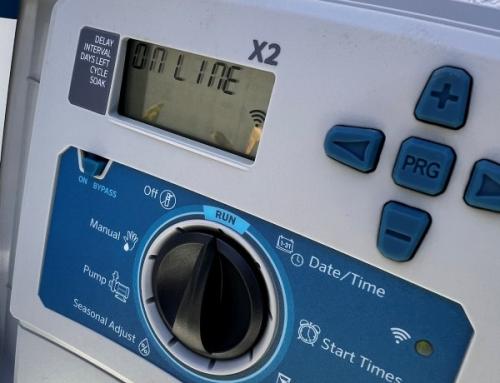
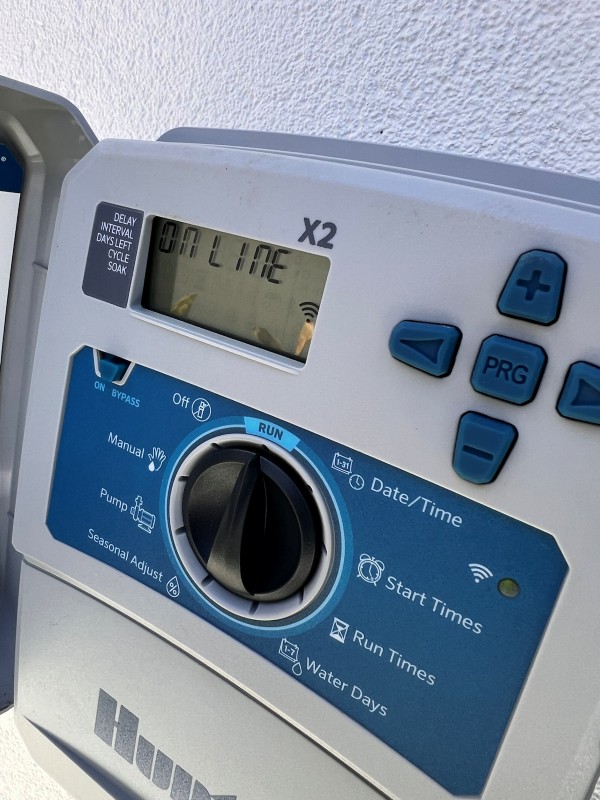
If your winter assessment concludes that your controller needs upgrading — to a Hunter Hydrawise smart system, a Hunter Node BT Bluetooth controller, or any similar upgrade — the commissioning and settling period matters. A new controller installed in July has two full months to be tested, adjusted, optimised and confirmed before September demand begins. The initial setup always involves some adjustment — the predicted run times, the weather station calibration, the zone-by-zone coverage confirmation. That adjustment process is best done under winter conditions when there is time and low stakes.
A controller installed in late September for the first time in October heat is being relied upon immediately with no settling period and no margin for adjustment. The stakes for every setting are immediate and high.
The Legal Connection — Why Winter Irrigation Is Now a Governance Decision
If you have read our recent guide on NSW strata garden maintenance legal exposure, the compliance dimension of this decision will already be clear. Under the July 2025 amendments to Section 37 of the Strata Schemes Management Act 2015 (NSW), strata committee members are now required to act with due care and diligence in managing common property — including irrigation infrastructure.
An irrigation system that has not been formally serviced for 18 months, that is running on an unreviewed schedule and that has undocumented faults developing — is a documented gap in the committee’s due diligence record. Particularly given the extension of the Section 106 limitation period to 6 years, a committee that cannot demonstrate active, proactive management of its irrigation system is more exposed than it was before 2025.
A winter irrigation service — with a written report, documented fault identification, completed repairs and follow-up confirmation — is not just operational maintenance. It is documented evidence of the due care and diligence the law now requires. The report from the case study above — timestamped photos, fault descriptions, repair confirmation, follow-up visit — is exactly what a committee needs in its strata records to demonstrate proactive management.
Sydney Water’s permanent Water Wise Guidelines require automated irrigation to run only before 10am or after 4pm, year-round. Fines for non-compliant watering start at $550 for strata bodies corporate. A controller schedule reset by a power interruption — which is exactly the type of issue the ant-damaged controller in the case study was heading toward — is a compliance breach that the OC is responsible for whether or not the committee was aware of it. A winter service that reviews and documents the controller schedule provides the compliance confirmation your strata records need and closes the loop between the maintenance obligation and the compliance obligation.
What a Proper Winter Irrigation Service Includes
A winter irrigation service is not the same as an emergency repair. It is a systematic assessment of every component of the system followed by remediation of everything found — while there is time and availability to do it properly.
-
1
Full Zone Walk — Every Zone Activated and Inspected
Every zone is activated in turn and walked while running. We are checking coverage pattern, head performance, visible leaks and any signs of pressure problems. This step identified the broken Zone 3 wiring in the case study — the zone activated but the coverage walk confirmed it was not irrigating consistently. Without the walk, the intermittent wiring fault would have passed undetected on a simple controller activation test.
-
2
Controller Assessment — Inside and Out
The controller housing is opened and inspected — wiring connections, battery backup status, display function, and critically, any signs of pest intrusion. Ants, silverfish and other insects are drawn to the warmth and shelter of outdoor controller housings in Sydney summers. Finding and addressing a colony in June prevents the controller damage that accumulates invisibly over the following 12 months. Entry points are sealed as a standard part of every service.
-
3
Solenoid Valve Testing and Diaphragm Assessment
Each solenoid is tested for clean activation and complete closure. Where valves show slow activation, incomplete closure or reduced flow, the diaphragm assembly is inspected and replaced if blocked or worn. Sydney water quality makes mineral deposit accumulation in solenoid diaphragms a predictable maintenance item — most solenoids in systems over 5 years old will benefit from diaphragm inspection at each service interval.
-
4
Wiring Integrity Check
Common property irrigation wiring runs through gardens, under pathways and along boundary structures — all environments where cable damage accumulates from ground movement, digging, root intrusion and UV degradation at exposed joins. A systematic wiring check using resistance testing identifies breaks and degraded connections before they become intermittent faults that are significantly harder to diagnose under operational conditions.
-
5
Seasonal Schedule Review and Compliance Confirmation
The controller schedule is reviewed and updated for winter — reducing run times and frequency from summer settings to match actual winter evapotranspiration rates. All start times are confirmed within Sydney Water’s permitted window. The final schedule is documented and provided to the strata manager as a compliance record.
-
6
Written Report With Photos — Committee Ready
Every service produces a written report documenting: each zone’s operational status, any faults found and repairs completed, the current controller schedule, and the follow-up plan if one is required. Photos of each zone running and any fault locations are included. For strata committees, this report goes directly into the strata manager’s maintenance records and constitutes the documentation your committee needs for compliance and governance purposes.
-
7
Two-Week Follow-Up Where Required
Where significant repairs have been completed — diaphragm replacements, wiring repairs, controller work — we return within two weeks to confirm everything is performing correctly under normal operating conditions. This step is only possible in winter when the diary has room for it. It is the step that catches any secondary issues that weren’t apparent at the time of the initial repair, and it closes the loop on the job with documented confirmation rather than assumption.
Book your winter irrigation service now
June–August availability is real. September is not. Fixed pricing, written report, 2-week follow-up included where required.
When a Winter Service Becomes a Winter Upgrade
Most winter irrigation services reveal one of three situations:
Situation A — Service and go. The system is in reasonable condition. Minor faults addressed, schedule updated, compliance confirmed. No further work required until the next service. This is the most common outcome for systems under 8 years old that have been reasonably maintained.
Situation B — Repair and monitor. Specific faults identified and addressed — like the three-fault job in the case study — but the underlying system is structurally sound and worth preserving. The winter repair program restores the system to full function and the assessment gives the committee visibility on the remaining component lifespan.
Situation C — Upgrade recommended. The service assessment identifies that the system has crossed the threshold where further repair is not the most economical path. Typically: multiple simultaneous component failures, a controller that cannot be upgraded to smart management, or a pipe infrastructure in advanced deterioration. In this situation, the winter service converts into a replacement scoping conversation — and winter is, again, the right time for that conversation. Replacement commissioned in July is operational before September. Replacement commissioned in September is a rush job against the clock.
If your strata system is running an older controller without smart management capability — no WiFi, no app, no weather integration — the winter service is the natural trigger point to assess an upgrade. A Hunter Hydrawise Pro-HC or Hunter Node BT controller installed in July gives you two full months of settled operation before spring. It also delivers the compliance documentation capability — controller schedule archived in the app, accessible to your strata manager — that the post-2025 governance environment makes genuinely important. Controller upgrade cost: $420–$1,100 supplied and installed, depending on the model and zone count.
The Real Cost of Waiting Until October
This is not a scare tactic. It is a straightforward description of what actually happens in Sydney’s irrigation market every year.
The availability problem
Sydney’s irrigation technicians — specialist contractors who know what they’re doing — are a limited pool. In September and October, that pool is fully committed. Existing maintenance clients with priority booking, new installation deadlines, and the surge of emergency callouts from systems that have failed over summer all compete simultaneously. A committee that calls in early October for an irrigation service is looking at a 3–4 week wait in most years. That is 3–4 weeks of your garden going into spring heat with a system that may have undiagnosed faults.
The pricing reality
Emergency or urgent availability in peak season carries a cost premium. A winter irrigation service at standard pricing becomes a spring service at rates that reflect the demand on the provider’s time. The work is identical. The timing is what changes the price. A $280 winter service becomes a $380–$420 spring service — not because the work is more complex, but because the demand is higher and the urgency is real.
The consequences of a fault found in October
The blocked Zone 2 solenoid in the case study above had been running at 60% capacity through the previous summer. Found and fixed in May, it cost $120 and the garden bed showed no lasting damage because the deficit happened in cool conditions. Had the same fault been found in November — when the same garden bed was in active growth and summer temperatures were arriving — the plant stress accumulated over the weeks between fault identification and repair would have been visible and potentially required supplementary watering and plant replacement on top of the repair cost.
Faults found in winter are inconvenient. Faults found in the middle of summer are expensive.
Winter Irrigation Service as Part of Your Annual Strata Garden Program
In every strata garden maintenance program we manage, the annual irrigation service is scheduled in June or July — not left to chance or a committee reminder. It is a confirmed line item in the annual maintenance calendar, booked while availability exists.
What every strata irrigation service with Garden Managers includes:
- Full zone walk and coverage assessment — every zone, every visit
- Controller housing inspection — pest intrusion check and entry point sealing
- Solenoid valve testing and diaphragm assessment — all zones
- Wiring integrity check — common fault points tested
- Seasonal schedule update — winter settings with Sydney Water compliance confirmed
- Written report with photos — committee-ready documentation for strata records
- Two-week follow-up where repairs were completed — confirmation visit included
Frequently Asked Questions
Why is winter the best time to service irrigation in Sydney?
Winter — June to August — is the best time to service strata irrigation in Sydney for four reasons. First, demand on the system is lowest, so any disruption during service or repair causes minimal plant stress. Second, irrigation technicians have genuine availability in winter that disappears by September when spring demand peaks. Third, faults found in winter can be repaired without urgency — blocked solenoids, damaged wiring, controller issues — before they cause plant damage under summer conditions. Fourth, smart controller upgrades commissioned in winter have two months to settle and be optimised before September demand begins. Waiting until spring means higher pricing, longer wait times and faults that are found when they are already causing problems.
What are the most common irrigation faults found in Sydney strata properties?
The most common faults we find in Sydney strata irrigation systems during winter service visits are: controller damage from ant or insect infestation in the housing — ants colonise warm controller housings over summer and cause progressive wiring damage; blocked solenoid diaphragms from mineral deposit accumulation — Sydney water quality makes this a predictable maintenance item; broken or degraded wiring — particularly at cable joins, under pathways and in areas with recent digging or root intrusion; controller schedule non-compliance with Sydney Water permitted watering hours — often caused by schedule resets after power interruptions; and misaligned or degraded sprinkler heads from mower damage, foot traffic or UV degradation.
How much does a strata irrigation service cost in Sydney in 2026?
A full strata irrigation service in Sydney in 2026 costs $280–$420 for a small to medium system (2–4 zones), including the full zone walk, controller inspection, solenoid assessment, schedule update and written report. Repairs identified during the service are quoted separately — common repair costs include solenoid diaphragm replacement ($80–$150 per valve), controller ant-proofing and resealing ($80–$120), and wiring repairs ($120–$280 depending on fault location). A comprehensive service including identified repairs typically costs $350–$650 for a medium strata property. Garden Managers includes a two-week follow-up visit at no additional cost where significant repairs were completed.
Can ants really damage an irrigation controller?
Yes — ant infestation in irrigation controllers is a genuine and common problem in Sydney strata properties. Outdoor controller housings provide exactly the conditions ants seek: warmth, shelter and small enclosed spaces. Once established, colonies cause progressive damage to wiring connections inside the housing — either through physical disruption of connections or through the acidic secretions that accumulate around a nest. The damage typically manifests as intermittent zone activation failures that are difficult to diagnose without opening the controller housing. Ant-proofing — sealing all cable entry points with expanding foam or silicone — is a standard step in every winter service we complete. Without it, the same housing is re-colonised within one summer season.
Should I upgrade to a smart controller as part of my winter irrigation service?
If your current controller is more than 8–10 years old or lacks smart management capability — no WiFi, no app, no weather integration — a winter service is the ideal time to assess an upgrade. The practical advantages of upgrading in winter are significant: the new system has two months of settled operation before spring demand, initial programming adjustments can be made under low-stakes winter conditions, and the compliance documentation capability of smart controllers — schedule archived in an app, accessible to your strata manager — is available before the high-demand season begins. Hunter Hydrawise Pro-HC (WiFi) or Hunter Node BT (Bluetooth, battery-powered for valve box installations) are the systems we most commonly specify for Sydney strata properties. Controller supply and installation costs $420–$1,100 depending on model and zone count.
Book Your Strata Irrigation Service This Winter
Winter bookings have genuine availability. Spring bookings don’t. Garden Managers provides full irrigation service, repair and upgrade programs across Greater Sydney — fixed pricing, written report, 2-week follow-up where repairs are completed.