What a Premium Strata Garden Management Plan Actually Looks Like
Most strata gardens have no documented management plan at all. The previous contractor knew the property, and when they retired or moved on, everything they knew left with them. Here’s what a proper plan looks like — and what happened when we built one from scratch for a Vaucluse strata complex.
✓ Complete plan structure
✓ What premium actually includes
✓ Full committee checklist
A premium strata garden management plan goes well beyond a maintenance schedule. It’s a documented site system covering seven components: site inventory, scheduled maintenance program, irrigation management, drainage and hardsurface plan, planting plan, reporting structure, and compliance documentation. Most strata properties have none of this written down. When it’s done properly, it protects the committee under Section 106 of the SSMA 2015, dramatically simplifies contractor transitions, and gives the committee something they can actually review — not just trust blindly.
Here’s a scenario that plays out more often than most committees realise: a gardener has been maintaining the same strata complex for ten, twelve, sometimes fifteen years. They know every plant, every sprinkler zone, which drain blocks in a heavy rain, which hedge needs cutting before the AGM. And then they retire.
Nobody thought to write any of it down.
The next contractor arrives and essentially starts from scratch — guessing at maintenance schedules, missing seasonal timing, not knowing which corner of the property has a drainage issue that’s been managed quietly for years. The committee notices the gardens look worse but can’t quite pinpoint why. The new contractor isn’t necessarily doing a bad job. They just don’t know what they don’t know.
This is what we walked into at a Vaucluse strata complex last year, and what we did about it is the basis for everything in this post.
The complex’s long-serving gardener had retired with no handover documentation. A replacement had been hired quickly — without much due diligence — and within a few months the committee knew something wasn’t right. Site knowledge was absent, there were no records, maintenance was reactive rather than planned, and some issues that had apparently been managed for years were quietly worsening.
When they called us, we didn’t start with a quote. We started with a site assessment and built a complete garden management plan from scratch — a formal, documented program that covered every aspect of the property’s outdoor common areas, presented to the strata manager and committee as a proper planning document.
The committee chair later told us they’d never seen anything like it from a garden contractor. The price was higher than what they’d been paying. They signed the contract the same week.
What “premium” actually means — and what it doesn’t
Premium in this context has nothing to do with fancier plants or more frequent visits. The difference between a standard grounds maintenance arrangement and a managed garden program is almost entirely about documentation, planning, and systematic site knowledge. The physical work itself — mowing, trimming, mulching — is the same either way.
- Contractor shows up, does the work
- Schedule held in the contractor’s head
- No site records kept
- Issues flagged verbally if noticed
- Committee trusts it’s getting done
- Contractor changes = knowledge loss
- No compliance documentation
- Documented plan, reviewed annually
- Written schedule per task and season
- Full site inventory on record
- Photo reports from every visit
- Committee can audit the program
- Contractor changes = plan transfers
- Section 106 compliance documented
The case for paying more for the managed version isn’t really about quality of work. It’s about risk. A strata committee that can demonstrate documented, systematic maintenance of common property is in a completely different legal position to one that’s relying on a handshake arrangement with a gardener they like. Under Section 106 of the Strata Schemes Management Act 2015, the owners corporation has a strict duty to keep common property in good repair — and documented maintenance programs are how you show you’ve done that.
The seven components of a proper strata garden management plan
This is the actual framework we built for the Vaucluse property, adapted as a general structure any committee can use to evaluate what they have — or what they’re missing.
The foundation of the whole plan. Every plant species on the property is catalogued, with its location, current condition, maintenance requirements, and any notes about known issues. Irrigation zones are mapped. Drainage points are identified and assessed. Hardscape condition is noted — paving cracks, edging integrity, anything that could become a trip hazard or escalate into a more expensive repair.
For Vaucluse, this took a full morning to document properly. What we found in that morning included two irrigation zones that weren’t functioning as intended, a drain that had been partially blocked for an indeterminate period, and three mature shrubs that were significantly overgrown because nobody had known they needed annual structural pruning.
- ☐ Complete plant species list with location and condition
- ☐ Irrigation system map — zones, controller, valve locations
- ☐ Drainage point locations and current condition
- ☐ Hardscape condition audit (paving, edging, steps, ramps)
- ☐ Identified hazards flagged with urgency rating
- ☐ Known problem areas documented with history (where available)
A written schedule — not just “fortnightly visits” — that specifies what gets done on each visit, what’s monthly, what’s quarterly, and what’s seasonal. The schedule accounts for Sydney’s climate cycles rather than treating every visit identically year-round.
- ☐ Per-visit task list (what is done every visit, without exception)
- ☐ Monthly tasks (fertilisation, detailed weed control, blow and sweep)
- ☐ Seasonal hedge cutting calendar — by species and timing, not just “when it looks long”
- ☐ Lawn renovation schedule (autumn aeration and overseeding if applicable)
- ☐ Mulch refresh schedule (typically April–May and October–November in Sydney)
- ☐ Annual structural pruning for any large or specimen plants
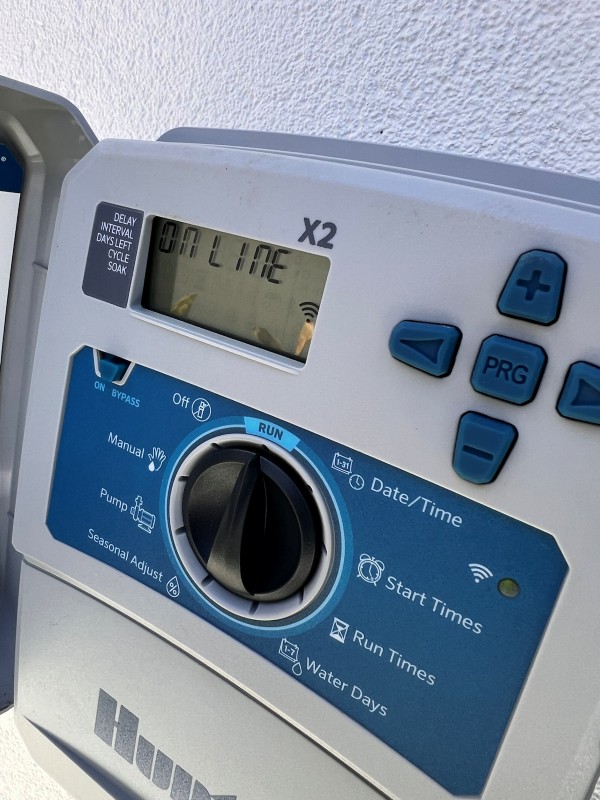
Sydney strata irrigation systems are often poorly documented — the controller was installed years ago, nobody knows what zone covers what, and the schedule hasn’t been adjusted seasonally because nobody thought to do it. A proper irrigation management plan changes this, and it matters for more than just plant health. Sydney Water’s Water Wise Guidelines require automated irrigation to run before 10am or after 4pm — strata bodies corporate face $550 fines for non-compliance, and an unchecked controller is the most common source of accidental breach.
- ☐ Zone-by-zone documentation (what each zone waters, run times, head types)
- ☐ Seasonal schedule adjustment dates (minimum: March, June, September, December)
- ☐ Sydney Water compliance verification — timing, exemptions, documentation
- ☐ Controller and valve inspection schedule (minimum twice yearly)
- ☐ Winter system check (pre-hibernation) and spring activation procedure
- ☐ Fault escalation procedure — what triggers a call to the strata manager
We cover the detail of strata irrigation management in our smart irrigation systems guide and the irrigation audit guide.
The component most often missing from strata maintenance contracts entirely. Drainage cleaning is genuinely important in Eastern Suburbs properties — coastal conditions, clay-heavy soils in some pockets, and the scale of hard surface in typical strata sites means blocked drains can escalate from a minor annoyance to a water damage claim quickly. At Vaucluse, the partially blocked drain we found on the initial audit had likely been building for over a season.
- ☐ All drain locations mapped and accessible
- ☐ Pre-winter drain clear (April–May, before heavy rainfall season)
- ☐ Post-autumn drain clear (June) after leaf fall
- ☐ Pathway, driveway, bin bay, and carpark blow and sweep schedule
- ☐ Hardsurface weed control (particularly paving joints and edging)
- ☐ Post-storm inspection protocol — who checks, what they look for, how it’s reported
A forward-looking document that covers what gets planted where, and why. This matters most for two situations: when a plant fails and needs replacing (the default without a plan is “whatever’s on special at the nursery”), and when the committee wants to improve a section of the garden over time without commissioning a full landscape redesign.
- ☐ Replacement species list — pre-approved alternatives for each major plant type on site
- ☐ Species suited to Eastern Suburbs coastal conditions (salt tolerance, wind exposure)
- ☐ Water-wise selections where applicable (Sydney Water compliance)
- ☐ Any planned garden bed improvements or additions, staged by budget cycle
- ☐ Seasonal colour rotation for entry or feature beds (if applicable)
This is the part that most impressed the Vaucluse committee, and it costs nothing extra to deliver once the system is set up. A committee that receives a photo report from every visit, without having to request it, has evidence of maintenance. A committee relying on “trust us, it got done” is in a different position entirely — especially if a resident complains, an insurance event occurs, or the OC’s maintenance obligations are ever called into question.
- ☐ Photo report template — consistent format, consistent angles, sent same day
- ☐ Named contact — one person at Garden Managers for the committee to call
- ☐ Hazard escalation protocol — what gets called through immediately vs next report
- ☐ Quarterly summary report — seasonal overview, upcoming works, budget flags
- ☐ Annual plan review — scheduled meeting or written review before AGM
- ☐ SMATA integration — work orders, digital records, committee access
The documentation the committee needs to demonstrate proper governance — both for day-to-day liability protection and for longer-term capital works planning. From July 2025, the Strata Schemes Legislation Amendment Act 2025 extended committee member duties to include honesty, fairness, and due care — documented maintenance programs are part of how “due care” gets evidenced.
- ☐ Certificate of currency — public liability and workers compensation
- ☐ WHS compliance documentation and Safe Work Method Statements
- ☐ Contractor licence details (where applicable)
- ☐ Section 106 SSMA 2015 maintenance record — dated visit logs
- ☐ Capital works inputs — 10-year budget projections for irrigation, planting, and major works
- ☐ Annual compliance review aligned to AGM cycle
For capital works planning specifically, we’ve built a detailed template in our 10-year capital works plan guide.
What the Vaucluse committee actually received
When we presented the plan, we had a bound document covering all seven sections — site maps, species list, annotated photos of the irrigation system and the blocked drain, a 12-month maintenance calendar broken down by visit, and a page of recommended planting replacements for the three overgrown shrubs. The strata manager later told us no contractor had ever walked in with paperwork like that before. The committee chair asked if they could keep a copy for the owners corporation records. That’s the point — it becomes the property’s document, not ours. If they ever change contractors again, the next person inherits a fully documented site, not a blank slate.
What it costs — and why premium justifies itself
| Level | What’s included | Typical monthly cost |
|---|---|---|
| Standard grounds maintenance | Mowing, hedging, weeding, blow and sweep | $600–$1,800 |
| Managed garden program | Above + site plan, irrigation management, drain schedule, photo reporting, compliance documentation | $1,200–$3,500+ |
| Premium managed program (complex sites) | All of the above + planting plan, quarterly reports, capital works inputs, annual review | $2,500–$6,000+ |
The premium price doesn’t just reflect more hours on site. It reflects the knowledge management, the documentation, and the structured ongoing relationship with the committee. A Vaucluse strata complex paying at the top of that range isn’t paying for fancier lawn mowing — they’re paying for a managed outdoor asset program that protects them legally, removes uncertainty, and means no committee member has to lie awake wondering whether the gardens are being properly looked after.
“If you stopped working for us tomorrow, what documentation would you leave behind?” If the honest answer is “not much,” that’s a risk your committee is carrying right now that a proper management plan would eliminate entirely.
Garden Managers provides fully documented strata garden management programs across Sydney’s Eastern Suburbs — Vaucluse, Double Bay, Rose Bay, Coogee, Randwick, and surrounds. We’re registered on SMATA, fully insured, and WHS compliant.
Frequently Asked Questions
What is a strata garden management plan?
A strata garden management plan is a documented site system that covers all aspects of maintaining a strata property’s outdoor common areas — plant inventory, scheduled maintenance, irrigation management, drainage program, planting plan, reporting structure, and compliance documentation. Unlike a standard maintenance contract which simply describes visit frequency and general tasks, a management plan is a living document specific to the property that transfers intact if the contractor ever changes.
Most strata properties don’t have one. The knowledge typically lives with whoever has been maintaining the garden — and leaves with them when they retire or move on.
Is a strata garden management plan a legal requirement in NSW?
Not explicitly — there’s no regulation that specifically mandates a written garden management plan. However, under Section 106 of the Strata Schemes Management Act 2015, the owners corporation has a strict duty to maintain common property in good repair. From July 2025, the Strata Schemes Legislation Amendment Act 2025 also extended committee member duties to include due care and diligence.
A documented garden management plan is how you demonstrate that both of these obligations are being met. In the event of a dispute, complaint, or insurance matter relating to the common garden areas, a committee with documented maintenance records is in a significantly different position to one without.
What should a strata garden management plan include?
A complete strata garden management plan covers seven core components: a site inventory and condition assessment, a written scheduled maintenance program, an irrigation management plan (including Sydney Water compliance), a drainage and hardsurface program, a planting plan for replacements and improvements, a reporting structure, and compliance and capital works documentation.
The depth of each section varies with property complexity — a smaller block might have a relatively brief site inventory, while a large complex with mature trees, an extensive irrigation system, and multiple drainage points warrants significantly more detail in each area.
How much does a premium strata garden management program cost in Sydney?
A managed garden program for a typical Eastern Suburbs strata block typically runs from $1,200 to $3,500 per month, depending on property size, visit frequency, and the complexity of the site. Premium programs covering complex sites with extensive irrigation, mature trees, and full quarterly reporting run from $2,500 to $6,000 or more per month.
These figures reflect a full managed program — not just grounds maintenance, but the full planning, reporting, and documentation structure described in this post. For standard grounds maintenance pricing without the full management layer, see our grounds maintenance guide.
How do we transition to a new strata garden contractor without losing site knowledge?
The short answer: you need a documented plan in place before the transition happens, not after. If the outgoing contractor holds all the site knowledge in their head, the transition will always involve some degree of knowledge loss and a reset period for the new contractor.
For committees facing a transition — whether planned or unexpected — we begin every new strata engagement with a full site assessment and plan build, so the new documentation becomes the property’s record from day one rather than depending on whatever was handed over from the previous arrangement. We cover what this looks like in more detail in our guide to getting committee approval for a new garden contractor.
Want a management plan built for your property?
We’ll assess your site, document what’s there, and build a plan the whole committee can actually review. No guesswork, no knowledge locked in someone’s head.