Spring Strata Garden Preparation Checklist Sydney 2026 — The Complete Committee Guide
Spring in Sydney begins in September. The committees that have their grounds looking exceptional by then started preparing in July. This is the complete preparation guide — what to do, when to do it, what it costs, and the NSW compliance items that matter most for your scheme’s documentation.
✓ July–September Timeline
✓ NSW Compliance 2026
✓ Real Sydney Pricing
For Sydney strata schemes, spring garden preparation should begin in late June or early July — not September. The preparation window covers five critical areas: irrigation system service (audit, repair and seasonal reprogramming before spring demand); structural pruning (completing all major hedge and shrub cuts while plants are dormant); lawn preparation (aeration, fertilising and bare patch repair for the September growth flush); compliance documentation (WHS site check, pesticide notification requirements, and updated contractor records under NSW strata law changes effective April 2026); and contractor and budget confirmation (locking in spring schedules before September availability disappears). The total budget for a comprehensive spring preparation program across a medium strata complex typically runs $1,800–$4,500 depending on property size and the extent of work required.
Every year in mid-September, we receive calls from strata managers in a mild panic. The AGM is approaching, the grounds look tired and overgrown, the irrigation system hasn’t been touched since last summer, and the committee wants everything looking immaculate for the spring inspection — ideally by next week.
The honest answer is: next week is possible, but it costs significantly more and the results are less thorough than if the preparation had started eight weeks earlier. The garden doesn’t respond to urgency — plants need time to recover after pruning, lawns need weeks to show improvement after aeration and fertilising, and an irrigation system serviced the week before peak demand is getting a rushed job rather than a considered one.
Spring preparation for a strata property is not a September task. It’s a July task — sometimes a June task. The committees that present immaculate grounds at their October AGMs are the ones whose contractors were on-site in July.
This guide covers the complete preparation program — every task, the right sequence, the compliance items that matter under NSW strata law, and what each component costs in Sydney in 2026. Use it as a committee planning document and a brief for your garden maintenance contractor.
Why Spring Preparation Starts in Winter — The Biology and the Business Case
Understanding why the preparation window starts in July requires understanding two things: how Sydney plants behave at the end of winter, and how the garden maintenance industry operates in spring.
The Plant Biology Case
Sydney’s climate means most garden plants never fully dormant in winter — they slow significantly but continue to maintain root activity and basic cellular function. This semi-dormant state is the ideal window for structural work:
- Pruning in July gives hedges and shrubs 6–8 weeks to callous before the September growth flush. Cuts heal cleanly, new growth emerges uniformly, and the plant enters spring in better structural condition than if it was pruned during active growth.
- Lawn aeration in July–August allows the soil to settle and initial recovery to occur before the warm-season grasses surge in September. Aerated in September, the lawn is being disrupted at its most active growth period.
- Soil conditioning in July — compost application, pH adjustment — gives amendments time to integrate before planting season. Applied in September, they haven’t had time to work.
- Mulch applied in July–August suppresses the spring weed flush before it establishes. Applied in September, the weeds have already germinated and the mulch is going on top of the problem rather than preventing it.
The Business Case
Garden maintenance in Sydney is a seasonal industry. In September and October, every quality provider is operating at full capacity — existing clients, emergency callouts, spring planting programs and new property acquisitions all compete for the same crews and equipment.
Committees that wait until September to book spring preparation work find:
- Their preferred provider is fully booked until mid-October
- Available providers are the ones whose existing clients chose not to rebook — often a signal worth noting
- Rush pricing — urgent spring preparation typically costs 20–30% more than the same work scheduled in July
- Compressed timelines that mean shortcuts — a proper hedge cut that takes three hours on a relaxed July visit takes the same three hours in October but is scheduled between four other urgent jobs
“By the third week of September our schedule is full. We have capacity locked in for all our existing strata clients who confirmed spring programs in July — and we turn away new enquiries from committees that left it too late. This isn’t a sales technique — it’s just how the timing works. The properties that look best in October are the ones where we spent quality time in July doing the structural work properly. The ones that look rushed in October are the ones where we squeezed the preparation into a single week.”
The Spring Preparation Timeline — Month by Month
JUN
Review the winter maintenance program, identify what work is needed for spring, discuss budget allocation between administrative fund (ongoing maintenance) and capital works fund (irrigation upgrades, major plantings). Confirm your spring maintenance program with your contractor — including any additional spring-specific tasks that fall outside the regular schedule. Get written quotes for any significant spring works now, before demand increases.
Irrigation system audit and service. Major structural pruning — hedges, overgrown shrubs, rose pruning, ornamental grass cutback. Lawn aeration where soil is compacted. Mulch replacement or top-up across all garden beds. Soil pH testing and conditioning where required. Removal of any dead or failing plants and ordering of replacements. WHS site audit — pathway hazards, lighting, overgrown sight lines. Compliance documentation review.
Install replacement plants identified in July — August is the last practical planting window before spring growth competition begins. Apply slow-release fertiliser to lawns (late August timing maximises uptake with the September growth flush). Final irrigation reprogramming for spring/summer schedule — increasing frequency and duration from winter settings. Pre-emergent weed treatment to suppress the spring weed flush before it establishes. Confirm spring schedule with contractor — weekly visits beginning first week of September.
If the July–August preparation has been done properly, September is when you see the results. Hedges that were structurally pruned in July are showing new growth uniformly across their form. Lawns aerated and fertilised in August are thickening with the warm weather. Irrigation running correctly on its spring schedule. Weeds suppressed by the August pre-emergent treatment. The committee’s job in September is to confirm everything is executing to plan — not to begin the preparation that should have happened two months earlier.
The Complete Spring Preparation Checklist — 8 Categories
Use this checklist as a planning document for your committee and as a brief for your maintenance contractor. Every item includes timing guidance and cost indication for Sydney strata properties in 2026.
July · High Priority
July · High Priority
July–August · Medium Priority
July · Medium Priority
Need a spring program quote for your strata property?
We provide written spring preparation proposals for strata committees across Greater Sydney. Book July assessment now — spring availability fills fast.
July · Critical for Compliance
NSW strata law reforms effective April 1, 2026 introduced a standard form for 10-year capital works fund plans. Garden and irrigation infrastructure is a capital works item — major replanting, irrigation system upgrades, hard landscaping — and should be documented in the 10-year plan using the new standard form. Ongoing maintenance (regular gardening visits, minor repairs, seasonal adjustments) remains an administrative fund expense. If your committee hasn’t updated its capital works fund plan to reflect the new standard form requirements, the spring planning process is a good time to do so. Irrigation system upgrades planned for this year should be itemised in both the capital works fund plan and the current year’s levy budget.
June–July · Required
August · Plan in July
June–July · Do This First
Spring Preparation Budget — What to Expect for Sydney Strata in 2026
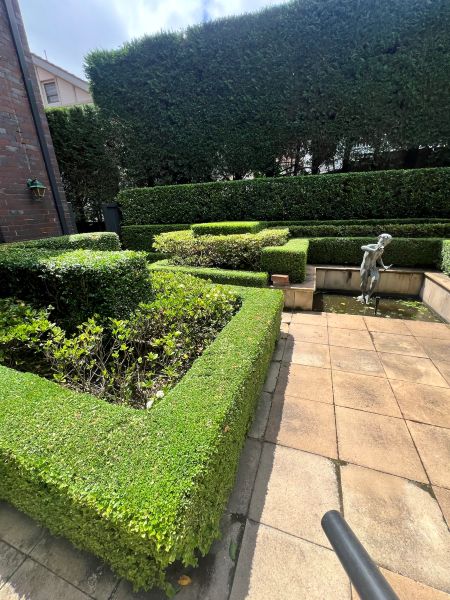
The following budget breakdown covers a typical medium strata complex in Sydney’s Eastern Suburbs — 24–40 lots with established gardens, a 4-zone irrigation system and formal hedging. Adjust proportionally for your property size.
| Task | Timing | Typical Cost | Fund |
|---|---|---|---|
| Irrigation system audit 4-zone system, written report |
July | $280–$420 | Admin |
| Irrigation repairs Heads, solenoids, controller reprogram |
July | $200–$600 | Admin |
| Major hedge structural cut 20 linear metres, 2m height |
July | $380–$700 | Admin |
| Mulch top-up Supply and apply, all beds |
July | $280–$600 | Admin |
| Lawn aeration Common lawn areas |
Late July | $180–$380 | Admin |
| Pre-emergent weed treatment Lawn and beds |
Late July | $120–$280 | Admin |
| Slow-release fertiliser Lawns and garden beds |
August | $120–$250 | Admin |
| Plant replacements 4–8 plants, supply and install |
August | $200–$600 | Admin/Capital |
| Seasonal colour planting Spring annuals, entrance beds |
August | $180–$420 | Admin |
| Total spring preparation program | July–August | $1,940–$4,250 | Mostly Admin |
Frame the spring preparation budget against the cost of not doing it properly. A $3,500 July preparation program that delivers immaculate grounds for the October AGM — when potential buyers are making decisions that affect the scheme’s property values — compares favourably against the alternative: a rushed $4,500+ emergency programme in September and a property that still looks unprepared for the inspection. The preparation budget is an investment in the scheme’s asset value, not a cost centre.
Book Your Spring Preparation Program Now — July Availability Is Limited
Garden Managers manages strata garden maintenance programs across Sydney’s Eastern Suburbs. Every strata program includes spring preparation as a structured component of the annual maintenance calendar — not an afterthought.
When you engage Garden Managers for your strata property:
- Spring preparation scheduled in the annual program — July irrigation service, structural pruning and soil work locked in
- Written scope with specific task dates — not “sometime in winter”
- Photo reports from every visit formatted for committee minutes
- Irrigation compliance documented and reported after every seasonal adjustment
- NSW pesticide notification handled by us — we notify residents and document it
- Insurance certificates on file — public liability $20M+, workers compensation current
- No lock-in contracts — month-to-month with 30 days notice
Frequently Asked Questions — Spring Strata Garden Preparation Sydney
When should spring garden preparation start for a Sydney strata property?
Spring preparation for a Sydney strata property should begin in late June or July — not September when spring actually arrives. The reason is simple: most of the high-value preparation tasks — structural pruning, irrigation service, soil conditioning, mulching, lawn aeration — deliver significantly better results when completed 6–10 weeks before the spring growth flush rather than during it. Plants pruned in July enter spring in defined form and fill in uniformly. Lawns aerated in July have time to recover before the September growth surge. Irrigation serviced in July is ready for spring demand and not competing with every other property that waited.
The other practical reason to start in July: quality garden maintenance contractors in Sydney are fully booked by mid-September. Committees that lock in July and August preparation visits secure better access to their preferred provider and avoid the rush pricing that comes with urgent spring work requests.
What does spring strata garden preparation cost in Sydney in 2026?
A comprehensive spring preparation program for a medium Sydney strata complex (24–40 lots, established gardens, 4-zone irrigation) typically costs $1,900–$4,250 for the July–August preparation phase. This covers: irrigation audit and repairs ($480–$1,020), major hedge structural cut ($380–$700), mulch top-up ($280–$600), lawn aeration ($180–$380), pre-emergent weed treatment ($120–$280), fertilising ($120–$250) and plant replacements ($200–$600).
Smaller boutique blocks (6–12 lots) typically budget $800–$1,800 for the preparation phase. Larger estates (50+ lots with significant gardens) budget $5,000–$12,000+. These costs are almost entirely administrative fund expenses. Irrigation system upgrades or major capital works are capital fund items and should be budgeted and approved separately.
What are the NSW strata compliance requirements for garden maintenance in 2026?
Under the Strata Schemes Management Act 2015, the Owners Corporation has a legal duty to maintain common property in good repair. For garden areas, the key compliance obligations are: maintaining pathways and common areas in a safe condition free from hazards; providing 5 days written notice to residents before applying pesticides in common areas; ensuring any contractor working on common property has adequate public liability insurance (minimum $20M); and ensuring irrigation systems comply with Sydney Water’s permanent Water Wise Guidelines (automated systems before 10am or after 4pm only).
NSW strata law reforms effective April 1, 2026 introduced a standard form for 10-year capital works fund plans. Garden infrastructure items — irrigation systems, major plantings, hard landscaping — should be reflected in the 10-year plan using the new standard form. Ongoing maintenance remains an administrative fund expense.
When is the best time to service strata irrigation in Sydney before spring?
July is the ideal time to service strata irrigation in Sydney before spring. Demand is low, repairs can be completed without urgency, and the system has the full August lead time to be functioning correctly before September demand increases. By October, irrigation technicians in Sydney are heavily booked — waiting until spring means either competing for limited availability or accepting a rushed service.
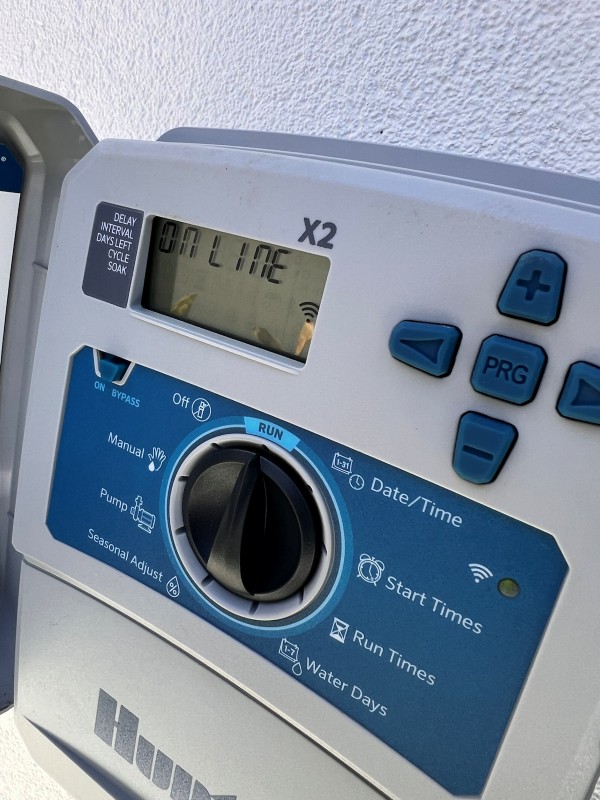
A July irrigation service should include: full zone audit and walk inspection, sprinkler head adjustment, solenoid valve testing, drip emitter flush, controller seasonal reprogramming for spring/summer schedules (confirming Sydney Water compliance), and a written report for committee documentation. Any identified repairs — solenoid replacements, head replacements, smart controller upgrade — should be completed in July or August while access and availability are good.
Does spring strata garden preparation need a committee resolution?
Routine spring preparation that falls within the OC’s approved annual maintenance budget does not require a separate committee resolution — it’s covered under the ongoing maintenance program. Works above the scheme’s approved spending threshold require a committee resolution before instructing the contractor. The threshold varies between schemes — check your scheme’s by-laws or ask your strata manager. Capital works items — irrigation system upgrades, major replanting, hard landscaping — require committee resolution and capital works fund allocation regardless of amount. Get the resolution before the work is instructed, not after it’s completed.
Get Your Strata Grounds Spring-Ready — Book a July Assessment
Garden Managers provides strata garden maintenance programs across Greater Sydney — Eastern Suburbs, Inner West, North Shore and beyond. Spring preparation is structured into every annual program. 5.0 stars, 50+ verified reviews, 10+ years experience.