Winter Garden Maintenance Sydney 2026 — What To Do in June and July
Winter is the season most Sydney gardeners underestimate. Here’s what we actually do in our clients’ gardens in June and July — and why getting this right now determines how your garden performs from September onwards.
In Sydney’s winter (June–July 2026), the most important garden maintenance tasks are: structural pruning of dormant shrubs and hedges, bamboo control before spring growth surge, irrigation system servicing and adjustment for reduced water needs, mulch top-up to protect soil through cold nights, and lawn care adjustments — raising mowing height and reducing frequency. Sydney winters are mild compared to most of Australia, averaging 8–17°C in June–July, but winter is still your most important window for the major maintenance work that shapes how your garden performs in spring and summer.
Every year without fail, I see the same thing happen in Sydney gardens. Homeowners slow down their maintenance in June thinking the garden doesn’t need attention in winter. Then September comes, growth kicks off hard, and they’re playing catch-up for weeks — overgrown bamboo taking over, hedges that have gone woody, lawns that thinned out because they were scalped all winter instead of given a break.
Winter in Sydney is not downtime for a garden. It’s the season where the really important structural work gets done — the work that’s actually easier now precisely because things have slowed down. Dormant plants handle pruning better. Access is easier. The heat isn’t a factor. And for bamboo, winter is quite literally your last chance before the spring growth surge makes the job significantly harder.
Here’s what actually needs doing in June and July in Sydney gardens — from someone who’s on the tools in Eastern Suburbs gardens week in, week out.
Your Winter Maintenance Calendar — June and July 2026
Sydney’s winter climate averages 8–17°C in June and 7–17°C in July — mild enough that most plants stay semi-active rather than fully dormant. Rainfall drops slightly from the autumn peaks, and days shorten significantly. This combination shapes exactly what your garden needs right now.
- Structural pruning — hedges, shrubs, roses
- Bamboo control — cut and treat now
- Irrigation adjustment — reduce run times
- Mulch top-up on all garden beds
- Lawn mowing height — raise by 10–15mm
- Winter weed flush — pull before seeding
- Plant inspection — identify fungal issues
- Gutter check — leaf accumulation peaks
- Complete irrigation system service
- Heavy structural pruning — deciduous trees
- Second bamboo check — early shoots
- Soil conditioning — aeration and compost
- Slow-release fertiliser — lawns and beds
- Plan spring planting — order plants now
- Strata budget planning for spring program
- Book spring maintenance — fills fast
1. Structural Pruning — The Most Important Winter Job
Winter is the best pruning season in Sydney — full stop. Not because of some gardening rule, but for a genuinely practical reason: when plants are growing slowly, they handle hard pruning far better. You can reshape a hedge in July that would look stressed and burnt if you did the same work in December.
In our experience maintaining Eastern Suburbs gardens, there are two pruning mistakes people make in winter. The first is not doing enough — leaving structural work until spring when everything kicks off at once and you’re playing catch-up. The second is pruning the wrong things — cutting back plants that flower in spring and accidentally removing all the flower buds before they open.
What to Prune in June–July
- Formal hedges — box, lilly pilly, photinia, viburnum — give them their most significant shape-cut of the year now. Winter growth is slow enough that the cut holds for months, and the hedge can fill in cleanly before spring when it matters most visually
- Roses — late June to mid-July is the traditional rose pruning window in Sydney. Hard prune hybrid teas and floribundas to 30–40cm, removing dead wood entirely. Old canes brown and corky — keep the green growth, remove the old
- Crepe myrtles and summer-flowering shrubs — prune hard in June while dormant. Don’t be shy — crepe myrtles in particular benefit from significant reduction and will come back vigorously in spring
- Ornamental grasses — cut back to about 15cm above the crown before new growth starts in August. Left too long and the new growth pushes through the dead material and looks messy for the whole season
- Dead wood removal from any plant, any species — winter is the easiest time to identify dead wood because it doesn’t have leaves hiding it. Remove it cleanly back to healthy tissue
- Fruit trees — if you have citrus, stone fruit or pome fruit, July is the window for structural pruning before the August blossom. Citrus in particular benefits from an open canopy cut that improves air circulation and reduces fungal issues through the humid spring
What NOT to Prune in Winter
Don’t touch camellias, gardenias, azaleas, grevilleas or any plant that is currently flowering or about to flower. These have been setting buds since autumn and pruning now removes next season’s display entirely. Wait until after they finish flowering — for winter-flowering camellias that means September or October before you pick up the secateurs.
“The question we get most in winter is whether it’s too late to prune something. Honestly, for most hedges and structural shrubs the window is June through August. July is the sweet spot. If you’re reading this in August and the hedge still hasn’t been cut — book it now. By September the growth surge starts and you’ll pay more for a job that takes longer and creates more mess. Winter pruning done early saves time and money.”
2. Bamboo — Do This Now or Regret It in Spring
I need to be direct about bamboo: if you have it in your garden and it hasn’t been properly managed, winter is your absolute best window. In spring — from September — bamboo produces its annual culm (shoot) growth. New culms emerge from the ground, and within weeks they can reach full height. Once that happens, controlling the spread becomes dramatically more difficult and more expensive.
Right now in June–July, bamboo growth is at its slowest. Existing culms can be cut back, the root system can be managed, and any treatment applied to cut stems is most effective when the plant isn’t in active growth pushing it out.
What Bamboo Management Involves in Winter
- Cutting overcrowded culms at ground level — removing old, brown or damaged culms to open the clump and reduce the overall volume. A healthy clump should have clear space between culms, not a solid wall
- Removing culms that have spread beyond the intended area — now is when you can clearly see which culms are encroaching on pathways, neighbouring properties or other plantings
- Root barrier inspection — if your bamboo has a root barrier installed, check it in winter. Rhizomes that have escaped under or over the barrier are easier to trace and remove now before they establish
- Height management — cutting tall culms back to their desired height while the plant is dormant. The cut ends won’t push new growth until spring, giving you a clean result through winter
- Clump shaping — thinning and shaping the clump to its intended form while you have the access and visibility that comes with reduced foliage density
For everything you need to know about keeping bamboo under control in a Sydney garden, read our detailed guide: Bamboo Trimming Sydney — Shape, Maintain and Control Your Bamboo →
Running bamboo (Phyllostachys species — the golden and black bamboos common in Sydney gardens) spreads aggressively via underground rhizomes and needs active containment every year. Clumping bamboo (Bambusa species) expands more slowly and is generally easier to manage. If you’re not sure which type you have, call us for an assessment — the management approach is quite different and getting it wrong is an expensive mistake.
3. Irrigation — Service It Now, Not in November When It Breaks
Every year we get calls in late September and October from people with broken irrigation systems. The pattern is always the same: the system was left on an end-of-summer schedule all winter, the components wore out, and now it’s spring — peak demand — and the system either doesn’t work or is flooding one zone while leaving another bone dry.
July is the ideal time to service your irrigation system for one practical reason: demand is low. If we find a fault, there’s no urgency — we can fix it properly without a garden full of stressed plants waiting for water. By October, every irrigation repair job in Sydney is competing for the same limited number of technicians at the same time.
What an Irrigation Winter Service Includes
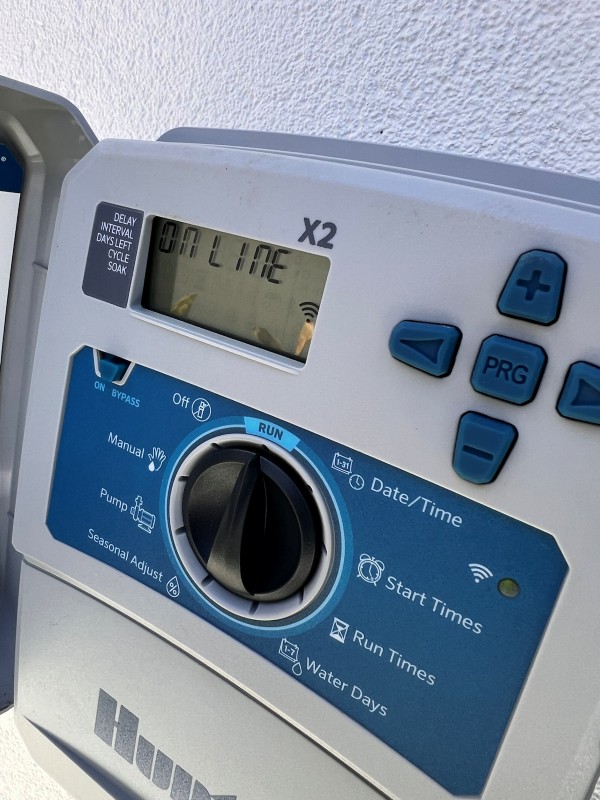
- Controller seasonal adjustment — reducing run times to match winter’s lower evapotranspiration rate. Most Sydney gardens need 40–60% less irrigation in June–July than in February. Leaving summer schedules running wastes thousands of litres and can cause fungal problems in lawn and garden beds
- Solenoid valve testing — activating each zone individually and checking for slow-activating or stuck solenoids that indicate the valve is failing and should be replaced before spring
- Sprinkler head inspection — checking spray patterns, arc adjustments, blocked nozzles and any heads that have been damaged by mowers or foot traffic through summer
- Drip emitter flushing — sediment and mineral deposits accumulate in drip emitters over summer. Flushing them now ensures they’ll deliver water efficiently when spring planting and watering demands resume
- Leak detection — running each zone and walking the system checking for wet spots, sunken areas or pressure drops that indicate underground leaks that have been quietly wasting water since summer
- Smart controller assessment — if your system is still running on a basic timer, winter is the ideal time to upgrade to a smart controller that adjusts automatically for weather. The investment pays back within one season through water savings
We handle full irrigation system servicing, repairs and smart controller upgrades across Sydney — residential, strata and commercial. Winter bookings typically have a faster turnaround than spring. Worth doing now while it’s quiet.
Irrigation service before spring — book now while it’s quiet
Full system check, seasonal adjustment, solenoid testing and smart controller advice. Faster turnaround in winter than spring.
4. Lawn Care — The Winter Mistakes That Cost You in Spring
Sydney lawns in winter are mostly buffalo, couch and kikuyu — all warm-season grasses that slow significantly when temperatures drop below 15°C. They don’t die, they don’t need constant attention, but they do need a few specific things done right to come back hard in September.
The Two Mistakes I See Every Winter
Mistake 1: Scalping the lawn. In winter, grass growth is slow and recovery from stress is very slow. A lawn scalped to 25mm in June takes months to recover when growth resumes. Raise your mowing deck to 40–50mm for winter — this height protects the crown of the plant, retains moisture in the soil layer, and shades out winter weeds.
Mistake 2: Over-watering on summer schedules. Cold, damp soil in winter is the perfect environment for fungal disease — dollar spot and brown patch in particular are common in Sydney buffalo lawns in June–July. Reduce irrigation frequency significantly and water in the morning so excess moisture evaporates during the day rather than sitting overnight.
What Your Lawn Actually Needs in Winter
- Raise the mowing height by 10–15mm compared to your summer setting — and keep it there until October
- Reduce mowing frequency — fortnightly in June, potentially monthly in July depending on growth rate
- Aerate if the soil is compacted — late May to early June is the last practical window for aeration before growth really slows. If you missed it, wait until September
- Apply a slow-release winter fertiliser in early June — a potassium-heavy formula strengthens cell walls against cold stress. Don’t fertilise in July — the grass can’t absorb it efficiently and excess nitrogen promotes soft growth that is more fungal-susceptible
- Pull winter weeds by hand in June — winter grass (Poa annua) and oxalis germinate in autumn and establish through June. Pull them before they set seed or they’ll be exponentially worse next year
- Monitor for dollar spot — small brown circular patches in the lawn. Treat with a registered fungicide early; dollar spot spreads rapidly in Sydney’s winter humidity if left
5. Mulching — Your Most Effective Winter Investment
If you mulched in autumn — good. If you didn’t, do it now in June. A 70–100mm layer of quality mulch in winter does several things simultaneously that no other single garden action can match:
- Insulates soil from cold nights — Sydney’s June–July minimum temperatures of 8–10°C can stress shallow-rooted plants without soil insulation
- Retains moisture between increasingly sparse rainfall events as winter progresses toward the dry spring period
- Suppresses the winter weed flush — particularly oxalis, which is extremely difficult to eradicate once established but rarely germinates through a proper mulch layer
- Feeds soil biology as it breaks down — improving the soil’s capacity to support the spring growth flush from September onwards
For Eastern Suburbs coastal gardens we typically use eucalyptus chip at 80–100mm — durable, wind-resistant and professional-looking. For garden beds with delicate perennials, a lighter pine bark at 60–80mm reduces the risk of collar rot around stems. Keep mulch 50–100mm away from plant stems and tree trunks regardless of mulch type.
“In coastal Eastern Suburbs gardens — Rose Bay, Double Bay, Coogee, Vaucluse — we almost always go eucalyptus chip for the main garden beds. It handles salt air and wind exposure without blowing everywhere, which lighter mulches like sugarcane definitely do in a south-east Sydney winter. The only exception is sheltered courtyard gardens with premium planting where we use a decorative hardwood chip for the finish. The mulch quality makes a bigger difference to garden health in winter than most people realise.”
6. Winter Weeds — Pull Them Now or Fight Them All Year
There is a very specific window in June when pulling winter weeds is dramatically more effective than any other time of year. At the start of winter, most winter weeds are small seedlings — easy to pull by hand, not yet seeding, not yet establishing deep root systems. By August they’re large, establishing, and in some cases already setting seed. By October they’ve seeded and the next generation is already in your soil bank.
The weeds to target in June in Sydney Eastern Suburbs gardens:
- Oxalis (wood sorrel, shamrock weed) — three-leafed, yellow-flowered, spreads by tiny bulblets. Pull carefully — bulblets left in soil generate new plants. Persistent; may require a selective herbicide for large infestations
- Winter grass (Poa annua) — soft annual grass that germinates in lawns and garden beds throughout June. Pull before it seeds — each plant produces hundreds of seeds that persist in soil for years
- Nutgrass (Cyperus rotundus) — one of Sydney’s most persistent garden weeds. Pull in winter when it’s smallest — the longer it grows, the deeper the nutlets establish and the harder it becomes to control
- Clover — relatively easy to control but signals nitrogen imbalance in the lawn. Pull and address soil nutrition
- Bindiis (Soliva sessilis) — the painful prickle weed. Treat in June before it flowers and sets seed — by spring the seed capsules are already forming and the damage is done for the season
Managing Strata Gardens This Winter? Here’s What We Prioritise
Winter is one of our most active periods for strata garden maintenance in Sydney. While residential gardens slow down, strata grounds need active management through winter for both compliance and spring preparation.
Our strata winter program priorities:
- Full hedge shaping — winter is the best window for major structural cuts before spring growth
- Pathway safety pruning — clear sightlines, lighting and CCTV unobstructed going into winter storms
- Irrigation system service — every zone tested and adjusted for winter schedules
- Bamboo containment where applicable — now before the spring surge
- Mulching all garden beds — moisture retention and winter weed suppression
- Photo reporting after every visit — supporting committee documentation through winter
- Spring program planning — locking in schedules and budgets for September–November
What Winter Garden Maintenance Costs in Sydney 2026
Winter rates are generally the same as the rest of the year — we don’t charge more or less seasonally. What does change is the type of work dominating each visit. Here’s a realistic breakdown of the specific winter jobs and what they cost in Sydney in 2026:
| Service | Typical Sydney Cost 2026 | Notes |
|---|---|---|
| Winter garden maintenance visit 2-person crew, fortnightly |
$160–$320/visit | Includes mowing, edging, weeding, debris. Green waste additional |
| Hedge structural pruning Annual winter shape-cut |
$180–$600 | Depends on linear metres and height. Quoted separately from maintenance |
| Bamboo management Cutting, shaping, containment |
$150–$500+ | Depends heavily on volume and how long since last managed |
| Irrigation winter service Full system check and adjustment |
$180–$420 | Controller reprogramming, sprinkler heads, solenoid test, leak check |
| Mulching (supply and apply) Eucalyptus or pine bark |
$180–$600 | Depends on bed area. 70–100mm depth as recommended |
| Rose pruning Per plant or per garden |
$15–$25/plant or from $120 | Usually combined with a general maintenance visit in June–July |
| Winter garden clean-up (one-off) Full tidy and structural work |
$350–$900 | Includes pruning, weeding, mulching, debris removal |
Use Winter to Prepare for Spring — Book Now
Here’s something I tell our clients every July: spring bookings fill up fast. In September when the growth flush hits and everyone suddenly realises their garden needs attention — most quality garden maintenance providers in Sydney are already fully booked for October and into November.
The gardeners who are booked solid in spring are not the ones who started taking bookings in September. They’re the ones whose existing clients locked in spring visits in July and August while there was still availability.
Lock in September and October maintenance dates while availability exists. Spring fills fast across all reputable Sydney garden maintenance providers.
If you want new plants established for summer, they need to go in the ground in September–October. Decide and order now — nurseries sell out of premium varieties fast in spring.
For strata committees, July is when annual budgets are typically reviewed. Lock in your spring maintenance program scope and pricing before September demand increases.
Book irrigation servicing in July–August. By October every irrigation technician in Sydney is booked weeks out. The gardens that go into summer with a serviced system perform significantly better.
Frequently Asked Questions — Winter Garden Maintenance Sydney 2026
What should I do in my Sydney garden in June and July?
In June and July in Sydney, the priority garden tasks are: structural pruning of hedges, roses and summer-flowering shrubs while they’re dormant; bamboo control before the spring growth surge begins; irrigation system adjustment and servicing for reduced winter needs; mulch top-up to protect soil through cold nights; raising your lawn mowing height by 10–15mm and reducing mowing frequency; and pulling winter weeds — particularly oxalis, winter grass and nutgrass — before they seed and compound the problem next year.
Winter in Sydney is also your best window to book spring maintenance visits before September demand fills available slots.
Should I still water my garden in winter in Sydney?
Yes, but significantly less than summer. Most established Sydney gardens need irrigation every 10–14 days in June–July, compared to every 3–5 days in peak summer. The key mistake is leaving irrigation controllers on summer schedules through winter — this wastes water, keeps soil too wet for cold conditions, and promotes fungal disease in lawns and garden beds.
Adjust your controller now: reduce run times by 40–60% from your summer settings. If you have a smart controller, update the seasonal adjustment to 35–45%. Sydney Water restrictions still apply year-round — water only before 10am or after 4pm with sprinkler systems. And always water in the morning, not the evening — wet foliage overnight in cold temperatures is the main cause of fungal issues in Sydney winter gardens.
When should I prune roses in Sydney?
Roses in Sydney should be pruned in late June to mid-July — this is the traditional pruning window and still the most effective timing. By this point most hybrid teas and floribundas have slowed significantly and can handle a hard prune without stress.
Prune hybrid teas and floribundas back to 30–40cm, making clean angled cuts just above outward-facing buds. Remove all dead wood, crossing branches and any stems thinner than a pencil. Apply a copper-based fungicide spray after pruning to protect cut ends. Roses pruned in late June in Sydney typically start producing new growth by mid-August and are flowering by October–November.
Is winter a good time to manage bamboo in Sydney?
Winter — specifically June and July — is the best time to manage bamboo in Sydney. This is when growth is at its absolute slowest, making cutting and containment work far more effective. In spring from September, bamboo produces its annual culm growth surge — new shoots can reach full height within weeks, making control exponentially more difficult and expensive.
If you have running bamboo (Phyllostachys species — the common golden and black bamboos) that hasn’t been managed recently, a professional winter service is strongly recommended before spring. Our bamboo trimming service covers cutting, containment, root barrier inspection and shaping for Sydney residential and strata gardens.
How often should I mow my lawn in winter in Sydney?
Most Sydney lawns — buffalo, couch and kikuyu — should be mowed fortnightly in June, reducing to monthly or as-needed in July when growth slows further. The more important adjustment is height: raise your mowing deck by 10–15mm compared to your summer setting. Keeping the grass taller in winter protects the crown of the plant, retains moisture in the root zone, and shades out winter weed germination.
Avoid scalping your lawn in winter. The combination of slow growth and cold temperatures means a scalped lawn in July can take until November or December to fully recover — missing the entire spring growth window.
What’s the best time to service my irrigation system in Sydney?
June–August is the ideal time to service irrigation systems in Sydney — demand is low, faults can be repaired without urgency, and the system will be fully ready for the spring and summer season when it’s needed most. By October, irrigation repair bookings are backed up significantly as everyone discovers their systems aren’t working at the start of peak demand.
An annual irrigation service should include: controller seasonal adjustment, solenoid valve testing on every zone, sprinkler head inspection and arc adjustment, drip emitter flushing, leak detection and a full system pressure check. If your system is more than 5 years old, a smart controller upgrade assessment is also worth including. We handle full irrigation servicing across Sydney — contact us for a winter booking.
Ready to Book Your Winter Garden Maintenance in Sydney?
We’re currently taking winter and spring bookings across Sydney’s Eastern Suburbs and Greater Sydney. Fixed pricing, photo reporting, and the kind of work that makes your garden look its best when September comes.