Landlord Responsibilities for Garden Maintenance in NSW 2026 — Complete Guide
What are you legally responsible for as a landlord when it comes to garden care? This guide landlord responsibilities garden maintenance in NSW covers every obligation — from tree pruning and irrigation systems to dispute prevention and protecting your investment.
✓ Landlord Obligations
✓ Tree & Irrigation Rules
✓ Dispute Prevention
In NSW rental properties in 2026, landlords are responsible for major garden maintenance — including large tree pruning and removal, irrigation system installation and repairs, structural garden elements (retaining walls, fencing, built features), replacing plants that die due to pre-existing conditions, and addressing significant pest and disease infestations. Tenants handle routine maintenance — mowing, weeding, watering and keeping outdoor areas tidy. The NSW Government’s rental property maintenance guidelines confirm this division, though specific tenancy agreements can expand or modify these obligations in writing.
Garden maintenance disputes are one of the most common — and most avoidable — sources of conflict between landlords and tenants in NSW. Most of the time, disputes arise not because either party is acting in bad faith, but because responsibilities were never clearly communicated or documented from the start.
As a landlord in NSW, understanding exactly where your obligations begin and end is essential — both for protecting your investment property and for maintaining a productive relationship with your tenants and property manager.
This guide covers every aspect of a landlord’s garden maintenance responsibilities under NSW law in 2026, including the grey areas that most guides skip over — and exactly how to protect yourself from costly disputes and NCAT claims.
The Legal Framework — What NSW Law Requires of Landlords
Landlord garden maintenance obligations in NSW are governed primarily by the Residential Tenancies Act 2010 (NSW) and the standard Residential Tenancy Agreement issued by NSW Fair Trading.
Section 63 of the Act requires landlords to provide and maintain the premises in a reasonable state of repair, having regard to the age, character and prospective life of the premises. This obligation extends to all aspects of the property — including garden infrastructure, structural garden elements, trees and irrigation systems. Critically, this obligation exists independently of whether the tenant reports a problem — a landlord cannot claim ignorance if a maintenance issue was reasonably foreseeable.
The critical phrase in NSW tenancy law is the distinction between routine maintenance — which is the tenant’s responsibility — and capital maintenance and repair — which belongs to the landlord. The law is intentionally general on this point, which is why specific tenancy agreements and thorough condition reports are so important.
What the law is clear on is this: tenants cannot be required to carry out maintenance that goes beyond keeping the property in the same condition as when they moved in. Any obligation that exceeds this standard — including major garden work, structural repairs or specialist horticultural treatment — falls to the landlord.
While tenancy agreements can expand or modify garden maintenance responsibilities, there are limits. A landlord cannot contractually require a tenant to perform work that is inherently a landlord’s obligation under NSW law — such as major tree work or structural repairs. Any clause attempting to do so may be unenforceable at NCAT. Always have unusual garden maintenance clauses reviewed before including them in a lease.
What Landlords Are Responsible For — Complete List
Here is a comprehensive breakdown of every garden maintenance obligation that falls to NSW landlords in 2026:
Trees — The Most Significant Landlord Obligation
Tree maintenance is the area where landlords most frequently fall short — and where the consequences of inaction can be most serious. As a landlord, you are responsible for:
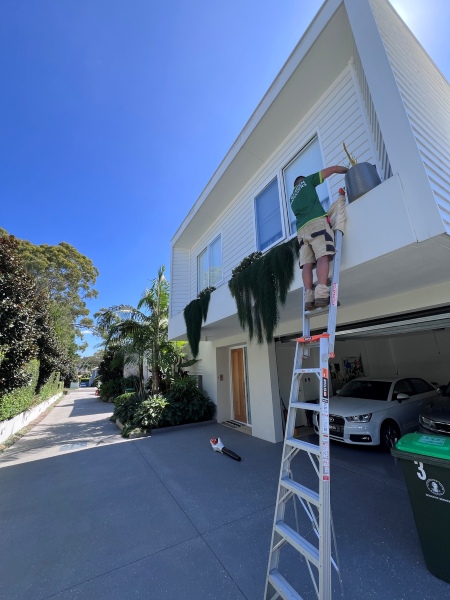
- Large tree pruning and structural maintenance — any pruning that requires elevated equipment, an arborist certificate, or involves branches larger than what a tenant could safely manage with a standard ladder is your responsibility
- Dead branch removal — dead or dying branches that pose a risk of falling must be removed promptly by the landlord. This is both a maintenance obligation and a safety liability issue — if a dead branch falls and injures a tenant or damages property, the landlord can be held liable
- Trees near power lines or structures — any tree growing towards power lines, buildings, fencing or other structures must be managed by the landlord. Council approval may also be required for removal or significant pruning
- Tree removal — removing established trees is the landlord’s responsibility and in many Sydney councils requires a permit or tree removal application regardless of who initiates it
- Root intrusion management — tree roots intruding into drainage systems, pipes or foundations are the landlord’s responsibility to manage
If a tenant reports a dangerous tree or dead branches in writing and the landlord fails to act promptly, and that tree subsequently causes injury or property damage — the landlord faces significant legal liability. Always action tree safety reports within 48–72 hours of notification. For urgent safety issues, engage a licensed arborist immediately.
Irrigation Systems
Irrigation infrastructure is entirely the landlord’s responsibility to maintain in working order. This includes:
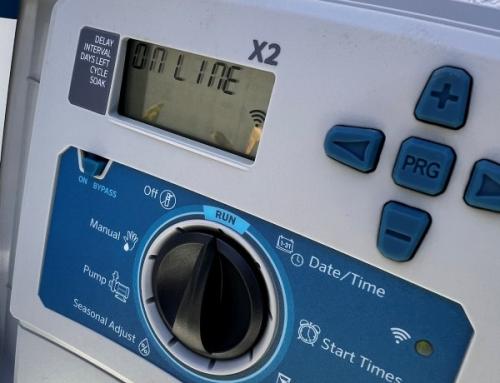
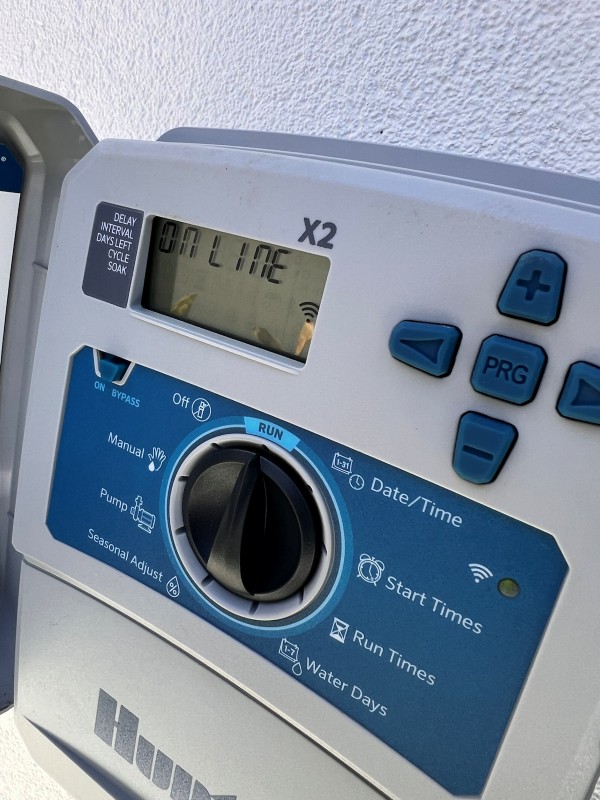
- Irrigation controller installation and repairs — the timer or smart controller unit, its programming infrastructure and any associated wiring
- Solenoid valves — replacing or repairing faulty solenoids that control individual irrigation zones
- Underground pipes and fittings — any pipe leaks, broken fittings or pressure issues within the irrigation infrastructure
- Sprinkler heads and drip emitters — maintaining the physical irrigation outlets in working condition
- Providing adequate irrigation equipment — if a property has no irrigation system, the landlord should provide at minimum a garden hose and appropriate connection points for the garden area
Tenants are responsible for programming the controller appropriately and observing Sydney Water restrictions. However, if a tenant reports an irrigation fault and the landlord fails to repair it — and plants subsequently die as a result — the landlord generally cannot hold the tenant responsible for the plant losses.
“One of the most common issues we see at investment properties is an outdated irrigation controller running on a fixed summer schedule year-round. This wastes significant water, increases the landlord’s water bill liability, and often causes both over and under-watering of different garden zones seasonally. A smart controller upgrade is a landlord obligation and investment that pays for itself through reduced water costs and healthier plants that maintain the property’s value.”
Structural Garden Elements
- Retaining walls — maintaining, repairing and replacing retaining walls that are part of the property’s structure. Retaining wall failure is a significant safety issue and an urgent landlord obligation
- Garden edging and borders — structural garden edging, sleeper borders and raised bed structures are the landlord’s responsibility to maintain
- Fencing that defines garden boundaries — garden fencing, trellises and boundary structures are the landlord’s responsibility unless damage is caused by tenant negligence
- Garden lighting — outdoor garden lighting systems, including wiring and fittings, are the landlord’s responsibility
- Water features and ponds — structural maintenance of any water features, pumps and associated plumbing
- Paths and hard landscaping — repairing damaged pathways, pavers and hard landscaping that have deteriorated through normal use or age
Plant Replacement and Garden Health
- Replacing plants that die due to pre-existing conditions — if a plant was unhealthy at the start of the tenancy, or dies due to disease, age or pre-existing soil issues, replacement is the landlord’s responsibility
- Significant pest and disease treatment — treating established infestations that were present before the tenancy or that develop due to conditions beyond the tenant’s reasonable control
- Soil health and drainage issues — addressing underlying soil compaction, drainage problems or pH imbalances that prevent plants from thriving
- Specialist plant care — established plants requiring specialist horticultural knowledge, specific treatments or professional care beyond basic watering and pruning
Gutters and Drainage
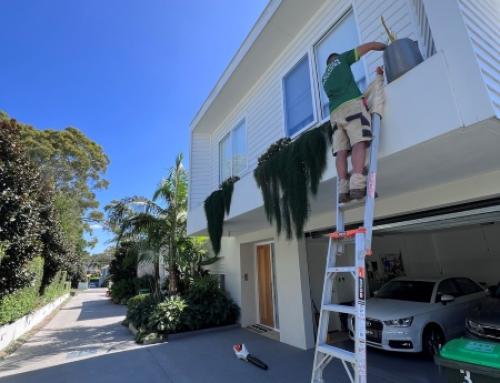
Gutter cleaning is consistently identified by NSW property law practitioners as a landlord responsibility — though tenants have a corresponding obligation to report blockages promptly. If a tenant reports a blocked gutter and the landlord fails to act, and water damage subsequently occurs, the landlord carries the liability. We recommend scheduling professional gutter cleaning at least twice per year as part of your investment property maintenance program.
Quick Reference — Who Is Responsible for What
| Garden Task | Responsible Party | Notes |
|---|---|---|
| Large tree pruning and removal | Landlord | Any work requiring arborist or elevated equipment |
| Dead branch removal | Landlord | Safety obligation — action promptly when reported |
| Irrigation system repairs | Landlord | Controllers, solenoids, pipes, sprinkler heads |
| Retaining walls and structures | Landlord | Structural repair and replacement |
| Replacing plants (pre-existing/age/disease) | Landlord | Unless caused by proven tenant neglect |
| Pest and disease treatment (established) | Landlord | Pre-existing infestations and conditions |
| Gutter cleaning | Landlord | Tenant must report blockages promptly |
| Garden lighting and electrical | Landlord | All garden electrical infrastructure |
| Lawn mowing and edging | Tenant | Routine, seasonal maintenance |
| Weeding garden beds | Tenant | Ongoing routine care |
| Watering established plants | Tenant | Within Sydney Water restrictions |
| Small shrub trimming | Tenant | Low-growing shrubs and ground covers |
| Leaf and debris clearing | Tenant | Lawns, paths and hard surfaces |
| Fertilising | Specify in lease for clarity | |
| Hedge trimming (structural) | Basic shaping is tenant, major restructuring is landlord | |
| Mulching | Maintaining existing mulch is tenant, full replacement may be landlord |
How Smart Landlords Protect Their Investment Property Garden
Beyond legal obligations, the most commercially sensible approach for NSW landlords is to proactively manage garden quality rather than relying on tenants to maintain it — particularly for higher-value properties where a neglected garden directly impacts rental yield and capital value.
Photograph every part of the garden with date stamps. Include close-ups of all plants, lawn condition, mulch levels, irrigation heads and any existing issues. This is your legal benchmark.
Include specific garden maintenance requirements — mowing frequency, watering standards, which areas are tenant responsibility versus landlord. Vague leases cause disputes.
Don’t wait for things to break. Schedule annual tree inspections, irrigation servicing and structural checks as part of your investment property maintenance calendar.
For high-value properties or complex gardens, many landlords include professional garden maintenance in the rent — removing tenant ambiguity entirely and protecting the asset.
Should You Include Garden Maintenance in the Rent?
For investment properties with significant gardens — particularly in prestige Eastern Suburbs locations — many landlords choose to include professional garden maintenance as part of the tenancy arrangement. This approach has real advantages that often outweigh the cost:
The Advantages
- Eliminates garden disputes entirely — when a professional maintains the garden, there is no ambiguity about who is responsible for what standard
- Protects capital value — a professionally maintained garden consistently attracts higher-quality tenants and supports rental yield
- Tax deductible — professional garden maintenance costs on investment properties are generally tax deductible as a property expense. Consult your accountant for specific advice
- Documented maintenance history — professional photo reports after every visit create a complete maintenance record that protects you legally and assists with future insurance claims
- Removes the cost-uncertainty of end-of-lease restoration — a garden maintained professionally throughout the tenancy eliminates the expensive restoration jobs that accumulate when tenants manage gardens poorly
When It Makes Sense
Including garden maintenance in the rent makes strong commercial sense when:
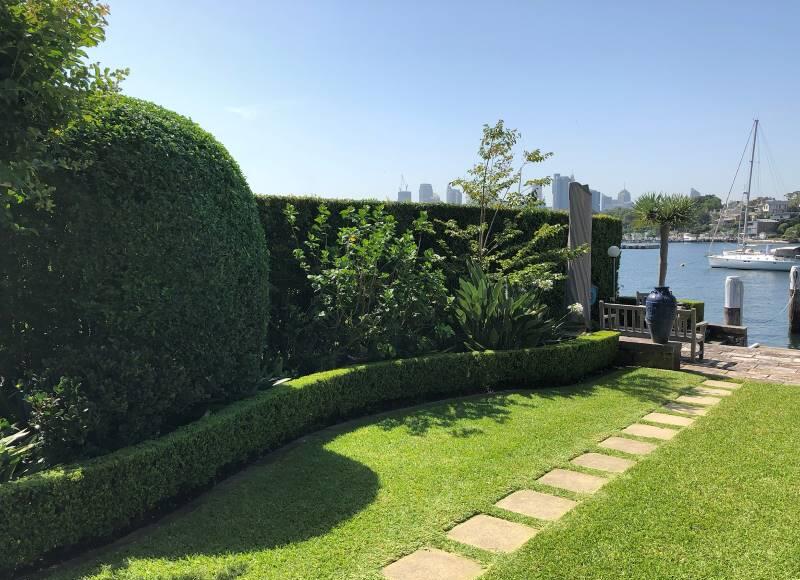
- The property has a significant garden with established hedges, specimen plants or formal landscaping
- The property is in a prestige location where garden presentation is a meaningful part of the rental value
- The property has complex irrigation, sloped sites or specialist plantings that require horticultural knowledge
- You have had previous tenants neglect the garden and faced expensive end-of-lease restoration costs
- The property is managed by a property manager who wants reliable documentation for inspection reports
“We manage a number of Eastern Suburbs investment properties where the landlord includes our maintenance program in the rent — typically $180–$350 per month added to the rental price. In every case, the landlord recovers this cost through higher rental yield, a better class of tenant, and the complete elimination of end-of-lease garden restoration bills that previously ranged from $800–$3,000 per vacancy. For prestige properties, a well-maintained garden genuinely commands higher rent and shorter vacancy periods.”
Manage an investment property in Sydney?
We provide professional garden maintenance programs for landlords and property managers across Greater Sydney — with photo reporting, fixed pricing and no lock-in contracts.
Preventing Garden Disputes — A Practical Checklist for NSW Landlords
The vast majority of garden maintenance disputes in NSW are preventable. Here is what experienced landlords and property managers do to eliminate them before they start:
Before the Tenancy Starts
- Have the garden professionally maintained before the tenant moves in — this establishes a clear, high standard that is documented in the condition report and harder to dispute at vacate
- Complete a thorough photographic condition report — photograph every corner of the garden including close-ups of individual plants, lawn quality, mulch levels, irrigation heads and any structural elements
- Address all landlord maintenance items before handover — dead trees, damaged irrigation, broken structural elements should be repaired before the tenant moves in, not afterwards
- Specify garden responsibilities clearly in the lease — mowing frequency, watering requirements, which areas are common property and which are the tenant’s responsibility
- Provide a basic garden maintenance guide — for properties with specific plants or complex irrigation systems, a brief guide helps tenants understand what the garden needs
During the Tenancy
- Conduct quarterly garden inspections — don’t wait for the end of lease to identify garden issues. Catching problems early allows both parties to address them without the pressure of a vacate inspection
- Action maintenance reports promptly — when a tenant reports a tree, irrigation or structural issue in writing, respond within 48 hours and arrange repair within a reasonable timeframe
- Schedule annual tree inspections — particularly important for properties with established trees in Sydney’s Eastern Suburbs where heritage tree protection orders and council permit requirements are common
- Service the irrigation system annually — pre-summer irrigation servicing ensures the system runs efficiently and within Sydney Water restrictions throughout the peak growing season
At End of Tenancy
- Compare end-of-lease photos directly against ingoing photos — not against an ideal standard. Claims must be based on deterioration beyond fair wear and tear from the documented ingoing condition
- Obtain professional quotes before making bond claims — NCAT requires reasonable evidence of costs. An itemised quote from a licensed garden maintenance company is far stronger evidence than an estimate
- Allow adequate time for the tenant to remedy issues — if the outgoing inspection identifies garden issues, provide a reasonable remedy period before proceeding to bond claims
- Account for fair wear and tear — some garden deterioration over a long tenancy is normal and cannot be charged to tenants. A lawn that is slightly less lush after a two-year tenancy is not a claim; a completely dead lawn with significant weed infestation may be
Landlords in Strata Properties — Additional Considerations
For landlords who own investment properties within strata schemes, garden maintenance responsibilities are layered — with obligations coming from both NSW tenancy law and NSW strata legislation simultaneously.
In a strata scheme, common area gardens — including shared pathways, entry gardens, pool surrounds and building perimeters — are the Owners Corporation’s responsibility under the Strata Schemes Management Act 2015 (NSW), not the individual lot owner’s or tenant’s.
This means that as a landlord in a strata scheme:
- You are responsible for any gardens or outdoor areas within your exclusive use area or private courtyard — these are your lot and your maintenance responsibility
- The Owners Corporation (through strata levies) is responsible for common area gardens — your tenants cannot be held responsible for these areas
- If the strata’s grounds are poorly maintained, the remedy is through the Owners Corporation and its strata garden maintenance contractor — not through your tenants
- Some strata by-laws place specific obligations on lot owners regarding courtyard maintenance — check your strata’s by-laws carefully
What Landlord Garden Maintenance Costs in Sydney 2026
Budgeting properly for garden maintenance is part of responsible investment property management. Here are realistic costs for landlord maintenance obligations across Sydney in 2026:
| Service | Typical Sydney Cost 2026 | Frequency |
|---|---|---|
| Arborist inspection and report Established trees, safety assessment |
$250–$500 | Annual |
| Large tree pruning Arborist, elevated work |
$400–$2,000+ | As required |
| Irrigation system service Full check, seasonal adjustment |
$180–$480 | Annual (pre-summer) |
| Smart controller upgrade Hunter Hydrawise or Rain Bird |
$450–$950 | Once (replaces old timer) |
| Gutter cleaning Standard residential |
$150–$350 | Twice yearly |
| Retaining wall repair Minor repair, sleeper wall |
$500–$3,000+ | As required |
| End of lease garden restoration Full clean-up and reinstatement |
$400–$2,500+ | Per vacancy (if needed) |
| Landlord-managed maintenance program Included in rent arrangement |
$180–$450/month | Ongoing (eliminates restoration costs) |
Prices are indicative for Greater Sydney in 2026. Garden Managers provides free site assessments and fixed-price proposals for all landlord maintenance services — contact us for a quote specific to your investment property.
Garden Managers — Trusted by Sydney Landlords and Property Managers
We provide professional garden maintenance for investment properties across Sydney’s Eastern Suburbs — helping landlords protect their assets, eliminate end-of-lease disputes and maintain the presentation standards that command premium rents.
Our landlord programs include:
- Fixed monthly price — fully tax deductible investment property expense
- Photo report after every visit — complete maintenance record for your files
- Annual irrigation servicing included in all comprehensive programs
- Pre-tenancy garden preparation — establish the highest possible ingoing standard
- End of lease restoration — fast, documented, fully quoted
- Liaison directly with your property manager — minimal time required from you
- 5-star rated, fully insured, 10+ years Sydney experience
Frequently Asked Questions — Landlord Garden Maintenance NSW 2026
What garden maintenance is a landlord responsible for in NSW?
In NSW, landlords are responsible for major garden maintenance including: large tree pruning and removal (any work requiring an arborist or elevated equipment), irrigation system installation and repairs (controllers, solenoids, pipes and sprinkler heads), structural garden elements (retaining walls, fencing, garden lighting, water features and hard landscaping), replacing plants that die due to pre-existing conditions or age, treating significant pest and disease infestations, and gutter cleaning.
Routine maintenance — mowing, weeding, watering and general tidying — is the tenant’s responsibility under the Residential Tenancies Act 2010 (NSW). The dividing line is routine care versus capital maintenance and repair.
Can a landlord require a tenant to maintain a complex garden in NSW?
Landlords can require tenants to maintain gardens to the standard documented in the ingoing condition report — but they cannot require tenants to perform work that goes beyond routine care. A lease can specify mowing frequency, watering requirements and general presentation standards. However, requiring tenants to manage established trees, service irrigation systems, or perform specialist horticultural work would likely be unenforceable at NCAT.
For properties with complex or high-value gardens, the most practical approach is for landlords to either include professional garden maintenance in the rent, or clearly accept that the significant horticultural components of the garden are their ongoing maintenance responsibility.
Who pays for tree removal on a rental property in NSW?
Tree removal on a rental property in NSW is the landlord’s responsibility and cost. This applies regardless of the reason for removal — whether the tree is dead, dangerous, damaged by storm, growing towards power lines or structures, or simply requires removal as part of garden management. Tenants cannot be required to arrange or pay for tree removal.
In many Sydney councils, tree removal also requires a permit or development application — particularly for established natives or trees of a certain size. The landlord is responsible for obtaining any required council approvals before removal proceeds.
Is a landlord responsible for the irrigation system in a rental property?
Yes. The irrigation system infrastructure — including the controller, solenoid valves, underground pipes and sprinkler heads — is the landlord’s responsibility to maintain in working order. If any component fails, the landlord must arrange repair promptly after being notified.
Tenants are responsible for programming the controller appropriately for the season and observing Sydney Water restrictions. If a tenant reports an irrigation fault in writing and the landlord fails to act, and plants subsequently die as a result, the landlord generally cannot hold the tenant responsible for the plant losses at end of lease.
Can a landlord claim on the bond for garden neglect in NSW?
Yes — but only to restore the garden to the standard documented in the ingoing condition report, not to improve it beyond its original state. Bond claims for garden neglect must be supported by photographic evidence from both the ingoing and outgoing condition reports, and reasonable professional quotes for the remedial work required.
Claims are decided by NCAT if disputed. Landlords should be aware that NCAT applies a fair wear and tear standard — some garden deterioration over a long tenancy is considered normal and cannot be charged to tenants. Well-documented condition reports from both the start and end of the tenancy are essential for any successful bond claim.
Should I include garden maintenance in the rent for my investment property?
For investment properties with significant gardens — particularly in prestige Eastern Suburbs locations — including professional garden maintenance in the rent is often the most commercially sensible approach. It eliminates garden disputes entirely, protects your capital value, is generally tax deductible as a property expense, and removes the cost and stress of end-of-lease garden restoration.
A typical professional maintenance program costs $180–$450 per month and is often fully recovered through higher rental yield and shorter vacancy periods. Garden Managers provides investment property maintenance programs across Sydney’s Eastern Suburbs — contact us for a fixed-price proposal for your property.
Protect Your Investment Property Garden in Sydney
Garden Managers provides professional garden maintenance for landlords and property managers across Greater Sydney — with fixed pricing, photo reporting and programs designed around investment property needs.