Most irrigation breakdowns aren’t breakdowns at all. Nine times out of ten, it’s a timer that’s lost its program, a valve that’s been nudged shut, or a solenoid that’s quietly given up after years in a damp valve box. Before you book a callout, a few minutes of checking the obvious stuff can save you real money — and after maintaining irrigation systems across Sydney’s Eastern Suburbs for over a decade, we can tell you that roughly half the jobs we attend could’ve been sorted by the homeowner with a quick look at the controller.
The Most Common Reasons Your Irrigation System Stops Working
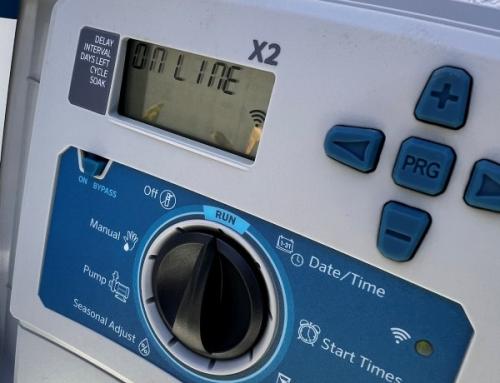
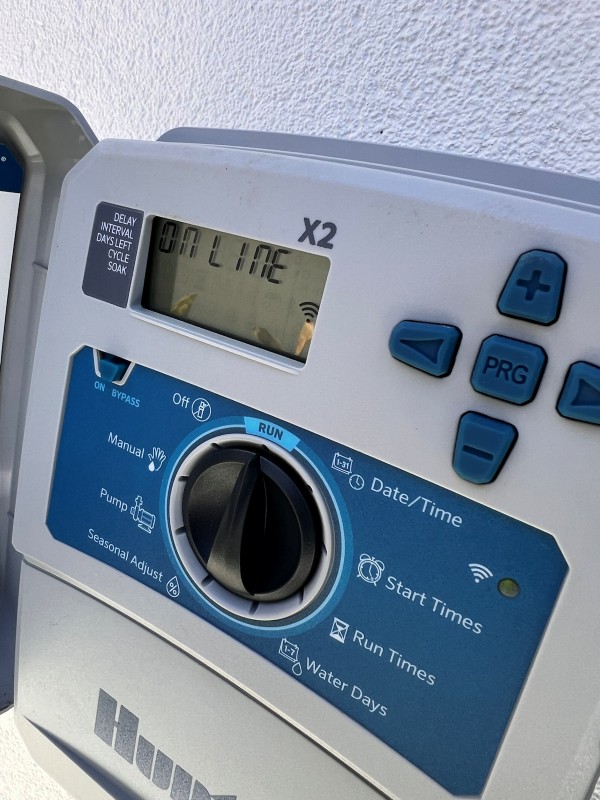
The controller has lost its programming. This is the single most common issue we diagnose — easily 40% of callouts. A power surge, a tripped circuit breaker, or a flat CR2032 backup battery is all it takes to wipe your entire watering schedule. The valves, pipes, and heads are all perfectly fine. The system is just sitting idle because nobody told it to run. If your controller screen is blank, flashing “12:00,” or showing the factory default, this is almost certainly your problem. Hunter Pro-C and Rain Bird ESP-Me units — the two most common controllers we see in the Eastern Suburbs — both lose their programs when the backup battery dies during a power outage.
A solenoid valve has seized or failed. Every zone on your system is controlled by its own solenoid valve, usually buried in a green or purple plastic valve box at ground level. When one fails, that specific zone stops watering while every other zone keeps running normally. Sydney’s water supply carries enough dissolved minerals to gradually build up residue inside these valves, and heavy rain can flush silt and clay directly into the box. We dealt with exactly this at a federation-era property in Randwick last March — three rear zones completely dead after a week of heavy autumn rain. The owner was bracing for a full system replacement. Turned out two solenoids were packed solid with clay that had washed down from the garden beds above. A clean-out, a new irrigation solenoid on the third, and the whole system was back inside an hour. Total parts cost was under sixty dollars.
Sprinkler heads are cracked, clogged, or buried. Lawn mowers clip them. Tree roots slowly push them out of alignment. Sandy Eastern Suburbs soil works its way into the nozzles over summer. The telltale sign is always the same — a patchy lawn that’s green in some spots and crispy brown in others, even though the system appears to be running. Run each zone manually, walk the line, and look for heads that aren’t popping up, spraying in the wrong direction, or just dribbling instead of throwing a proper arc.
Irrigation Fault Diagnosis — What to Look For
| Symptom | Likely Cause | DIY or Pro? |
|---|---|---|
| No zones turn on at all | Controller lost power or programming | DIY — reprogram schedule |
| One zone is completely dead | Failed solenoid or cut wire | Pro — requires multimeter testing |
| Low pressure across every zone | Master valve or backflow preventer half-closed | DIY first — check valve is fully open |
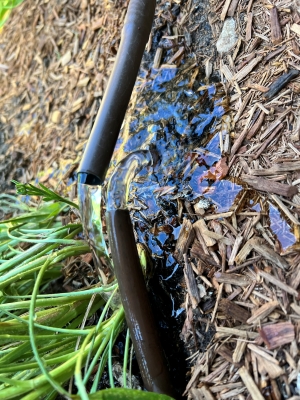
| Water bubbling up around one head | Cracked body or snapped riser | DIY — unscrew and replace the head |
| System skips its scheduled run | Rain sensor stuck or rain delay enabled | DIY — reset sensor, clear delay |
| Some heads won’t retract after cycle | Debris in the spring mechanism or worn seal | DIY — clean or replace the head |
What You Can Check Right Now
- Open the controller box and check the screen. Is the time and date correct? If the display is blank or flashing, replace the backup battery — it’s a standard CR2032 coin cell, available at any Woolworths or Bunnings — then reprogram your zone start times and run durations.
- Run each zone manually from the controller itself, not from a phone app. Turn the dial to the manual position or hold the manual button. This isolates whether the fault is in the programming or the hardware. If zones run fine manually, your schedule is the problem.
- Locate your master valve or backflow prevention device — usually near the water meter or the external tap closest to the street. Make sure it’s turned fully open. These get bumped during garden work or by tradespeople more often than you’d expect.
- Walk each active zone and visually inspect every head. Look for ones that don’t pop up, spray unevenly, or leak at the base. A single broken head can drop pressure for the entire zone.
- Check your rain sensor — a small disc typically mounted on the fascia board, fence, or eave. If the hygroscopic discs inside are still swollen, the sensor will tell the controller to stay off even if it hasn’t rained in days. You can verify recent rainfall on the Bureau of Meteorology Sydney observations page to confirm whether the shutoff is justified. Also worth checking that your system complies with current Sydney Water usage guidelines while you’re at it.
When To Call Someone
Dead battery, wiped schedule, cracked sprinkler head you can see with your own eyes — sort those yourself. Genuinely not worth a callout. But when zones won’t fire despite a working controller, when pressure drops for no visible reason, or when you’re tracing 24-volt wiring through a garden bed that hasn’t been touched since the house was built — that’s where basic troubleshooting ends and proper diagnostic equipment starts. This is especially true for strata properties, where a single faulty zone can leave shared common areas bone dry for weeks before anyone on the committee notices the damage. If you’ve worked through everything above and you’re still stuck, get in touch — we’ll find it.
People Also Ask
Why won’t my irrigation system turn on automatically?
Almost always a programming issue. Power outages and dead backup batteries wipe stored schedules. Check your controller screen, replace the battery if needed, and re-enter your zone times. Also confirm no rain sensor or manual rain delay is overriding the program.
How do I tell if an irrigation solenoid valve is broken?
Run each zone manually from the controller. If one zone stays dead while the rest work, that zone’s solenoid has likely failed. A technician can confirm with a multimeter test on the valve wiring — a healthy solenoid reads between 20 and 60 ohms.
How much does it cost to repair an irrigation system in Sydney?
Simple fixes like a new sprinkler head or solenoid cost $15–$50 in parts and can be DIY. Professional diagnostic callouts in Sydney’s Eastern Suburbs typically range from $120–$200, depending on the complexity of the fault and the number of zones involved.
Written by Laszlo — founder of Garden Managers and qualified horticulturist with over 10 years of hands-on experience installing, repairing, and maintaining irrigation systems across Sydney’s Eastern Suburbs, including Randwick, Coogee, Vaucluse, Bondi, and Rose Bay.