NSW Strata Garden Maintenance: Why Your Committee’s Legal Exposure Just Tripled
Three significant changes to NSW strata law since March 2025 have fundamentally shifted the risk landscape for strata committees — and garden maintenance is one of the most directly affected areas. Here is what changed, what it means in plain English, and what your committee needs to do about it.
⚖️ Section 37 July 2025
✓ Real Examples
✓ Action Checklist
This guide explains recent NSW strata law changes in plain English from the perspective of a garden maintenance specialist. It is not legal advice. For advice specific to your scheme’s situation, consult a qualified NSW strata lawyer. References to legislation are included throughout — check the linked sources for the exact legislative text.
1. The window to sue tripled. From 1 July 2025, lot owners have 6 years (up from 2) to bring a claim against the Owners Corporation for failing to maintain common property — including gardens, paths and irrigation. Every unmaintained garden hazard from 2020 onwards is potentially still actionable today.
2. Committee members now have codified personal duties. From 1 July 2025, Section 37 of the Strata Schemes Management Act 2015 (NSW) formally requires each committee member to act with honesty, fairness and due care and diligence. Ignoring a known garden hazard is now a documented personal duty breach — not just an organisational failure.
3. NSW Fair Trading can now come to you. The regulator has new direct enforcement powers over Owners Corporations that fail their maintenance duty. Previously, owners had to take the committee to NCAT themselves. Now, Fair Trading can investigate and issue compliance notices without a private owner having to initiate anything.
Most strata committee members accept their role with the best of intentions. They volunteer their time, attend meetings, make decisions about the building, and generally try to do right by their fellow owners. Many of them have no legal background and no reason to think that their involvement on a volunteer committee creates serious personal legal exposure.
The NSW strata law reforms of 2025 — rolled out in stages from March through July 2025, with further changes effective April 2026 — have changed that picture significantly. Not dramatically for well-run schemes that are already doing the right things. But meaningfully for the large number of schemes where maintenance decisions have been made informally, documented poorly, or deferred without formal resolution.
For garden maintenance specifically, these changes matter more than most committees realise. Gardens, pathways, trees, irrigation systems and common area landscaping generate a disproportionate share of the maintenance failures that lead to claims. And the three changes described below directly increase the legal exposure those failures create.
This guide explains each change in plain English, illustrates it with a realistic garden scenario, and tells you what your committee should be doing differently from today.
Change 1 — The Claim Window Tripled: From 2 Years to 6 Years
What the law says
Section 106 of the Strata Schemes Management Act 2015 (NSW) places a strict legal duty on every Owners Corporation to maintain common property in a state of good and serviceable repair. This has been the law since 2015 and has not changed. What changed — effective 1 July 2025 under the Strata Schemes Legislation Amendment Act 2025 — is how long an affected owner has to bring a claim when that duty is breached.
Before 1 July 2025, an owner had 2 years from when they first became aware of a loss to bring an action against the Owners Corporation under Section 106. From 1 July 2025, that window became 6 years. The same type of claim, the same cause of action, triple the time to pursue it.
What this actually means for your committee
The 2-year window was short enough that many maintenance failures fell outside it before an owner got around to acting. The 6-year window removes that buffer almost entirely. A garden maintenance failure from 2022 that an owner noticed in 2023 but hadn’t pursued — that owner now has until 2029 to bring a claim. Work backwards from today: any common property maintenance failure your scheme has had since approximately mid-2020 is potentially still within the window under the new timeframe.
For committees that have been informally managing garden maintenance — no written records, no contractor photo reports, no documented decisions — this extended window means that past decisions (or the absence of decisions) about garden maintenance are now significantly more exposed than they were 18 months ago.
The Tree Root Claim That Wouldn’t Have Been Possible Before 2025
Consider this situation: a strata scheme in Sydney’s Inner West had a mature Ficus tree with known root intrusion issues. In 2022, the committee received a contractor’s report noting that the tree roots were beginning to lift a section of the shared pathway near the main entrance. The committee discussed it at a meeting but resolved to monitor the situation rather than proceed with root management and pathway repair due to cost concerns. The minutes recorded: “committee to review.”
By late 2023 the path surface was noticeably uneven. A resident raised it in writing with the strata manager. The committee discussed it again and approved a quote, but works were delayed through 2024 and had still not been completed by mid-2025.
In August 2025, a resident tripped on the raised path section and suffered a knee injury. They engaged a solicitor in October 2025 — more than 2 years after the original contractor report that documented the hazard, but well within the new 6-year window.
Under the pre-2025 law, this claim would have faced a significant limitation period argument. Under the law as it stands today, the 6-year window from when the owner first became aware of the hazard gives this claim a strong procedural foundation. The 2022 contractor report — sitting in the strata records — is now a document that demonstrates the OC knew about the hazard years before it was addressed.
The lesson: documented maintenance awareness without documented maintenance action is now significantly more problematic than it was before 2025.
“We are seeing more strata committees specifically requesting that our visit reports document any hazards we identify — not just the work completed. This is the right instinct. A photo report that shows a maintenance issue identified and reported creates a paper trail of diligence. But a maintenance issue identified, reported, and then not actioned for 18 months creates the opposite — documented evidence of prolonged inaction. The photo reports are only half the solution. The other half is actually completing the work.”
Change 2 — Committee Members Now Have Codified Personal Duties
What the law says
Section 37 of the Strata Schemes Management Act 2015 existed before 2025, but it previously imposed only a general duty to act for the benefit of the owners corporation with due care and diligence. The July 2025 amendments to Section 37 under the Strata Schemes Legislation Amendment Act 2025 expanded and codified these duties significantly.
From 1 July 2025, every strata committee member in NSW is legally required to:
- Exercise their functions with honesty and fairness
- Act with due care and diligence
- Act for the benefit, as far as practicable, of the Owners Corporation as a whole
- Comply with the Act and the regulations
- Not behave in a way that unreasonably affects any person’s lawful use or enjoyment of a lot or the common property
These standards are described by legal commentators as deliberately aligned with corporate governance principles — the same language that applies to company directors. The phrase “due care and diligence” has a specific legal meaning and the same expression appears in the Corporations Act 2001 in relation to company officers.
What this actually means for your committee
The practical implication is the removal of the “we didn’t know” defence. Before these amendments, a committee member could argue they acted in good faith on incomplete information and that their general volunteer role didn’t demand the same diligence as a professional director. The July 2025 amendments make that argument significantly harder to sustain.
Acting with “due care and diligence” in the context of common property maintenance means:
- Taking maintenance reports seriously when they are provided
- Responding to documented hazards within a reasonable timeframe
- Ensuring that maintenance decisions — including decisions to defer maintenance — are formally recorded with reasons
- Seeking qualified advice when the committee lacks the expertise to assess a maintenance issue independently
A committee that receives a garden contractor’s report noting a hazard, discusses it informally without resolution, and allows the issue to persist without formal documentation is now operating outside these duties in a way that is clearly defined in law.
Section 260 of the Strata Schemes Management Act 2015 provides that a committee member is not personally liable for anything done or omitted in good faith for the purpose of executing functions under the Act. This protection remains in place — it means committee members are not automatically personally liable every time a maintenance decision turns out to be wrong. However, the NSW Supreme Court confirmed in Saad v The Owners – Strata Plan No 75928 [2025] NSWCATCD 108 that this protection is lost where a member is found to have acted without good faith. Ignoring a documented maintenance hazard over a prolonged period, with no formal resolution or documented reasoning, is the type of conduct where good faith arguments become significantly harder to make. The OC itself remains primarily liable for Section 106 breaches — but committee members who drove the decision-making are not completely insulated.
A Compliance Failure the Committee Was Aware Of
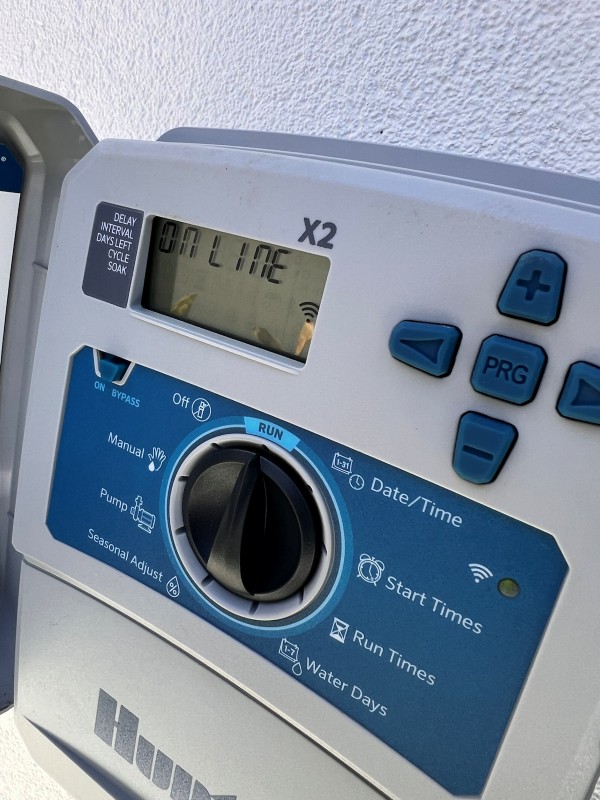
A strata complex in Sydney’s Eastern Suburbs had an irrigation controller that had been running outside Sydney Water’s permitted window — before 10am or after 4pm — since a power outage reset its schedule in late 2023. The garden maintenance contractor mentioned it verbally at a site visit in early 2024. The committee chair acknowledged it but the correction wasn’t scheduled as a formal maintenance item.
In 2025, Sydney Water issued a notice to the Owners Corporation regarding non-compliant watering. When the strata manager investigated, they found the original verbal report in the contractor’s site notes but no formal committee response — no resolution, no documented decision to address it, no record of any follow-up instruction.
Under the post-July 2025 duty framework, the committee’s failure to formally address a known compliance issue — even a relatively minor one — is now a documented failure to act with due care and diligence on a matter that was specifically brought to the committee’s attention. The contractor’s site note showing the issue was raised is the key document. What was missing was the committee’s documented response to it.
Change 3 — NSW Fair Trading Can Now Come Directly to You
What the law says
Before the 2025 reforms, the enforcement mechanism for Section 106 maintenance failures was almost entirely owner-driven. An owner who believed the Owners Corporation had failed to maintain common property had to take the matter to NCAT — the NSW Civil and Administrative Tribunal — themselves. This was expensive, time-consuming and required the individual owner to carry the entire burden of pursuing the matter.
The Strata Schemes Legislation Amendment Act 2025 gave NSW Fair Trading direct investigative and enforcement powers over Owners Corporations that may be in breach of their Section 106 duty. According to the NSW Government’s official strata reforms page, Fair Trading can now:
- Investigate potential breaches of the duty to repair and maintain common property
- Issue compliance notices to the Owners Corporation
- Take enforcement action without an individual owner having to initiate proceedings
What this actually means for your committee
The practical effect is a significant expansion of the enforcement risk. Previously, the risk of a Section 106 action depended entirely on whether an individual owner was motivated, resourced and persistent enough to take the committee to NCAT. Most weren’t. The cost and effort involved meant that many maintenance failures never resulted in formal proceedings — not because the OC had no obligation, but because the enforcement pathway was too difficult for individual owners to navigate.
Fair Trading’s new powers change this completely. A single complaint from any resident — or even Fair Trading’s own proactive monitoring — can trigger an investigation. The committee no longer needs a determined and legally-informed owner to face regulatory scrutiny of its maintenance record.
In a maintenance investigation, the documents that matter most are: written records of maintenance issues identified (contractor reports, resident complaints, inspection notes); formal committee resolutions in response to those reports; evidence of works completed; and contractor documentation — quotes, invoices, photo reports. A scheme with no contractor photo reports, no written maintenance schedule and no documented response to identified hazards has very little to show an investigator. A scheme with systematic documentation has a clear record of diligent management even if some issues took time to resolve.
Why Garden Maintenance Is Particularly Exposed Under These Changes
Strata committees often think of legal exposure in terms of building fabric — roofs, facades, plumbing, structural elements. These are significant and well understood. But garden and grounds maintenance generates a surprisingly high proportion of the maintenance failures that produce real-world claims, and the reasons are specific to how garden maintenance is typically managed.
Gardens produce the most physically dangerous hazards
Trip and fall injuries on common property are among the most frequently claimed strata incidents. And the leading causes of trip hazards on strata common property are almost all garden-related: tree root heave lifting pathway surfaces, uneven lawn edges adjacent to hard surfaces, overgrown vegetation reducing visibility and lighting effectiveness, deteriorating garden steps and retaining walls. These hazards develop gradually, are often documented in contractor reports, and then persist because the committee didn’t treat them as urgent. Under the post-2025 framework, a documented hazard that persists without formal resolution is the definition of the problem.
Garden maintenance is rarely formally documented
Most strata schemes have formal processes for major building works — quotes approved at committee meetings, written contracts, inspection certificates. Garden maintenance is almost always managed more informally — a verbal instruction to the gardener, a quick text to the strata manager, a mental note about the overgrown hedge. When a claim arises, this informal management trail provides very little evidence of diligence.
Irrigation compliance is an ongoing obligation — not a set-and-forget task
Sydney Water’s permanent Water Wise Guidelines require automated irrigation to run only before 10am or after 4pm — year round, regardless of whether formal restrictions are in place. Fines for non-compliant watering start at $550 for strata bodies corporate. An irrigation system running outside these hours due to a reset controller, a failed component or a schedule that was never properly set is an ongoing compliance breach. Under the due care and diligence standard now codified in Section 37, a committee that is aware of irrigation compliance issues and has not formally addressed them is operating outside its legal duties.
“The pattern we encounter regularly: a strata property has been maintained by the same contractor for years, informally, with no written scope, no photo reports and no formal inspection process. Everything looks fine most of the time so nobody has pressed for better documentation. Then something goes wrong — a trip, a Water notice, a resident complaint — and the committee suddenly needs to demonstrate that they were actively managing the gardens and responding to issues. Without photo reports and written records, there’s nothing to show. The documentation isn’t just a legal protection. It’s the evidence that the committee was doing its job.”
Four Garden Scenarios — Before and After the 2025 Changes
Scenario 1 — Overgrown Tree With Known Root Damage
Before 2025: A contractor’s report in 2022 notes tree root movement near a pathway. The committee discusses it, defers it. An owner trips in 2023 and wants to bring a claim — but the 2-year clock started running from when they were first aware of the hazard, and by the time they consult a solicitor in late 2023 the claim is running out of time.
After 2025: The same scenario. The same 2022 report. The same 2023 trip. But now the owner has until 2029 to bring the claim — and the 2022 report is in the strata file showing the committee was aware three years before the injury. The committee’s failure to formally resolve the issue over that three-year period is a documented compliance failure against the due care and diligence standard now in Section 37.
Scenario 2 — Irrigation Running Outside Permitted Hours
Before 2025: An irrigation system resets after a power outage and runs at 3am. The maintenance contractor mentions it verbally. The committee doesn’t formally action it. A Sydney Water fine arrives six months later. The committee pays the fine, fixes the system, and the matter ends there. No formal enforcement follow-up beyond the fine.
After 2025: The same scenario — except now NSW Fair Trading can investigate whether the committee’s failure to action a known compliance issue constitutes a failure to properly maintain common property infrastructure. The verbal contractor report that was never formally actioned is the document that demonstrates the committee knew. The absence of a formal committee response is the gap in the record.
Scenario 3 — Pathway Edge Adjacent to Garden Bed
Before 2025: A garden bed soil level gradually rises above the adjacent pathway surface over several seasons, creating a raised edge. The committee is generally aware that garden maintenance has been variable. An owner rolls an ankle on the raised edge in 2023, sustains an injury and wants to claim. By the time they act, 2 years have elapsed and the claim faces a limitation argument.
After 2025: The 6-year window gives the same owner until 2029. More significantly, if the committee cannot produce maintenance records, contractor visit reports or any documentation of garden condition over the relevant period, they have almost no capacity to defend a claim that the common property was not being properly maintained. The absence of documentation is itself evidence.
Scenario 4 — Contractor With No Insurance and No Documentation
Before 2025: A strata scheme uses a sole trader gardener with no public liability insurance and no written agreement. The committee knows this is suboptimal but hasn’t formalised the arrangement. A visitor is injured when a piece of garden equipment damages paving that creates a trip hazard. The gardener has no insurance, the committee has no documentation of any maintenance program.
After 2025: Under the due care and diligence standard in Section 37, using an uninsured contractor without a written maintenance scope — particularly where the committee was aware of this arrangement — is the type of decision that sits uncomfortably against the codified duty. The committee’s good faith defence becomes difficult to sustain when the circumstances of the maintenance arrangement are documented and clearly fell below the standard a reasonable committee acting diligently would have maintained.
What Your Committee Should Do Right Now — The Documentation Checklist
The good news is that the practical response to all three of these changes is the same set of actions — and none of them require legal expertise to implement. They require discipline and consistency.
The Honest Perspective — This Is Manageable
This guide has covered serious legal territory and the changes are real. But it’s worth being direct: the committees most at risk under these changes are the ones that have been managing garden maintenance informally, without documentation, and without a systematic response to identified issues. Well-run schemes with a professional maintenance contractor, consistent photo reporting and documented decision-making are already doing what the law now requires.
The 2025 reforms don’t change what good committee governance looks like. They change the consequences of falling short of it. For a committee that is already operating systematically, the practical impact is limited — you document what you’re already doing, and that documentation becomes your protection.
The investment required is not large:
- A written maintenance agreement with your contractor
- Photo reports after every visit
- A formal committee response to every identified hazard
- Annual irrigation compliance confirmation
- Contractor insurance certificates on file
None of these require legal expertise. They require consistency. And they protect every committee member from the personal duty exposure that Section 37 now creates.
Garden Managers — Built for the Documentation Requirements Your Committee Now Needs
The documentation practices that protect your committee under the 2025 reforms are the same practices we have delivered to every strata client since we began. Our strata garden maintenance programs include every element your committee needs for a defensible maintenance record:
- Written fixed-price service agreement — scope, frequency and inclusions in writing before work begins
- Photo report after every visit — work completed, issues identified, seasonal observations
- Formal hazard reporting — every identified risk documented and communicated to the strata manager in writing
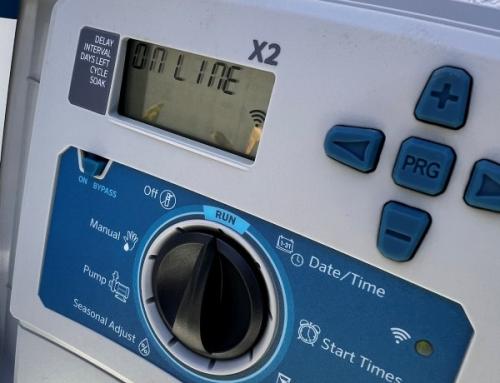
- Irrigation compliance confirmation — controller schedule documented and filed with each seasonal adjustment
- Public liability insurance $20M+ and workers compensation — certificates provided to your strata manager at engagement and annually
- Records retained — our visit records are available to strata managers for any documentation review or investigation
- No lock-in contracts — 30-day cancellation. We earn your retention through performance, not obligation.
Frequently Asked Questions
How long do owners now have to sue a strata committee for garden maintenance failures in NSW?
From 1 July 2025, lot owners in NSW have 6 years from when they first became aware of a loss to bring a claim against the Owners Corporation for failing to maintain and repair common property under Section 106 of the Strata Schemes Management Act 2015. This was previously 2 years. Garden maintenance failures — including pathway hazards from tree roots, irrigation failures, and overgrown vegetation causing safety issues — are all common property maintenance obligations covered by Section 106. The change means that issues from approximately mid-2020 onwards may still be within the new limitation period.
Can individual strata committee members be personally liable for garden maintenance failures?
The Owners Corporation — not individual committee members — is primarily liable for breaches of the Section 106 duty to maintain common property. Section 260 of the Strata Schemes Management Act 2015 protects committee members acting in good faith. However, the July 2025 amendments to Section 37 codified personal duties for committee members requiring them to act with honesty, fairness and due care and diligence. Where a committee member is found to have acted without good faith — for example, by ignoring documented hazards over an extended period without formal resolution — the Section 260 protection becomes harder to rely on. The NCAT Appeal Panel in Saad v The Owners – Strata Plan No 75928 [2025] NSWCATCD 108 confirmed that personal liability for committee members arises where good faith is absent.
What is the strata committee’s legal obligation for common area gardens in NSW?
Under Section 106 of the Strata Schemes Management Act 2015 (NSW), the Owners Corporation has a strict duty to maintain common property — including all garden areas, pathways, trees and irrigation infrastructure — in a state of good and serviceable repair. This is not a discretionary obligation. The duty applies regardless of cost, regardless of whether owners are in dispute, and regardless of other competing priorities. From July 2025, the committee members responsible for managing this obligation must do so with honesty, fairness and due care and diligence under Section 37. A committee that receives reports of garden maintenance issues and fails to formally respond to them is operating outside these obligations.
Can NSW Fair Trading investigate a strata committee for failing to maintain common area gardens?
Yes. The Strata Schemes Legislation Amendment Act 2025 gave NSW Fair Trading direct investigative and enforcement powers over Owners Corporations that may be in breach of their Section 106 maintenance duty. Previously, enforcement was almost entirely owner-driven — individual owners had to take committees to NCAT themselves. Fair Trading can now investigate potential breaches, including garden and grounds maintenance failures, and issue compliance notices to the Owners Corporation directly. A complaint from any resident — or Fair Trading’s own monitoring — can trigger an investigation without a private owner having to initiate proceedings.
Does a strata committee need photo reports from their garden maintenance contractor?
Photo reports are not legally mandated but are now effectively essential given the documentation requirements implied by the 2025 strata law reforms. Under the due care and diligence standard in Section 37, a committee needs to demonstrate active, systematic management of common property. Photo reports after every maintenance visit — showing work completed and any issues identified — are the most practical way to create that documented record. In any investigation or claim, the absence of visit documentation is itself evidence that the committee was not actively managing the property. Any strata garden maintenance contractor should provide photo reports as a standard service offering.
Does strata committee liability apply to irrigation system maintenance?
Yes. Irrigation systems installed on common property are common property infrastructure and fall within the Section 106 duty to maintain. This includes the controller, solenoid valves, pipe network, sprinkler heads and drip emitters. An irrigation system running outside Sydney Water’s permitted hours due to a failed or misconfigured controller is both a compliance breach (potentially $550 fine for strata OCs) and a maintenance failure that a committee exercising due care and diligence should identify and address. The committee should have a documented record of annual irrigation service and confirmation that the system is running within compliant hours.
References and Further Reading
- Strata Schemes Management Act 2015 (NSW) — Section 37 (Committee member duties), Section 106 (Duty to repair and maintain common property), Section 260 (Good faith protection)
- Strata Schemes Legislation Amendment Act 2025 (NSW) — Amending legislation, assented 2 March 2025, Stage 3 amendments effective 1 July 2025
- NSW Government — Changes to Strata Laws — Official summary of reform stages and commencement dates
- Holding Redlich — Extension of Section 106 Claims to 6 Years — Legal analysis of the limitation period change, March 2025
- Grace Lawyers — NSW Strata Reforms 2023–2026 — Comprehensive reform overview, May 2026
- Sydney Water — Water Wise Rules — Permanent irrigation restrictions applicable to all strata properties in Greater Sydney
Is Your Strata Garden Maintenance Program Ready for the New Legal Standard?
Garden Managers provides written service agreements, photo reporting after every visit, formal hazard documentation and irrigation compliance records — exactly the documentation your committee needs under the 2025 reforms. Free site assessment across Greater Sydney.