
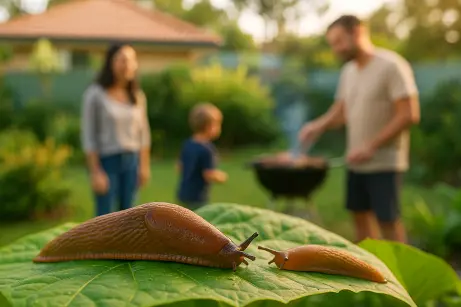
At first glance, garden slugs might seem harmless—slow-moving, almost cartoonish creatures with wiggly eye stalks. Some might even call them “cute.” But beneath that soft exterior lies a voracious appetite that can devastate your garden in just days.
If you’ve spotted slugs in your garden, your plants could be in trouble. These pests are among the most destructive you’ll encounter, capable of stripping leaves, damaging stems, and ruining fruit overnight. The earlier you act, the better your chances of saving your plants from a midnight feast.
Before we get into proven ways to control slugs in Australian gardens, let’s understand what we’re dealing with.
Know Your Enemy: The Garden Slug
Slugs are hermaphrodites—meaning they possess both male and female reproductive systems. They can breed without a mate, laying up to 36 eggs several times a year.
They mature in about six weeks and can live two to six years, continuing to grow throughout their lives—sometimes reaching up to 10 cm. A single slug can eat twice its body weight in a day, using thousands of tiny teeth to chew through tender leaves and fruit.
Slugs thrive in damp, shady spots and often hide their eggs under weeds or mulch. Understanding their habits is the first step to controlling them.
4 Effective Ways to Get Rid of Slugs
- Hunting and Traps
For small gardens, milk or beer traps are a simple and effective choice:
- Bury a deep cup in the soil with the rim a few centimetres above ground to avoid trapping beneficial insects.
- Fill halfway with beer, milk, or a yeast-honey-water mix.
- Replace every couple of days.
Slugs can’t resist the yeast smell in beer, mistaking it for overripe fruit. If you prefer humane methods, place moist cardboard, wooden planks, or upturned flowerpots in the garden. These create cool hiding spots where slugs will gather. Simply collect and relocate them far from your garden.
For larger infestations, go slug hunting at night using a headlamp or torch. Wear gloves and drop them into a bucket of soapy water.
- Natural Predators
Encourage nature to do the work for you:
- Ground Beetles – Available as larvae from garden centres. Provide shelter under stones or straw to keep them around.
- Toads – Offer shady hiding spots or install a small pond (without fish).
- Birds – Ducks, chickens, and even wild birds will happily snack on slugs. Install bird baths, feeders, and hedges to attract them.
- Slug Deterrents
Prevention is key:
- Reduce garden moisture – Use drip irrigation, water early in the morning, mow regularly, and space plants for airflow.
- Slug-repelling mulch – Oak leaf mulch or tobacco stem meal can be used as a barrier.
- Copper barriers – Slugs receive a mild shock when touching copper strips placed around garden beds.
- Plant slug-resistant species – Examples include garlic, mint, kale, foxglove, lobelia, and bleeding hearts.
- Chemical Control (Use Sparingly)
When nothing else works:
- Iron phosphate pellets – Products like Sluggo or Escar-Go are considered pet-safe and can kill slugs within a week.
- Ammonia spray – Mix ammonia and water in a spray bottle for direct application to slugs (avoid spraying plants).
Always follow product instructions and minimise environmental impact.
5 Garden Managers Tips for Slug-Free Gardens
- Inspect plants regularly at night – That’s when slugs are most active.
- Keep compost heaps tidy – Overgrown, moist compost can be a slug haven.
- Use raised garden beds – These make it easier to install barriers and traps.
- Encourage biodiversity – The more predators, the fewer slugs.
- Rotate crops seasonally – This disrupts slug breeding cycles.
Useful Resources
- ABC Gardening Australia: Pest Control – Reliable Australian-specific gardening advice.
- The Royal Horticultural Society: Slugs and Snails – In-depth information on slug behaviour and control.
For expert help with ongoing pest control and year-round garden care, visit Garden Managers—your local specialists in garden maintenance and landscaping.
If you’re struggling with slug infestations, remember: early detection and consistent action are key. By combining natural, preventive, and, when necessary, chemical methods, you can protect your plants and keep your garden thriving all year round.






Leave A Comment