› Mosman Nature Strip Transformation
Nature Strip Garden Sydney: What It Costs and What’s Involved — A Mosman Case Study
A Mosman strata building had a long, sloping council verge that was patchy grass and not much else. Council supplied the plants free through its Sustainable Nature Strip Program. We did the rest — turf removal, soil preparation, planting, guarding and mulching. Here’s the full process and what it costs.
✓ Full turf removal
✓ Traffic-managed site
✓ Council-supplied natives
A full nature strip garden transformation in Sydney typically costs $3,000–$7,000, depending on site preparation required, the length and slope of the verge, and site-specific requirements. Where a council program supplies the plants — as Mosman Council does through its free Sustainable Nature Strip Program — that cost covers the physical work: turf removal, waste disposal, soil preparation, planting, plant guards, mulching and establishment watering, plus traffic management, because a nature strip is a public footpath.
The situation
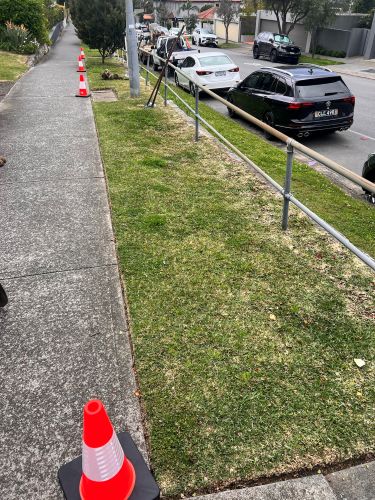
The verge outside this Mosman strata building was doing nothing for anybody. It was grass — thin in places, worn in others, sloping down toward the road, and needing mowing it didn’t really deserve. On a street of well-kept sandstone walls and established gardens, it was the weak point in the frontage.
Nature strips sit in an awkward space. The land is Council’s, but the maintenance falls to the adjoining property — so for a strata scheme it’s common property presentation that the owners corporation is responsible for keeping tidy, on land it doesn’t actually own. That’s usually why verges get the bare minimum: mow it, move on.
What changed the equation here was Mosman Council’s Sustainable Nature Strip Program. Council supplies the plants free for approved projects, along with a free garden design consultation. The scheme covers the labour and materials to install it. That shifts a verge garden from “nice idea, expensive” to genuinely worth doing.
Under the Sustainable Nature Strip Program, Mosman Council offers a free garden design consultation and free plants for approved projects. The program is open to homeowners, strata residents and tenants, with a focus on local native species chosen to support biodiversity and improve plant survival. Applications go through Council — details are on the Council website.
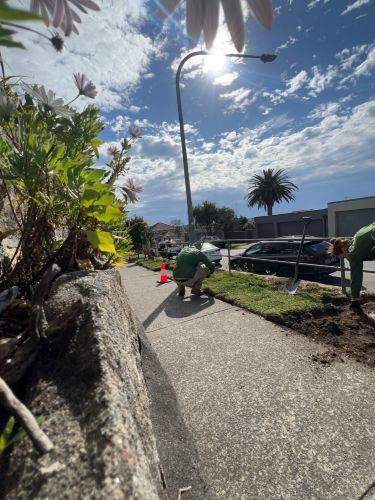
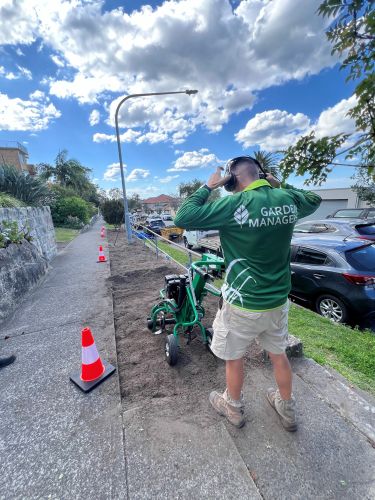
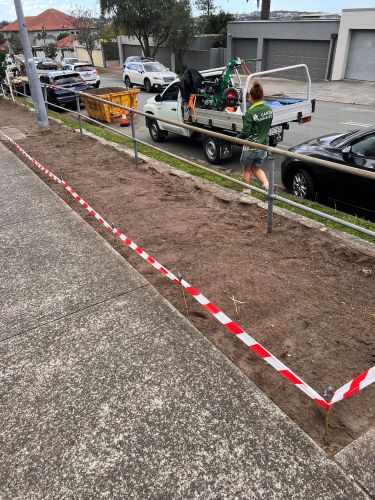
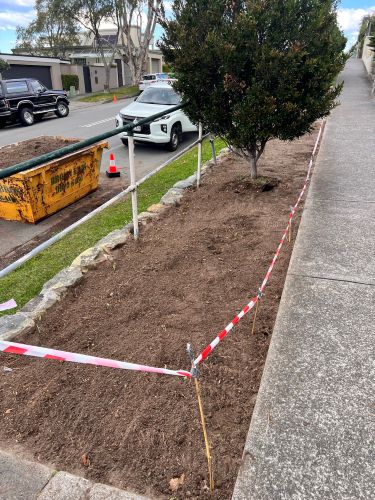
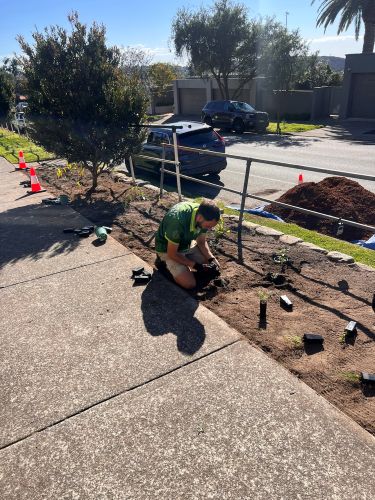
How the work ran
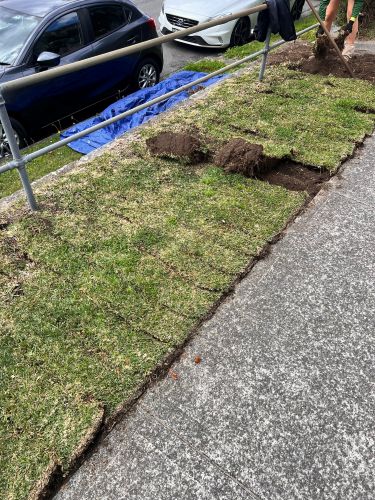
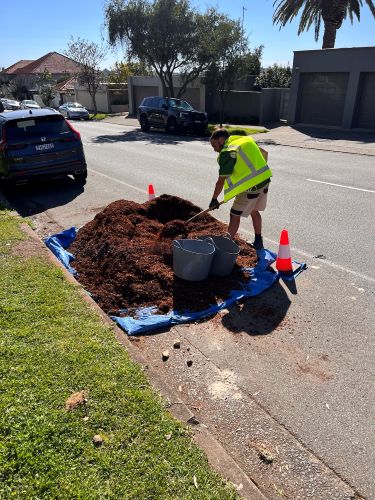
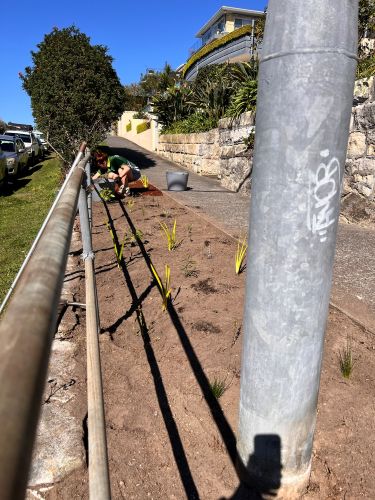
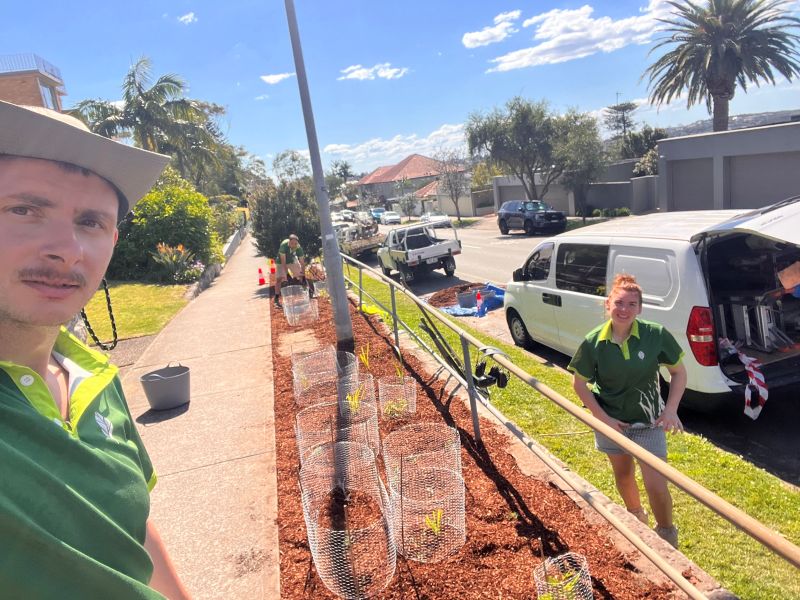
The thing that makes verge work different from a private garden isn’t the horticulture — it’s everything around it. You’re working on an active footpath, next to a live road, with parked cars either side and pedestrians who need to get past. Cones and tape go out before a tool comes off the truck, and material has to be staged kerbside on a tarp rather than dumped on the grass. On a sloping street like this one, everything also wants to roll downhill — mulch, tools, and water. It adds time that has nothing to do with planting, and it’s the part people don’t budget for when they picture the job.
What a nature strip garden costs in Sydney
This is the question every committee asks first, and the honest answer is that it varies more than most garden jobs — because the preparation, not the planting, is where the cost sits.
| Item | Detail |
|---|---|
| Full verge transformation | $3,000 – $7,000 |
| Plants (where a council program applies) | Free |
| What’s included in the range | Turf removal, waste disposal, soil preparation, planting, guards and stakes, mulch supply and spreading, traffic management, watering in |
Sydney, 2026. The range reflects real variation in site preparation, verge length, slope, access, and any site-specific requirements. This needs a site assessment rather than a per-metre rate.
What moves the price within that range
Preparation required
The biggest single variable. A verge with thin turf over reasonable soil is straightforward. Heavily compacted ground, or a strip that needs significant soil improvement before anything will grow, adds real time.
Length and slope
Length is obvious. Slope is less so — on a graded street everything has to be barrowed uphill or controlled downhill, and material staging takes longer.
Site requirements
Traffic management, waste volume, access for delivery and skip placement, and any specific council conditions attached to the approval.
The result
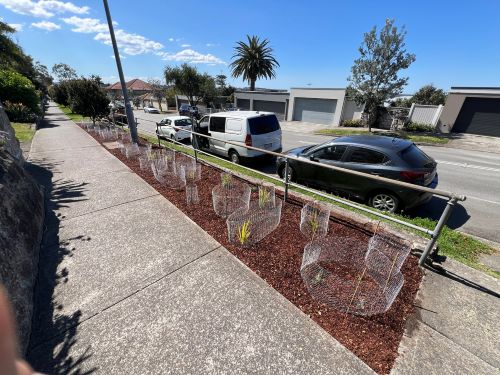
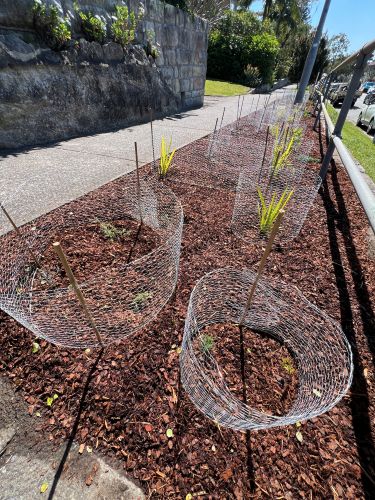
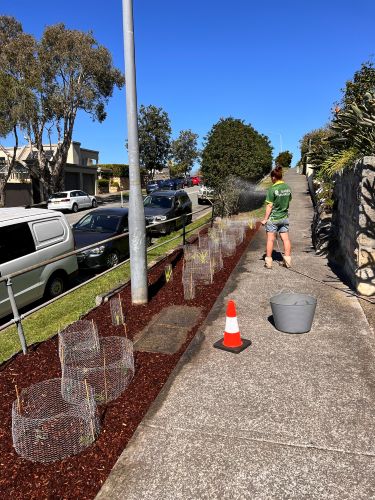
The verge went from patchy grass to a planted native strip running the full length of the building frontage — mulched, guarded, and set up to fill in over the coming seasons as the tubestock establishes.
Two things worth noting about the outcome. First, it looks deliberate now. A mulched, planted verge reads as maintained in a way that mown grass on a slope never quite does, and it lifts the whole frontage of the building. Second, it should be less work over time, not more — an established native planting on mulch needs periodic weeding and tidying rather than a mow every fortnight through the growing season.
Tubestock plantings look sparse when they go in, and that’s correct. The plants are spaced for their mature size, not for instant effect, and the wire guards are visible until they come off. A verge like this looks its best in its second and third year — worth explaining to a committee before the work starts, so nobody is surprised by how modest it looks on day one.
What strata committees should know before doing this
- Check with Council first. Nature strips are Council land. Programs, approvals and plant lists vary between councils, and doing work without approval can mean being asked to undo it.
- Free plants doesn’t mean free project. Council supplies the plants; the scheme pays for turf removal, waste disposal, soil preparation, mulch, labour and traffic management.
- Sightlines and access matter. Verge plantings need to keep driver sightlines clear, allow people to get from parked cars to the footpath, and leave room for bins on collection day. Species and placement have to account for this.
- Someone has to water it. New tubestock needs establishment watering through its first summer. Agree who does this before planting, not after.
- Traffic management is a real cost. Any contractor working on a public footpath needs appropriate insurance, WHS documentation and site controls. It’s not optional.
For strata schemes generally, verge work sits alongside the rest of the common property program rather than separate from it — see our guide to what’s actually included in strata grounds maintenance, or our Vaucluse garden management plan case study for how documented planning works on a strata site.
Frequently Asked Questions
Can you plant a garden on your nature strip in Sydney?
Yes, with Council approval. Mosman Council actively encourages it through the Sustainable Nature Strip Program, which offers a free garden design consultation and free plants for approved projects. The program is open to homeowners, strata residents and tenants.
Because the nature strip is Council land, approval matters — you can’t simply start planting. Applications go through Council, and the program focuses on local native species selected to support biodiversity and give the plants the best chance of surviving.
Who is responsible for maintaining a nature strip?
The land belongs to Council, but day-to-day maintenance generally falls to the adjoining property owner or occupier. For a strata scheme, that means the owners corporation is responsible for keeping the verge outside the building presentable, even though it isn’t part of the strata parcel.
This is why verges often end up as the weak point in an otherwise well-maintained frontage — the responsibility sits in an awkward place, so the default is a mow and nothing more.
How much does a nature strip garden cost in Sydney?
A full nature strip garden transformation in Sydney typically runs $3,000–$7,000. The plants being free through a council program removes one cost, but the physical work remains: turf removal, disposal of the lifted turf, soil preparation, mulch supply and spreading, plant guards and stakes, labour, and traffic management for working on a public footpath.
Where a project lands in that range depends mainly on how much preparation the site needs, the length and slope of the verge, and any site-specific requirements attached to the approval. A short, flat verge over reasonable soil sits at the lower end; a long sloping strip needing significant soil work sits at the upper end. It needs a site assessment rather than a per-metre rate.
Why are the new plants covered with wire guards?
Because a nature strip is a public footpath. Young tubestock is small, easy to miss, and sits directly beside foot traffic, parked cars, dogs and bins on collection day. A wire mesh guard and a stake make each plant visible and protect it while it establishes.
The guards are temporary. Once plants have put on enough growth to be obvious and to withstand the occasional knock, the guards come off.
Is a native verge garden less maintenance than grass?
Over time, generally yes. An established native planting on mulch needs periodic weeding and tidying, whereas turf on a verge needs mowing and edging through the whole growing season.
The first year is the exception. New tubestock needs establishment watering through its first summer and closer attention to weeds until the plants and mulch close over the ground. The maintenance saving comes once it’s established, not immediately.
Credit where it’s due — this project only happened because of Mosman Council’s Sustainable Nature Strip Program. Supplying free native plants and a free design consultation is what takes a verge garden from a nice idea to something a strata scheme will actually approve.
It’s a genuinely good program, and one more councils could learn from. Every verge that gets planted out is a small win for local biodiversity, for stormwater, and for how the street looks and feels. Our thanks to the Council team for making it straightforward to be part of.
Thinking about a verge planting for your building?
We handle nature strip transformations for strata and residential properties across Sydney — including turf removal, planting, mulching, and the traffic management that comes with working on a public footpath.