Autumn Garden Maintenance Sydney 2026 — What To Do This Month
The autumn garden maintenance in Sydney (April–June 2026), the most important garden maintenance tasks are: applying mulch to protect soil moisture, completing a full garden clean-up before winter, adjusting your irrigation schedule to match reduced rainfall needs, fertilising lawns before growth slows, and pruning summer-flowering plants. Acting now prevents costly repairs and prepares your garden — or strata property — for a strong spring comeback in September.
Autumn is arguably the most important maintenance season for Sydney gardens — and the most overlooked. Most homeowners and strata committees focus on spring and summer, but the work you do in April, May and June directly determines how well your garden performs when growth returns in September.
Sydney’s autumn is mild, with temperatures dropping from mid-20s in April to low teens by June. According to the Bureau of Meteorology, Sydney averages 127mm of rainfall in April alone — one of its wetter months — which creates both opportunity (for planting and recovery) and risk (for fungal disease and drainage issues) if your garden isn’t properly prepared.
This guide covers exactly what to do, week by week, for residential gardens and strata properties across Greater Sydney in 2026.
Your Autumn Garden Maintenance Calendar — April to June 2026
- Full garden clean-up
- Apply autumn mulch
- Fertilise lawns
- Adjust irrigation schedule
- Plant cool-season specimens
- Check drainage before rains
- Prune summer-flowering shrubs
- Hedge shaping and trim
- Weed control — pull before seeding
- Soil conditioning
- Irrigation system service
- Plant natives and ground covers
- Structural winter pruning
- Final mulch top-up
- Reduce mowing frequency
- Check for fungal disease
- Book spring maintenance now
- Review irrigation timers
1. Mulching — The Single Most Important Autumn Task
If you do nothing else this autumn, mulch. A 70–100mm layer of quality mulch applied in April delivers more benefit per dollar than any other garden maintenance activity in this season.
Here’s what mulching does for your Sydney garden right now:
- Insulates soil temperature as nights cool — protecting root systems from stress
- Retains moisture in the top 30cm of soil — reducing your irrigation needs by 30–50% through autumn
- Suppresses autumn weed germination — particularly important as kikuyu and buffalo grass slow and weeds seize the opportunity
- Feeds soil biology as it breaks down — improving structure and nutrient availability for spring growth
- Protects coastal garden beds from salt spray damage during winter storms
Which Mulch for Sydney Conditions?
Not all mulch performs the same in Sydney’s conditions. Here’s what we recommend based on property type:
| Mulch Type | Best For | Depth |
|---|---|---|
| Eucalyptus wood chip | Strata properties, coastal gardens — durable, professional finish | 75–100mm |
| Pine bark | Garden beds with established plants — good moisture retention | 70–90mm |
| Sugarcane mulch | Veggie gardens and annuals — breaks down quickly, feeds soil | 50–75mm |
| Pea straw | Flower beds — lightweight, adds nitrogen as it breaks down | 50–75mm |
“Keep mulch 50–100mm away from plant stems and tree trunks. Mulch piled against stems creates a moist environment that accelerates collar rot — one of the most common avoidable plant deaths we see in Sydney gardens every autumn.”
For strata properties across Sydney’s Eastern Suburbs, we typically use eucalyptus wood chip at 80–100mm depth for its durability, professional appearance, and resistance to coastal wind dispersal. See our professional mulching services in Sydney for detailed pricing and inclusions.
2. Lawn Care — What Your Sydney Lawn Needs Right Now
April is a transition month for Sydney lawns. Most common grass types — buffalo, couch, kikuyu and zoysia — are slowing their growth but are not yet dormant. This brief window is your best opportunity to strengthen root systems before winter.
Fertilising in April — Do It Now, Not in June
Apply a slow-release autumn fertiliser in April — not May or June. Once temperatures drop below 15°C consistently, grass cannot efficiently absorb nutrients and fertilising becomes wasteful.
Look for a fertiliser with a higher potassium content for autumn — potassium strengthens cell walls and improves frost and stress tolerance through winter. Products like Lawn Solutions Australia Premium or Scotts Lawn Builder Autumn/Winter are widely available at Bunnings and nurseries across Sydney.
Mowing Adjustments for Autumn
- Raise your mowing height by 10–15mm compared to summer — taller grass protects roots and retains moisture
- Reduce frequency gradually — from weekly in summer to fortnightly in May-June
- Leave clippings on the lawn in autumn — they break down quickly and return nutrients to the soil
- Stop scalping or hard edging in April — the grass needs every leaf to photosynthesise through the slower months
Sydney Water’s Water Wise Rules apply year-round. Sprinkler and drip systems may only be used before 10am or after 4pm. In autumn, many Sydney gardens need significantly less irrigation — but leaving timers on summer schedules wastes thousands of litres monthly. Adjust your controller now.
3. Irrigation — Adjust Now or Waste Water All Winter
One of the most costly mistakes Sydney homeowners and strata committees make is leaving irrigation controllers on summer programs through autumn. With average April rainfall of 127mm and temperatures dropping 8–10°C compared to February, your plants’ water needs reduce dramatically.
Autumn Irrigation Checklist
- Reduce run times by 30–40% compared to your February settings
- Switch to a rain-sensor or weather-based program if your controller supports it
- Inspect all sprinkler heads — summer heat and garden activity often displaces or blocks heads
- Check solenoid valves for slow drips — these often go unnoticed in summer but become obvious on reduced cycles
- Flush drip emitters — sediment builds up through summer and can block emitters heading into winter
- If you have a smart controller like Hunter Hydrawise or Rain Bird, update the seasonal adjustment to 40–50%
Autumn is also the perfect time to upgrade an old basic timer to a smart irrigation controller before the next summer season. With Sydney Water restrictions now permanent, a smart controller that automatically adjusts to local weather data pays for itself within one season through reduced water bills.
4. Pruning — What to Cut Now and What to Leave Alone
One of the most common autumn mistakes we see across Sydney gardens is over-pruning in April. The rule is simple: prune plants that have already finished flowering, and leave everything else until winter proper or early spring.
What to Prune in April–May (Sydney)
- Summer-flowering perennials — agapanthus, salvia, pentas — cut back by one third after flowering completes
- Roses — light shaping only in April, hold major pruning for June-July when fully dormant
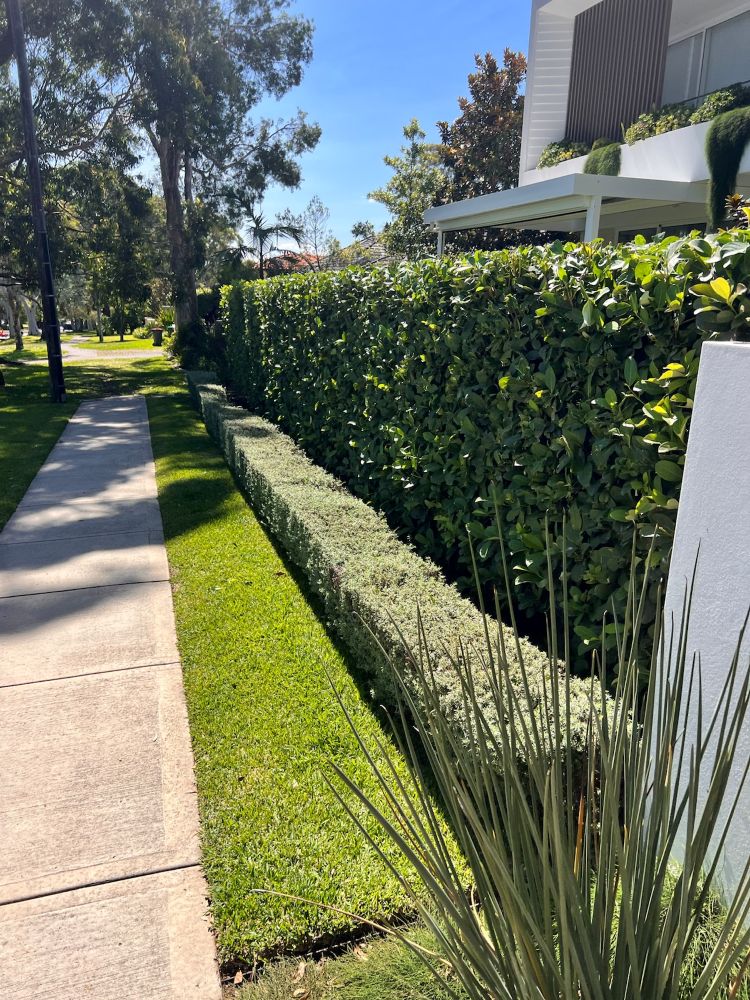
- Hedges — complete any formal shaping now before growth fully stops — plants recover better in the final weeks of mild weather
- Fruit trees — wait until fully dormant in June-July for structural pruning
- Dead or diseased wood — remove immediately regardless of season
- Palm fronds — April is ideal for frond removal on strata properties — safer working conditions and plants respond well
What Not to Prune in Autumn
Do not prune camellias, gardenias, azaleas or any winter-flowering plants in autumn — you will remove next season’s flower buds. Also avoid heavy structural pruning of trees during autumn leaf fall — wait until full dormancy in June-July for anything beyond dead wood removal.
Strata Committee? Autumn Is Budget Planning Season
April–June is when most NSW strata committees plan their maintenance budgets for the coming financial year. A well-structured autumn maintenance program protects your common property investment and keeps your Owners Corporation compliant with its obligations under the Strata Schemes Management Act 2015.
Our strata autumn programs cover:
- Full common area garden clean-up and green waste removal
- Professional mulching of all garden beds (70–100mm depth)
- Irrigation system audit and seasonal adjustment
- Hedge shaping and pathway safety pruning
- Photo reporting after every visit for committee documentation
- Winter maintenance schedule and spring preparation planning
5. Planting — What Thrives When Planted in Sydney’s Autumn
Autumn is genuinely one of the best planting seasons in Sydney. The combination of mild temperatures, increased rainfall and still-warm soil creates near-perfect conditions for establishing new plants before their first spring growth flush.
Best Plants to Add to Sydney Gardens in Autumn 2026
Natives for Eastern Suburbs conditions: Westringia (coast rosemary), Lomandra, Grevillea ‘Robyn Gordon’, Callistemon (bottlebrush), Correa — all exceptionally salt-tolerant, drought-hardy once established and low-maintenance.
Screening plants for privacy: Photinia ‘Red Robin’, Viburnum tinus, Lilly Pilly ‘Resilience’ — ideal for strata common areas and property boundaries. Fast-establishing in autumn conditions.
Ground covers for slopes and garden beds: Myoporum parvifolium, Dichondra, Scaevola — suppress weeds through winter and knit together by spring.
Cool-season colour: Pansies, violas, snapdragons, dianthus — provide colour through the grey winter months in Eastern Suburbs gardens.
6. Common Autumn Garden Problems in Sydney — And How to Fix Them
Fungal Disease
Sydney’s humid autumn conditions — warm days, cool nights, increased rainfall — create ideal conditions for fungal problems including lawn dollar spot, powdery mildew on roses, and root rot in poorly-drained garden beds. Improve air circulation through pruning, avoid overhead watering in the evening, and apply a preventative fungicide to high-risk plants in April.
Autumn Weed Flush
As summer grasses slow, autumn weeds seize their opportunity. Oxalis, winter grass and clover germinate rapidly in April-May. Hand pull or spot spray with a selective herbicide before they set seed — a single oxalis plant can produce thousands of seeds that persist in soil for years.
Drainage Issues
Sydney’s April rainfall often reveals drainage problems that were invisible through the dry summer. Low spots pooling water, paths directing runoff into garden beds, and compacted soil preventing percolation are all common. Address these in April-May — not June when soils are saturated and work is much harder.
Frequently Asked Questions — Autumn Garden Maintenance Sydney
When should I fertilise my lawn in Sydney’s autumn?
Fertilise your Sydney lawn in early to mid April — before temperatures consistently drop below 15°C. Once grass growth slows significantly, it cannot efficiently absorb nutrients and late fertilising can promote soft growth vulnerable to fungal disease. Use a slow-release autumn formula with higher potassium content to strengthen roots and improve winter hardiness. Don’t fertilise again until September when growth resumes.
How often should I water my garden in Sydney’s autumn?
Significantly less than summer. Most established Sydney gardens need irrigation every 7–10 days in April, moving to every 10–14 days in May–June as temperatures drop further. Newly planted specimens need more frequent watering — every 3–4 days for the first month. Always check soil moisture 5cm below the surface before watering. Sydney Water restrictions apply year-round — only water before 10am or after 4pm.
Is autumn a good time to plant in Sydney?
Yes — autumn is one of Sydney’s best planting seasons, particularly April and May. Mild temperatures reduce transplant stress, increased rainfall reduces establishment watering needs, and still-warm soil encourages root development before winter. Avoid planting in June once temperatures consistently drop below 12°C overnight.
What autumn garden maintenance does a strata Owners Corporation need to complete?
Under the Strata Schemes Management Act 2015 (NSW), the Owners Corporation must maintain all common property — including gardens, lawns and pathways — in good repair. Autumn obligations include keeping pathways clear of leaf litter and slip hazards, mulching garden beds, adjusting irrigation, removing dead or hazardous branches, and documenting all maintenance with photo reports.
How much does autumn garden maintenance cost in Sydney?
For a typical residential garden in Sydney’s Eastern Suburbs, a comprehensive autumn clean-up costs $300–$600 including labour and green waste removal. Mulching is typically additional at $150–$400 depending on area size. Strata properties vary significantly — small blocks from $600/month, larger complexes from $1,200–$3,200/month.
Should I aerate my lawn in Sydney’s autumn?
Yes — early autumn (April) is an excellent time to aerate Sydney lawns, particularly buffalo and couch that experience heavy foot traffic through summer. Core aeration relieves compaction, improves water penetration, and allows fertiliser to reach root zones. After aerating, apply autumn fertiliser and a light top dressing of sandy loam. Allow at least 4 weeks of growing conditions after aeration before growth slows.
Ready to Get Your Garden Autumn-Ready?
Garden Managers provides professional autumn garden maintenance across Sydney’s Eastern Suburbs, Inner West and North Shore — residential and strata. We’re currently booking April and May visits.