Garden Irrigation Maintenance During a Heatwave: Why It Matters (and What to Check)
Last updated:
Summary
Heatwaves put gardens and irrigation systems under extreme pressure. Even a “working” system can fail in hot, sustained conditions if filters are dirty, drippers are blocked, sprinklers are misaligned, valves leak, or the controller schedule hasn’t been adjusted. Heatwave-focused irrigation maintenance improves plant survival, reduces wasted water, prevents avoidable breakdowns, and protects the long-term value of your landscape.
Why heatwaves expose weak irrigation systems
A heatwave is more than a single hot day. When high daytime temperatures are paired with warm nights over multiple days, plants can’t recover properly and soil dries out faster than usual.
That’s when small irrigation issues become big problems: a partially blocked filter, a slow leak, or uneven sprinkler coverage can tip a healthy garden into stress quickly.
If you want the official definition and how heatwaves are described in Australia, see the Bureau of Meteorology explainer:
Heatwaves: what you need to know (Bureau of Meteorology).
Common heatwave symptoms that look like “not enough water”
- Sudden wilting in the afternoon (even when soil is damp on top)
- Leaf scorch / browning edges, especially on full-sun sides
- Patchy lawn colour (dry spots appear first where coverage is weak)
- Hedge dieback starting from the inside or on the hottest face
- New plants failing while established plants look “okay” (new roots dry out faster)
Heatwave irrigation success is mostly about distribution (watering the right place), infiltration (water soaking in), and timing (reducing evaporation).
Just increasing minutes can waste water if the system isn’t delivering water where roots actually are.
Heatwave irrigation maintenance checklist (high-impact, practical)
1) Do a “run-and-watch” test for every zone
Run each zone for 2–3 minutes and physically watch it. You’re looking for the easy wins.
- Broken, tilted, or sunken sprinklers
- Misting/fogging (often pressure-related) instead of clean streams
- Blocked nozzles or uneven arcs
- Overspray onto paths, walls, fences, or windows
- Dry pockets that stay dry while nearby areas get drenched
2) Clean filters (especially drip irrigation)
Drip systems rely on clean filtration. In heatwaves, partial blockages can silently starve plants.
If you’re not sure where the filter is, it’s worth identifying it now—before the next hot stretch.
3) Check for leaks and “silent losses”
- Soft, soggy patches that never dry out
- Sudden pressure drop across multiple zones
- Green rings around a single sprinkler head
- Valves that continue to seep after the zone finishes
- Controller running normally, but water is pooling in one spot
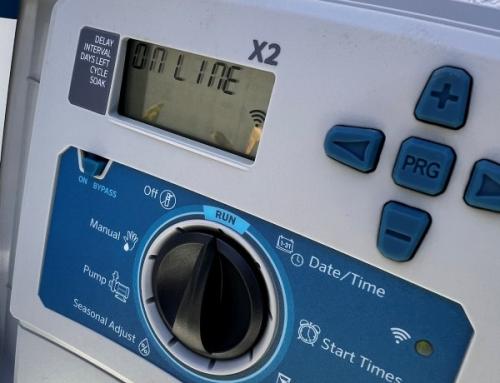
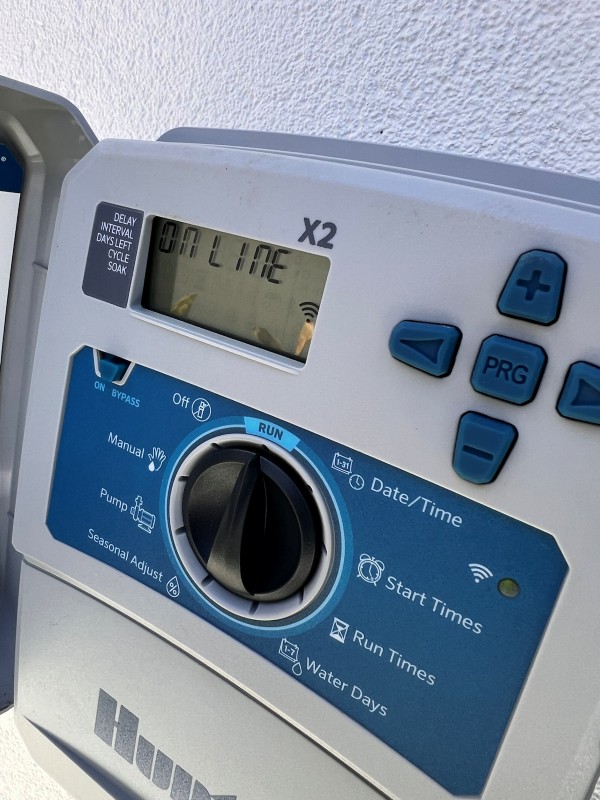
4) Confirm controller basics (clock, start times, and season settings)
- Check the time and AM/PM setting (common mistake)
- Avoid too many zones starting close together (pressure can drop and coverage suffers)
- Review “seasonal adjust” or “water budget” settings if your controller supports it
5) Inspect sensors (if installed)
Rain sensors and soil moisture sensors are only helpful if they’re clean, positioned correctly, and not bypassed.
Confirm they actually influence watering and aren’t permanently overridden.
6) Walk the garden and check the root zone
The surface can look wet while the root zone is dry. Check soil moisture 5–10 cm down in a few spots across each zone.
If it’s dry below the surface shortly after watering, you likely have poor coverage, runoff, or insufficient soak time.
For practical, Australia-specific garden watering tips that also reduce evaporation losses, NSW Government guidance is a strong reference:
Saving water in the garden (NSW Government).
Maintained vs unmaintained irrigation in a heatwave (comparison table)
| What matters in a heatwave | Maintained, heatwave-ready irrigation | Unmaintained irrigation |
|---|---|---|
| Water reaches roots | Even coverage, correct run times, minimal runoff | Dry patches, runoff, “green here / stressed there” |
| Water use | Efficient application with fewer losses | Higher usage with poorer results |
| Plant stress | Better recovery and fewer scorch/dieback events | Higher chance of decline and plant loss |
| Reliability | Fewer emergency repairs and breakdowns | More leaks, blockages, and pressure issues |
| Soil performance | Deeper watering supports stronger roots | Frequent light watering encourages shallow roots |
| Long-term cost | Lower replacement/repair costs over time | More replanting, more repairs, more wasted water |
Simple controller adjustments that usually help during a heatwave
If your system is already struggling (runoff, weak pressure, patchy coverage), maintenance comes first.
But once the system is delivering water properly, these adjustments typically improve performance in hot conditions:
Use cycle-and-soak where runoff happens
If water runs off before it soaks in (common on slopes, clay soils, or compacted areas), split watering into shorter cycles with breaks.
This helps water penetrate and reduces waste.
Separate spray zones from drip zones
Sprays often need shorter runs (to prevent runoff), while drip usually needs longer, slower application.
If they’re on the same schedule, one of them is typically wrong.
Avoid stacking too many start times
If multiple zones overlap or run too close together, pressure drops and coverage suffers.
Better coverage often beats longer run times.
Prioritise vulnerable areas
- Pots and planters
- New plants (first 6–12 weeks)
- Full-sun beds near hard surfaces
- Hedges/screens on the hottest face of the property
Zone-by-zone heatwave tips
Lawns
- Patchiness usually means coverage issues, not “not enough minutes”.
- Check for blocked nozzles, misalignment, and poor head-to-head coverage.
- If runoff occurs, use cycle-and-soak rather than one long run.
Hedges and screens
- They can look fine until they suddenly brown from the inside.
- Make sure irrigation reaches the full root line, not just one side.
- Check for drippers that have stopped flowing (a common heatwave failure).
Garden beds and new plants
- New plants dry out faster due to smaller root systems.
- Confirm emitters are positioned to wet the root zone (not the mulch edge).
- Check filters more often during periods of heavy irrigation use.
Pots and planters
- Pots heat up quickly and can need separate watering strategies.
- If you use drip stakes, physically confirm each one is flowing.
- Consider adding shade temporarily for sensitive plants during severe heat.
FAQ
Should I just increase watering time during a heatwave?
Not automatically. First confirm the system is delivering water evenly and to the root zone. If coverage is poor, extra minutes often just create runoff, overspray, or wasted water while stressed plants still miss out.
How do I know if my drip system is blocked?
Look for plants declining in a line or cluster while nearby areas remain healthy. Run the zone and check multiple emitters by hand. If flow is weak or uneven, clean the filter and inspect the line for kinks, crushed sections, or clogged emitters.
Is watering at night OK?
Early morning is generally ideal because it reduces evaporation while allowing foliage to dry after sunrise. Late-night watering can increase the chance of fungal issues in some situations, especially in dense plantings. The best timing also depends on local conditions, plant types, and your system’s distribution.
What’s the quickest “must do” if I only have 10 minutes?
Run each zone briefly and watch for obvious faults (broken heads, misting, overspray, dead drippers), then clean the drip filter if you have one. Fixing distribution problems often has the biggest impact during heat.
References
About the author
Garden Managers provides garden maintenance and irrigation support with a focus on reliable outcomes, practical advice, and tidy, professional workmanship.
We help homeowners and strata keep landscapes healthy through seasonal changes, including heatwave preparation and system tune-ups.
Need a heatwave irrigation check?
If your garden is showing stress, or your irrigation hasn’t been checked in a while, a quick inspection can prevent plant loss and reduce water waste.
We can assess coverage, clean filters, fix common faults, and adjust programs for summer conditions.
Enquire:
Book an irrigation inspection