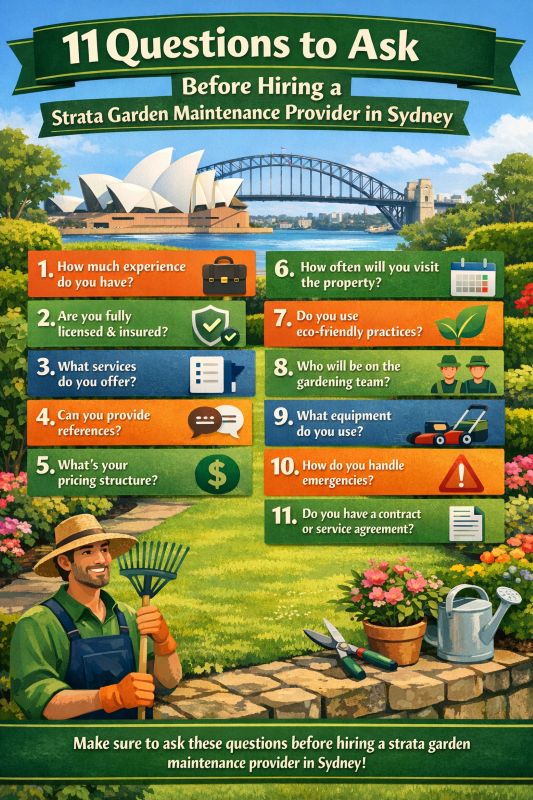
Choosing the right contractor for a strata property is not just about finding someone who can mow lawns and trim hedges. In Sydney, a good provider needs to understand common property, presentation standards, irrigation efficiency, seasonal planning, safety, resident sensitivity, and the reporting requirements that make life easier for strata managers and committees.
The wrong contractor often looks cheaper at the start, then costs more through missed visits, poor communication, rushed work, plant decline, irrigation failures, and repeated call-backs. The right contractor protects presentation, reduces committee friction, and keeps the grounds consistently under control.
If you are comparing providers now, start by looking at what a professional strata garden maintenance in Sydney service should actually include before you review quotes.
Quick answer
The best strata garden maintenance provider in Sydney is not usually the cheapest one. It is the contractor who can prove they understand strata work, communicate clearly, manage safety and access properly, keep the site consistently presentable, and give you a realistic maintenance plan instead of a vague hourly promise.
A strong provider should be able to show:
- clear scope of works
- public liability and workers compensation cover
- WHS processes and safe work documentation where required
- strata-specific reporting
- realistic service frequency
- experience with irrigation, plant health and seasonal planning
- clear exclusions and variation rules
- reliable communication with managers and committees
Why this matters more in strata than in residential gardening
Strata gardening is different from standard residential maintenance.
On a residential property, the client is usually one owner and the standard is based on personal preference. In strata, there are multiple stakeholders, common property obligations, higher visibility, and greater pressure around presentation, access, budget approval, and complaint management.
In NSW, the owners corporation or strata committee must repair and maintain common property. That makes contractor selection more important because neglected gardens, trip hazards, drainage issues, overgrown planting, or failed irrigation can become broader common-property maintenance issues rather than simple cosmetic problems.
Sydney conditions add another layer. The city averages about 1,211 mm of annual rainfall, but the pattern is uneven through the year, which is why strata gardens often swing between burst growth, weed pressure, washouts, and then dry stress.
11 questions to ask before hiring a strata garden maintenance provider in Sydney
1. Do they actually specialise in strata work?
Many contractors say they “do strata”, but really they are residential gardeners who occasionally service a unit block.
Ask:
• How many strata properties do you maintain?
• Do you work directly with strata managers, building managers or committees?
• Can you handle recurring common-area maintenance and separate quoted works?
• How do you manage resident access, cars, bins, entry points and complaint handling?
A strata specialist understands presentation standards, communication chains, approval delays, and the difference between routine maintenance and variation works.
2. What is included in routine maintenance, and what is not?
This is where many quote disputes start.
A proper quote should separate:
• mowing and edging
• weeding garden beds
• hedge trimming
• pruning shrubs
• leaf and litter clean-up
• fertilising
• green waste removal
• irrigation checks
• seasonal tidy-ups
• reporting and photos
It should also clearly explain exclusions such as:
• tree lopping
• palm work
• irrigation repairs
• mulch top-ups
• planting replacements
• pest and disease treatments
• pressure cleaning
• after-hours attendance
• traffic control or special access equipment
If the scope is vague, expect arguments later.
3. Do they understand irrigation, not just gardening?
This is one of the biggest separators in Sydney strata maintenance.
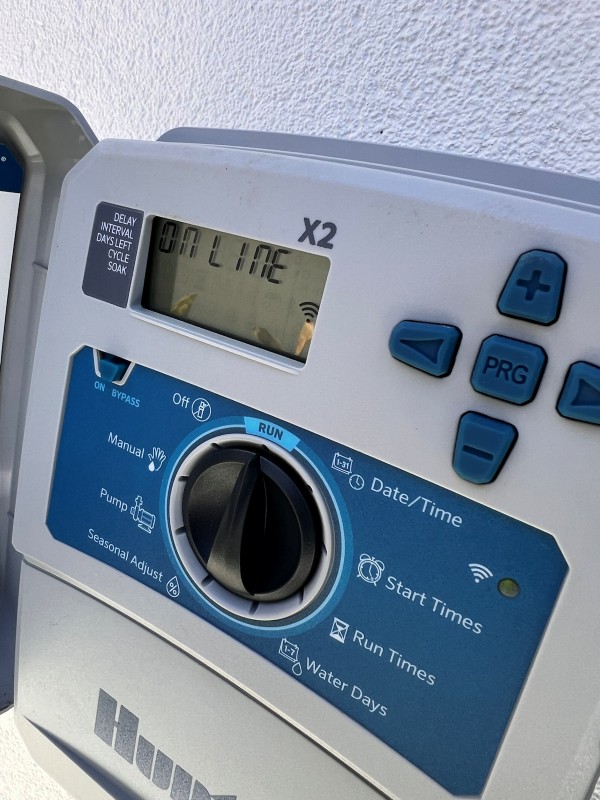
A site can look fine for a month or two under a basic mow-and-blow contractor, then slowly decline because irrigation faults go unnoticed. Dry patches, overspray, leaking solenoids, blocked drippers, broken pop-ups and incorrect controller settings all create avoidable cost.
A strong strata provider should be able to:
• identify obvious irrigation faults during routine visits
• advise whether repairs should be quoted separately
• adjust watering seasonally
• understand the difference between lawn and garden-bed watering
• recommend drip or smart irrigation where appropriate
Sydney Water’s current Water Wise Guidelines permit watering gardens and lawns with drinking water before 10 am and after 4 pm, while smart watering systems or drip irrigation systems may be used between 10 am and 4 pm. For strata sites, that makes efficient irrigation planning a real operational advantage.
4. Can they provide clear reporting?
For strata, silence is rarely a sign of good service. It usually means the manager is flying blind.
The best providers give short, useful updates such as:
• visit completed
• key work done
• issues noticed
• urgent items requiring approval
• photos where needed
• recommendations for seasonal works
Good reporting reduces email back-and-forth, gives committees confidence, and helps justify budget decisions.
5. Are they properly insured and WHS-aware?
At minimum, ask for:
• public liability insurance
• workers compensation cover where applicable
• ABN and business details
• safe work method statements where relevant
• evidence they can safely handle tools, access and common-area risks
This matters even more on strata properties because contractors work around residents, vehicles, shared accessways and high-visibility entrances.
6. How do they price — and is the quote actually comparable?
Do not compare two providers by total price alone.
One quote may include:
• waste removal
• fertilising
• minor irrigation adjustments
• reporting
• seasonal detail work
Another may exclude all of that and appear cheaper.
Ask each provider to confirm:
• crew size
• visit frequency
• estimated time on site
• inclusions
• exclusions
• waste fees
• whether materials are included
• minimum visit charges
• how variations are approved
A fair comparison is “scope versus scope”, not “price versus price”.
7. What does their maintenance plan look like across the year?
Sydney strata gardens should not be maintained the same way every month.
A good provider should think seasonally:
• spring: growth control, fertilising, weed pressure, irrigation ramp-up
• summer: water stress, irrigation faults, presentation control, pest pressure
• autumn: leaf volume, pruning, mulch planning, recovery work
• winter: structural pruning, plant replacements, low-growth tidy work
If a contractor cannot explain how the work changes through the year, they are probably reacting, not managing.
8. How do they deal with resident expectations and complaints?
Strata contractors need tact.
One resident may want everything cut hard. Another may complain that “the gardeners removed too much”. A good provider communicates through the right channel, documents instructions, and avoids getting dragged into ad hoc site politics.
Ask:
• Who is the main point of contact?
• How are extra requests handled?
• Do you act only on authorised instructions?
• How do you document site-specific preferences?
9. Can they spot bigger risks before they become expensive?
The best contractors do not just maintain gardens. They notice problems early.
That may include:
• trip hazards from roots or lifted edges
• blocked drains from leaf build-up
• declining hedges from compaction or lack of nutrition
• overgrown sightlines near driveways
• irrigation leaks causing slippery paths
• plant selection problems in coastal or shaded zones
This is where experience saves money.
10. Are they giving you a realistic frequency recommendation?
A contractor who says “monthly is fine for everything” without seeing the site properly is usually telling you what is easiest to sell.
Service frequency depends on:
• lawn area
• hedge density
• presentation standard
• leaf load
• irrigation
• access
• prestige level
• plant palette
• season
For many Sydney strata sites, fortnightly is a practical baseline, with weekly attendance for higher-profile properties or peak growth periods.
11. Do they sound like a long-term maintenance partner or just a labour crew?
This is the final test.
A strong provider speaks in terms of outcomes:
• keeping entrances consistently presentable
• reducing long-term remedial cost
• planning works ahead of problems
• making committee decisions easier
• improving water efficiency
• protecting plant health and site presentation
A weak provider talks only about “hours”, “cheap rates”, or “we’ll just see how it goes”.
Red flags to watch for
Be cautious if a provider:
• gives a price without inspecting properly
• cannot explain inclusions and exclusions
• has no strata-specific examples
• does not mention irrigation at all
• avoids questions about insurance or WHS
• over-promises on what can be done in very short visits
• gives no reporting process
• pushes a low monthly price with no maintenance logic behind it
What a good strata garden maintenance quote should include
A strong quote usually includes:
• site summary
• service frequency
• scope of routine works
• exclusions
• waste handling
• materials treatment
• irrigation note
• reporting method
• variation process
• payment terms
• insurance/WHS position
• start date or onboarding process
The clearer the quote, the fewer disputes later.
Simple scorecard to compare providers
You can use this quick scorecard when comparing quotes:
| Criteria | Provider A | Provider B | Provider C |
|---|---|---|---|
| Strata experience | /10 | /10 | /10 |
| Clear scope | /10 | /10 | /10 |
| Reporting quality | /10 | /10 | /10 |
| Irrigation understanding | /10 | /10 | /10 |
| Insurance/WHS confidence | /10 | /10 | /10 |
| Seasonal planning | /10 | /10 | /10 |
| Communication | /10 | /10 | /10 |
| Value for money | /10 | /10 | /10 |
The cheapest quote rarely wins this scorecard.
Sydney-specific issues your provider should understand
A Sydney strata provider should be comfortable discussing:
- coastal wind and salt exposure
- rapid spring growth
- summer irrigation efficiency
- leaf drop and storm clean-up
- shaded courtyards
- high-traffic entrances
- podiums and difficult access
- bin storage and green waste logistics
- water-wise irrigation choices
If they only speak in generic gardening terms, they may not be ready for a demanding Sydney strata portfolio.
Should you choose a specialist or a general gardening company?
If your property is simple, flat, easy to access and low-profile, a general gardening company may be enough.
But for sites with:
- multiple stakeholders
- higher presentation standards
- hedging and formal planting
- irrigation systems
- coastal conditions
- committee scrutiny
- recurring complaints
- prestige entry areas
a strata-focused specialist is usually the smarter choice.
The real cost of choosing the wrong provider
The most expensive quote is not always the highest one.
Often, the true expensive option is the contractor who:
- misses details
- causes complaints
- underquotes and rushes
- ignores irrigation
- lets plants decline
- creates repeated variation work
- needs replacing after six months
That is when a “cheap” contractor becomes very expensive.
Final checklist before you sign
Before approving a provider, make sure you have:
- a written scope
- confirmed visit frequency
- clarified exclusions
- checked insurance
- asked about reporting
- discussed irrigation
- confirmed waste handling
- agreed variation approval rules
- reviewed communication process
- compared value, not just price
FAQ
Who is responsible for strata garden maintenance in NSW?
In general, the owners corporation or strata committee is responsible for repairing and maintaining common property. Exact responsibility can still depend on the strata plan and by-laws, so those should always be checked for the site in question.
How often should a strata garden be maintained in Sydney?
It depends on lawn area, hedges, presentation standard, leaf load, irrigation and season. Many sites suit fortnightly maintenance, while premium or high-growth sites may need weekly attendance during peak periods.
Should irrigation be included in strata garden maintenance?
Routine visual checks should usually be part of competent maintenance. Repairs, controller upgrades, line faults and part replacement are often quoted separately.
What is the biggest mistake when hiring a strata garden contractor?
Comparing total price without comparing scope. A cheaper quote can easily exclude reporting, waste removal, irrigation attention, or seasonal detail work.
Is the cheapest gardening quote usually the best value?
Not for strata. Best value usually comes from the provider with the clearest scope, reliable communication, proper systems and fewer long-term headaches.
Need help comparing providers?
If you want a contractor who understands strata expectations, irrigation, reporting, common-area presentation and long-term garden performance, take a look at our professional strata garden maintenance in Sydney
service.
We work with strata managers and committees who want more than a basic mow-and-blow contractor. The goal is simple: fewer problems, clearer communication, and gardens that stay under control year-round.
Request a site walk and quote today if you want a clear maintenance plan, not just a vague hourly promise.
Under NSW strata rules, the owners corporation is generally responsible for maintaining common property, which is why choosing the right garden maintenance provider is about more than presentation alone.
In Sydney, water efficiency also matters. Following Sydney Water’s Water Wise Guidelines can help strata properties improve irrigation performance while avoiding unnecessary water waste.